
Review · ITALY
Lake Garda: Cima Capi Via Ferrata
This is Lake Garda from a wire. The Cima Capi route pairs wide lake views with a real mountain challenge, then adds an unusual walk through First World War forts and tunnels. I especially like the long views over the lake and Sarca Valley, plus the small groups of no more than six people. The guides Marco and David have also earned warm praise for their friendly approach and helpful photos.
The main catch is the effort required. You spend about an hour hiking before reaching the via ferrata, then face steep climbing and another long walk afterward. If you have low fitness, vertigo, or little patience for uphill work, the $106 price may not rescue the day.
Key points before you book
- The via ferrata begins after a long approach hike: Plan for roughly an hour of walking before the protected climbing starts, then about the same on the way back.
- Views stay with you almost all day: The route offers repeated looks over Lake Garda, the Sarca Valley, and steep walls far below.
- The climbing is approachable but exposed: The route is considered relatively simple for a via ferrata, yet the height and drop-offs can feel serious.
- First World War fortifications shape the return: Old military positions, walkways, and tunnels give the trip a strong historical side.
- A torch is genuinely useful: Bring one to explore the dark fortifications rather than treating them as a quick pass-through.
- Small groups improve the experience: With up to six participants and an English or Italian guide, you get a more personal outing than on a large group hike.
What the six-hour Cima Capi day feels like
This is not a quick tourist attraction with a short climb and a photo stop. It is a full mountain outing lasting about six hours, with a long approach, exposed protected sections, a summit, and a historic return route.
You use a harness on the via ferrata, and equipment is provided. A mountain guide leads the activity, with English and Italian available. The group limit of six matters here. On a route with steep sections and narrow old paths, a small group usually means less waiting and more room to ask for help or advice.
The price is $106 per person. That is fair if you want guided access to a serious mountain route, safety equipment, insurance, and a full half-day in the mountains. It is less attractive if you are mainly looking for a viewpoint, since much of the day involves walking and physical effort rather than continuous climbing.
More Via Ferrata Routes in Italy
- Dolomites Via Ferrata Experience
★ 5.0 · 58 reviews - Via Ferrata Cima Capi
★ 5.0 · 27 reviews - Via Ferrata Rio Sallagoni
★ 5.0 · 22 reviews
The approach hike takes about an hour
The first surprise is that the climbing does not begin right away. You should expect close to an hour of hiking before reaching the start of the via ferrata, and roughly another hour of walking on the way back.
That approach is part of the outing, not wasted time, but it changes how you should judge your fitness. You need energy before clipping into the steel cables. The return walk also comes after the steepest part of the day, when your legs may be tired.
Wear proper hiking shoes. Bring water and snacks, since food and drinks are not included. Sunglasses, a hat, sunscreen, and a jacket also belong in your pack. Mountain weather can change your comfort quickly, and an exposed route gives you little shade or shelter in some sections.
The walk to the climbing start helps you settle into the day. It also gives the guide time to explain the route and the equipment. Still, anyone expecting six straight hours of climbing should adjust that picture. This is a mountain hike with a via ferrata at its center.
Climbing above Lake Garda on the protected route
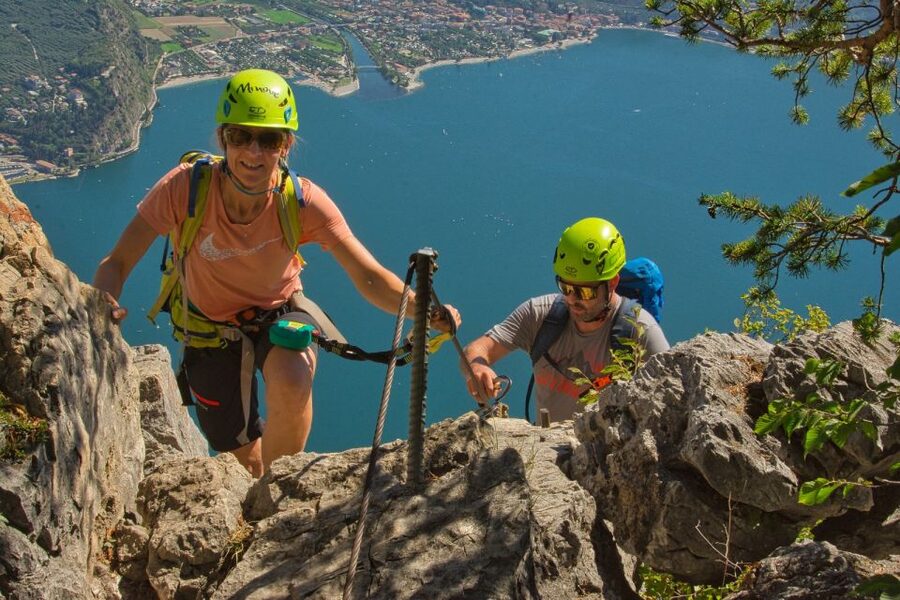
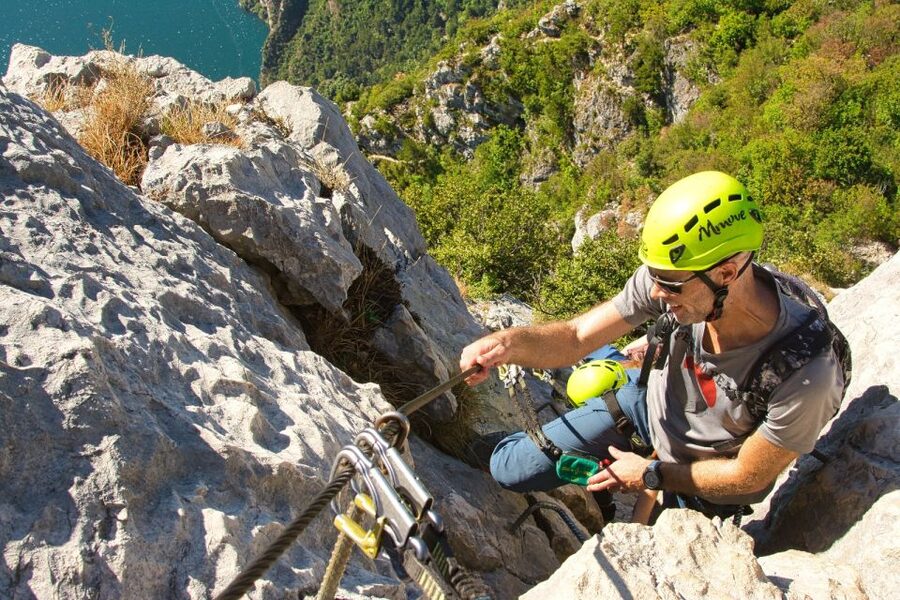
The Cima Capi via ferrata is the main event. A via ferrata uses fixed cables, ladders, and metal fixtures to help you move across steep mountain rock. You attach yourself to the cable with a harness system, allowing you to climb sections that would otherwise require technical climbing skills.
This route is described as relatively easy in climbing terms, making it a good introduction for someone who wants to try a via ferrata without starting with the most difficult terrain. That does not make it effortless. The vertical height gain demands stamina, and the route is very exposed.
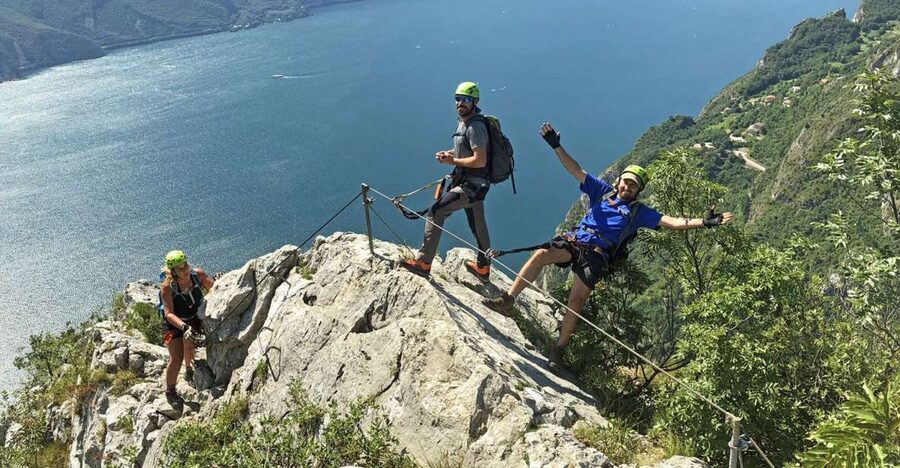
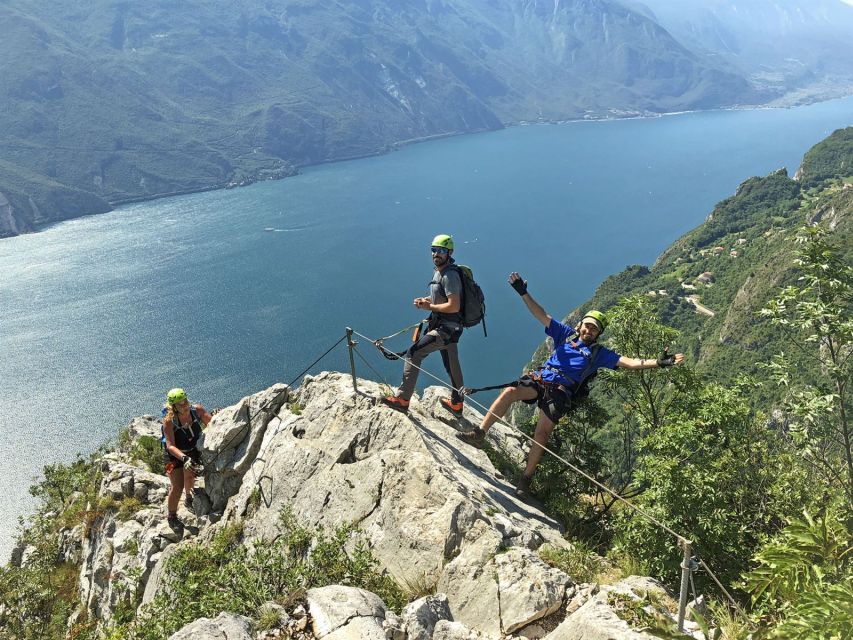
You may look down through open space to Lake Garda and the valley below. At times, the walls fall away sharply beneath you. That exposure creates the best views, but it is also the reason people with vertigo should not book this activity.
I like the balance here. You get genuine climbing sections, not just a marked hiking trail, but the route is manageable enough for a first experience if you are fit and comfortable with height. You still need to listen closely to the guide, move carefully, and accept that the mountain sets the pace.
The views are not limited to one summit photo. The route offers repeated glimpses of the lake and the Sarca Valley as you gain height. Those changing angles are one of the strongest reasons to choose this outing over a standard walking tour.
Reaching Cima Capi and earning the view
The summit of Cima Capi is the natural high point of the excursion. Reaching it gives you a clear reward for the approach hike and the vertical effort.
The setting is the real prize. Lake Garda spreads below, while the Sarca Valley adds depth beyond the shoreline. The combination of open water, steep mountain walls, and a high route creates the kind of view that makes frequent stops worthwhile.
Do not rush the summit simply because the route has taken work. The guide can help you find safe places to pause, and the small group size should make it easier to enjoy the view without a crowd pressing behind you.
You should also understand that the summit does not mark the end of the day. The return is not just a repeat of the approach. It takes you through old military remains, which gives the outing a second character after the climbing is finished.
Same rush, a different way to get it:
- Canyoning “Gumpenfever” – beginner Canyoningtour for everyone
★ 5.0 · 391 reviews - From Tignale, Lake Garda: Beginner-Friendly Canyoning Tour
★ 4.9 · 377 reviews - Private Tour explore Vulcano Island by Kayak & Coasteering
★ 5.0 · 338 reviews - Bagni di Lucca: Canyoning in the Cocciglia’s Gorge
★ 4.9 · 215 reviews
First World War tunnels make the return different
After Cima Capi, the route passes old walkways, fortifications, and tunnels built during the First World War. These remains give the mountain a human story that goes beyond scenery.
The military positions are practical rather than polished. You are seeing old defensive works in the place where they were built, among steep rock and high routes. That setting helps explain why the area mattered as a military position, even without a long museum-style explanation.
Bring a torch. The tunnels can be dark, and a phone light may be less useful than a proper small flashlight. This is one of the most important packing tips for the trip. Without a light, you may only glance into the fortifications instead of properly exploring them.
The historic section also changes the rhythm. The via ferrata asks for concentration and physical control. The fortifications invite slower movement and curiosity. For me, that mix makes the six-hour outing more satisfying than a climb that ends at a viewpoint and turns straight back.
How demanding is the route?
You should have a good level of fitness for this experience. The difficulty comes from the total day, the vertical height gain, and the exposed route rather than from extremely technical climbing.
The long approach hike can take close to an hour. The via ferrata then requires steady effort, and the descent or return walk follows after you have already worked hard. A person who hikes regularly and feels comfortable with sustained uphill movement should be better prepared than someone who only wants a gentle scenic walk.
The route is not suitable for children under 12, pregnant women, or people with vertigo. It is also specifically unsuitable for people with a low level of fitness. Those limits are sensible, especially because the route includes vertical walls and exposed sections.
If you are nervous about heights but still curious about via ferrata, be honest with yourself before booking. The route may be relatively simple from a climbing standpoint, but the views depend partly on your ability to tolerate exposure.
Guides, equipment, and the small-group advantage
The guide is an important part of this experience. The activity is available in English or Italian, and the small group has a maximum of six people.
Marco is praised for being friendly and well informed about the route, while David is noted for making the day enjoyable and taking excellent photos. Those details matter because a guide on a via ferrata does more than point out scenery. You want clear instructions, a calm presence, and someone who understands when the group needs a pause.
A mountain guide certificate and RC insurance are included. The harness and climbing equipment are provided, so you do not need to assemble a technical kit of your own. You still need to bring the basics: hiking shoes, jacket, sun protection, snacks, and a torch.
The guide also helps turn the historic remains into more than a dark passage through the mountain. English and Italian language support makes the outing practical for international visitors, although the available language should match what you need when you reserve.
What to pack for a safer, better day
Keep your pack light, but do not leave out the essentials. The supplied information specifically recommends:
- Hiking shoes
- Sunglasses
- Hat
- Sunscreen
- Jacket
- Snacks
- Torch
Food and drinks are not included, so bring enough for a six-hour outing. Snacks are especially useful because the day combines a long approach with climbing and a return walk.
A jacket is worth packing even if the day begins warm. The route is exposed in places, while tunnels and shaded sections can feel cooler. The torch is the item most easily forgotten, and it has a direct purpose on the return through the old fortifications.
You do not need to bring a harness or climbing system. Equipment is supplied, and the guide handles the activity side of the outing. Your responsibility is to arrive in proper footwear with enough personal food, water, and clothing for changing conditions.
Is $106 good value?
At $106, this is not a cheap walk, but it offers more than a self-guided trail. Your price covers a certified mountain guide, RC insurance, the guided experience, and the climbing equipment.
The small group is another part of the value. A six-person limit is useful on a route where people move at different speeds and may need individual help. It also makes the day feel less like a group transfer and more like a proper guided mountain activity.
The value depends on what you want. If you want a short climb, a lift-assisted viewpoint, or a relaxed lake excursion, this is the wrong product. You pay for six hours of physical activity, not convenience.
If you want your first guided via ferrata, dramatic views, and military history in one outing, the price is easier to justify. The route combines three experiences that would be difficult to match in a simple sightseeing tour: protected climbing, high views over Lake Garda, and old wartime structures.
Free cancellation up to 24 hours before the activity and reserve-now, pay-later booking also reduce the risk of committing too early. Check the available starting times before you book, since the activity lasts six hours and will shape much of your day.
Who should book Cima Capi?
I would recommend this experience to a fit adult who wants an introduction to via ferrata and does not mind a long approach hike. It suits you especially well if views matter as much as the climbing, since Lake Garda and the Sarca Valley remain central to the experience.
It is also a good choice if you like travel experiences with a historical layer. The First World War positions, walkways, and tunnels keep the return interesting and give the day more substance than a climb focused only on reaching the top.
I would not choose it for a family with children under 12, anyone who is pregnant, or anyone with vertigo. I would also avoid it if you are looking for an easy walk. The route may be a gentle introduction to via ferrata technique, but the six-hour day and exposed height still require preparation.
Should you book this Lake Garda via ferrata?
Book it if you want a demanding but approachable mountain day with excellent views, a small group, and a memorable return through First World War fortifications. The route offers a strong first taste of via ferrata without being described as technically difficult.
Skip it if your idea of a Lake Garda outing is a slow lakeside stroll, or if you dislike exposed heights. The long walk before the climbing begins is also a real consideration.
For the best chance of enjoying it, arrive with hiking shoes, snacks, sun protection, a jacket, and a torch. Most important, bring enough fitness for the approach, the vertical climb, and the walk back. Get those basics right, and Cima Capi offers far more than a scenic photo stop.
FAQ
How long does the Cima Capi via ferrata experience last?
The experience lasts six hours.
How much does the activity cost?
The price is $106 per person.
What languages are available?
The live guide is available in English and Italian.
How large is the group?
The group is limited to six participants.
Is climbing equipment provided?
Yes. A harness and the necessary climbing equipment are provided for the via ferrata.
Is a mountain guide included?
Yes. The activity includes a mountain guide and a mountain guide certificate.
Is insurance included?
RC insurance is included.
What should I bring?
Bring sunglasses, a hat, snacks, hiking shoes, sunscreen, a jacket, and a torch.
Is the activity suitable for children?
No. It is not suitable for children under 12 years old.
Can I cancel for a full refund?
Yes. You can cancel up to 24 hours in advance for a full refund.
Just added around Italy
- Rafting Classic, with Extreme Waves★ 4.8 · 16 reviews
- Monti Rossi Adventure Park Entry Ticket★ 5.0 · 4 reviews
- Monti Rossi Adventure Park Entry Ticket Full★ 5.0 · 3 reviews
- Lucca:Wild Canyoning in Lima Torrent.★ 5.0 · 35 reviews
- Lucca: packrafting Extreme★ 5.0 · 4 reviews
- Livigno: Adrenaline Ice Karting Experience★ 4.7 · 8 reviews
- Lake Como Adventure Park Day Access★ 4.9 · 7 reviews
- Arco: Via Ferrata Family-Friendly Climbing Tour★ 5.0 · 2 reviews
Via Ferrata Climbing, compared.
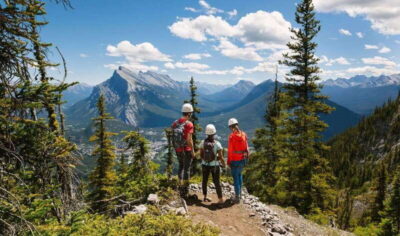
Banff: Mount Norquay 2.5 or 4-Hour Guided Via Ferrata Climb
Read our review →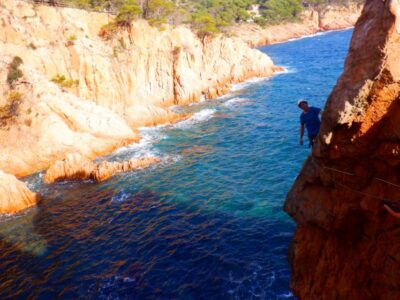
Sant Feliu de Guixols: Climb Via Ferrata Cala del Molí
Read our review →
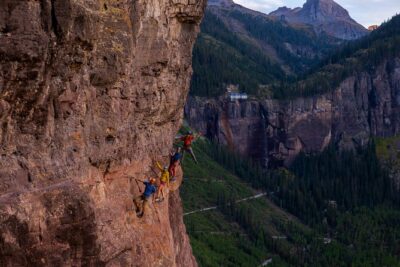
Small-Group Guided Via Ferrata Climbing with Banff’s Best Views
Read our review →
Via Ferrata in Gran Canaria. Vertical adventure park. Small groups
Read our review →Browse the lists this tour appears in