
Review · ITALY
Dolomites Via Ferrata Experience
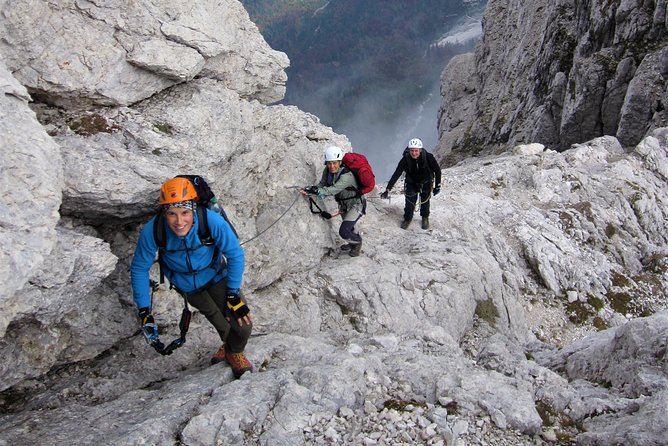
The mountains become your climbing wall. From Cortina d’Ampezzo, this four-hour outing combines a short drive, a walking approach, a safety lesson, and a guided via ferrata on the Dolomite rock. You clip into fixed cables, learn how to move safely, and gain a close-up view of one of Italy’s most striking mountain regions.
I like the patient instruction for beginners and the way guides such as Marco, Mara, Luca, Alex, and Enrico adjust the route to match your ability. I also like the mix of climbing, views, and wartime mountain history, especially on routes with old trenches and tunnels. The main drawback is that the exact route is not fixed, and extra costs can include a €15 gear rental, lifts, transport, and possibly a change of plan if weather turns bad.
I would choose this experience if you want a real introduction to via ferrata rather than a simple sightseeing walk. It suits people with moderate fitness who are comfortable with heights and ready to use both hands and feet on steep rock. The 4.9 rating from 58 ratings and 98 percent recommendation suggest very strong satisfaction, but mountain weather and route conditions still matter.
Key things to know before you climb
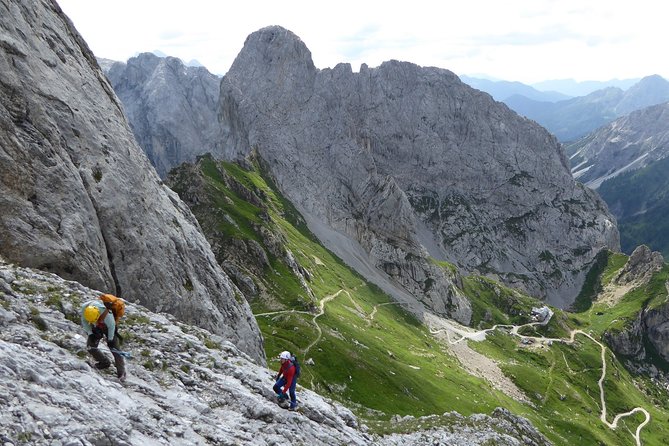
- Beginner-friendly instruction: You receive a briefing on the helmet, harness, via ferrata set, rope handling, and basic climbing technique before setting off.
- Routes change with ability: Guides have used easier A to C graded routes for first-timers, while still giving capable hikers a worthwhile challenge.
- Expect a short approach: The outing begins with a short drive from the meeting point, followed by a walk to the rock route.
- Gear costs extra: Helmet, harness, and via ferrata set rental are available for €15 per person on request.
- Mountain history adds depth: Some routes pass through World War I trenches and tunnels, giving the climb more meaning than scenery alone.
- Weather can alter the plan: Snow or poor conditions may force a change to another route, date, or activity.
How the four-hour Dolomites climb works
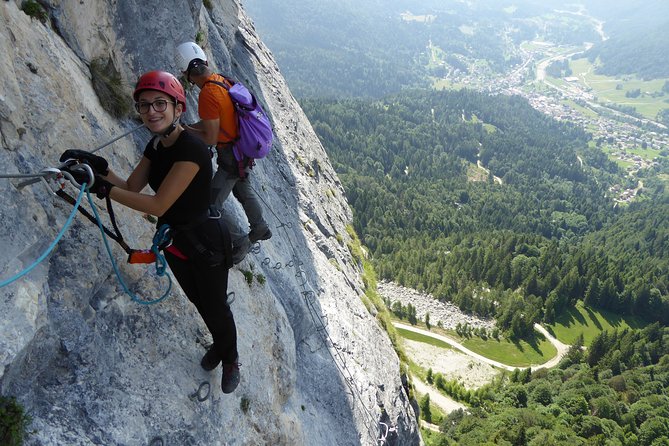
You meet at Cason Dei Caai in Cortina d’Ampezzo. From there, the group drives a short distance to a parking area, then walks toward the via ferrata. The approach is part of the experience, so you should wear proper hiking or climbing shoes from the start. Running shoes are a poor choice for steep, rocky ground.
Before you clip onto the cable, the mountain guide explains the equipment and the safety rules. You learn how to move the two carabiners along the fixed cable, where to place your feet, and how to handle the rope. On some first outings, the guide keeps you connected to an additional safety rope until you feel ready to manage the cable system with more confidence.
That early lesson matters. Via ferrata is not quite hiking and not quite rock climbing. Iron cables, ladders, rungs, and other fixtures help you cross steep rock, but you still need balance, strength, and calm movement. The best guides do not rush this part. Marco, Mara, Luca, Alex, and the other guides are repeatedly praised for clear explanations and a reassuring manner.
The climb itself may feel hardest in the first few meters. One route described by a beginner became more manageable as the grade changed during the ascent. That is useful to know before you start: a nervous beginning does not necessarily predict the whole route.
More Via Ferrata Routes in Italy
- Via Ferrata Cima Capi
★ 5.0 · 27 reviews - Via Ferrata Rio Sallagoni
★ 5.0 · 22 reviews - Lake Garda: Cima Capi Via Ferrata
★ 4.9 · 14 reviews
Why guide choice matters on the rock
A good guide does much more than keep you attached to the cable. The guide watches your pace, notices when you are tense, and selects a route that fits the group rather than forcing everyone onto the same challenge.
Marco receives especially strong praise for his communication before the outing and for matching routes to ability. He has taken first-timers onto routes graded around A to C, which can provide enough exposure and climbing without becoming an ordeal. He has also supplied hiking poles for snowy descents and taken photographs during the climb.
Mara is praised for choosing suitable routes and keeping the group both safe and encouraged. Alex has handled weather-related changes calmly, including a day when heavy September snow made the original plan unsafe. Luca is praised for making the first experience relaxed and fun, while Enrico has been singled out for patient instruction and a route that felt more challenging than expected.
You should still tell the guide about your experience before climbing. A person with a decade of mountain climbing may want more than a gentle introduction, while a first-timer may need a route with fewer difficult sections. The guides appear to have enough local route knowledge to make that adjustment.
What the listed mountain stops tell you
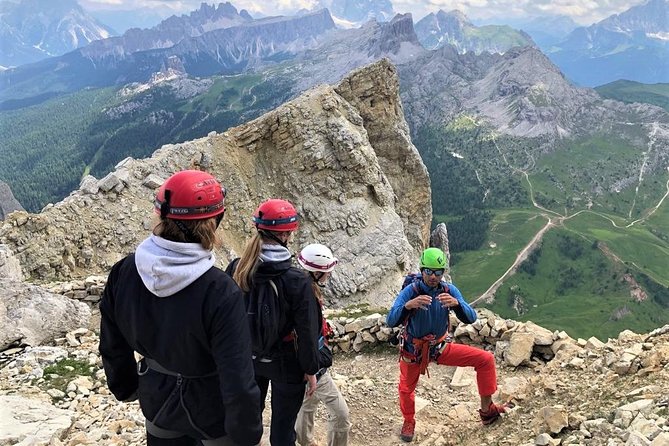
The experience names a wide collection of places across the Cortina and eastern Dolomites area. It is not realistic to treat all 14 as separate stops during a four-hour climb. Instead, they show the broad range of areas and routes the guiding team may use when choosing suitable terrain.
Cascate di Fanes
Cascate di Fanes refers to the Fanes waterfalls, an area known for dramatic rock and falling water. A route here can add a strong natural feature to the climb, but wet conditions may affect footing and route choice. You should ask which section is planned on your date rather than assume the waterfall itself is part of every outing.
Same rush, a different way to get it:
- Canyoning “Gumpenfever” – beginner Canyoningtour for everyone
★ 5.0 · 391 reviews - From Tignale, Lake Garda: Beginner-Friendly Canyoning Tour
★ 4.9 · 377 reviews - Private Tour explore Vulcano Island by Kayak & Coasteering
★ 5.0 · 338 reviews - Bagni di Lucca: Canyoning in the Cocciglia’s Gorge
★ 4.9 · 215 reviews
Funivia Faloria
The Faloria cable car area provides access to high mountain terrain above Cortina. A lift can save walking time and place you closer to the rock, though ski lifts are not included in the price. If a lift is needed, budget for that separately.
Monte Averau
Monte Averau is one of the named climbing areas around the high passes. It suggests a more open mountain setting, with large views and exposed rock. Exposure can make a route feel harder even when the technical moves are moderate, so your comfort with heights matters.
Parco Naturale delle Dolomiti d’Ampezzo
The natural park around Cortina brings the wider setting into focus. You may see a route chosen for its views as much as for its climbing. The park name also signals that this is not a built attraction with a fixed sequence. Conditions, skill level, and safety guide the day.
Monte Sass de Stria
Monte Sass de Stria is strongly linked with wartime mountain history. Routes in this area can combine iron cable sections with old military paths, trenches, or tunnels. That combination is one of the most distinctive features of a Dolomites via ferrata.
Giro del Nuvolau
The Giro del Nuvolau refers to a circuit around the Nuvolau area. A circuit-style outing can offer changing views rather than one repeated angle, though the exact climbing sections depend on the selected route and conditions.
Anello del Lagazuoi
The Lagazuoi circuit is another route with a strong connection to World War I. Old paths and tunnels make the mountain feel like an open-air history site. Bring patience for uneven walking, since the experience includes more than clipping onto cables and climbing upward.
Funivia del Lagazuoi
The Lagazuoi cable car can provide access to high terrain and save time on ascent or descent. It is not included, so you need to confirm whether the chosen route uses it and pay separately if required.
Alpe di Siusi and Val Gardena
Alpe di Siusi and Val Gardena point toward the broader Dolomite region beyond Cortina. They are important names for scenic mountain routes, but their inclusion does not mean you will visit every named valley during this short experience. Treat them as possible areas within the guiding service rather than guaranteed stops.
Gardena Pass and Passo di Giau
Both passes are known for high mountain scenery and access to walking and climbing routes. Passo di Giau is particularly useful as a setting for dramatic rock formations and broad views. High passes can also bring quick weather changes, so a route may need to shift at short notice.
Schlern-Rosengarten and Sciliar-Catinaccio Nature Park
This nature park is another named region in the wider Dolomite network. It suggests that the guiding company works across several famous mountain areas, not only one single cliff above Cortina. Confirm the meeting and transport plan if your selected route lies far from the base.
Alta Badia
Alta Badia rounds out the list of possible Dolomite areas. It is another sign that the service is built around local route selection rather than a rigid sightseeing circuit. For a four-hour booking, the value is the guide’s ability to find appropriate rock, not the number of place names you can check off.
The scenery and the World War I connection
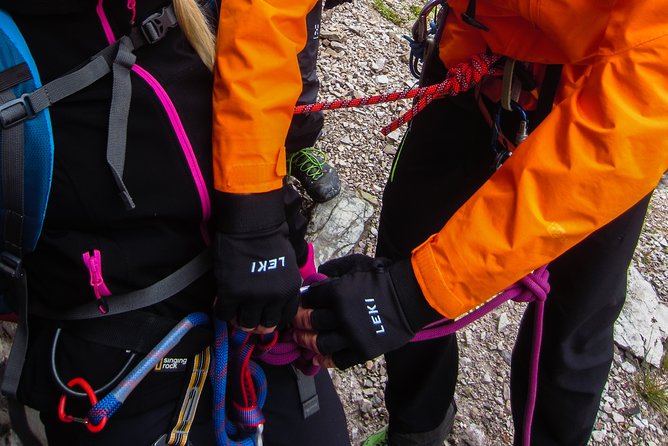
The views are a major reason to book. Several outings describe wide valley views and striking mountain scenery, with the feeling of being high on a cliff while still protected by the cable system. That combination can make the first exposure less intimidating, though no safety system removes the need for care.
The wartime routes add something you do not get from a standard mountain walk. Old trenches and tunnels cut through the rock, and one altered outing used a tunnel inside the mountain after snow made the intended route unsafe. You may find the history especially memorable because you experience it on foot, at the same height and in the same rough terrain where soldiers once moved.
What the $167.75 price really covers
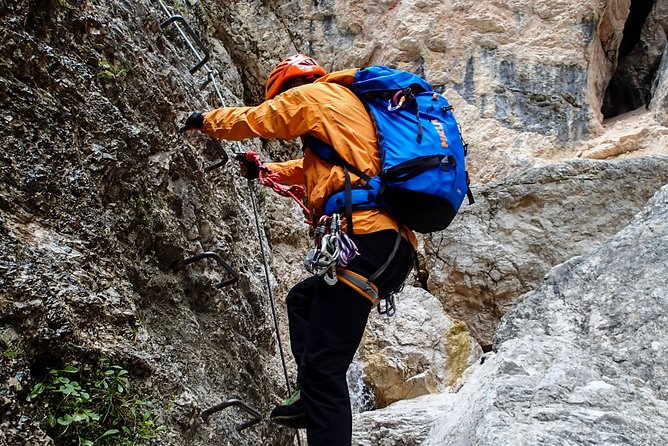
The listed cost is $167.75 per person. Its main value is the UIAGM or IFMGA mountain guide service, plus a tailored introduction to a specialized mountain activity. If you are new to via ferrata, paying for instruction can be far more useful than trying to learn the system alone.
The price does not include private transport, ski lifts, or personal equipment rental. A helmet, harness, and via ferrata set can be rented for €15 per person if requested. One small group also paid €15 for a ski lift, so you should keep some extra money available for access costs.
The group limit is 20 people, but several outings described much smaller groups, including four or five people. A small group gives the guide more time to help with carabiners, foot placement, and nerves. The maximum of 20 means you should not assume every departure will be intimate, though the route may still be divided or managed according to ability.
Fitness, fear of heights, and what to bring
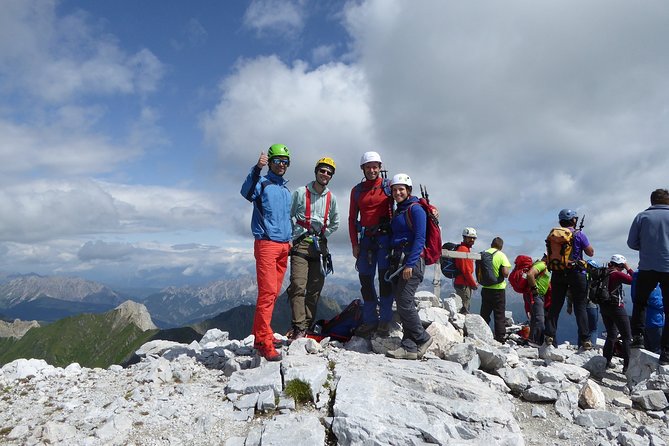
You need a moderate level of fitness. The activity includes a walking approach, steep movement on rock, and a descent that may be snowy or uneven. You do not need to arrive as an expert climber, but you should be able to walk uphill and remain active for about four hours.
You should also be honest about heights. The cable system provides protection, but you will still look across open rock and down steep slopes. Several first-timers found the experience exciting rather than overwhelming, especially after the first section, but this is not a good fit if exposure causes severe distress.
Bring hiking or climbing shoes with firm grip. Do not rely on running shoes. Ask about equipment before arrival, since the helmet, harness, and via ferrata set are not included automatically. Guides may provide extra help such as poles for a snowy descent, but you should not count on every item being supplied.
Weather and the no-refund rule
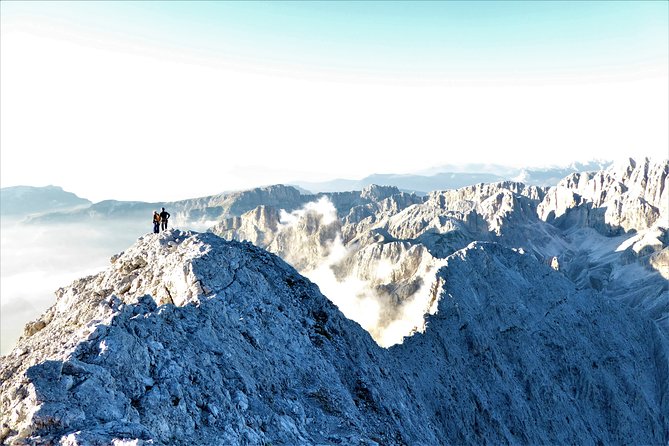
This is a mountain activity, so weather is not a minor detail. The experience requires good conditions, and heavy snow has caused a route change in the past, even in early to mid-September. A guide may move the group to another mountain, refuge, tunnel route, or section of via ferrata when safety requires it.
If poor weather cancels the activity, you are offered another date or a full refund. If the minimum number of participants is not reached, you are offered another date or experience, or a full refund. Outside those cases, the booking is non-refundable and cannot be changed, so do not reserve it until your plans are firm.
Confirmation is sent within 48 hours, subject to availability. The activity returns to the starting point at Cason Dei Caai, which makes planning the rest of your day easier.
Should you book the Dolomites via ferrata?
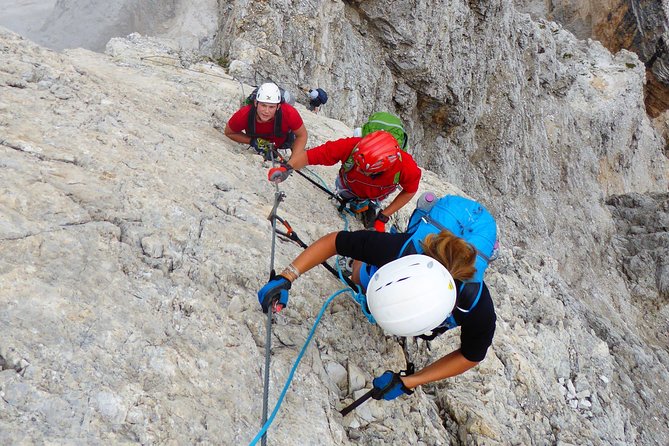
I would book this if you want an active, guided introduction to the Dolomites and you have moderate fitness, suitable shoes, and a reasonable tolerance for heights. The strongest reasons are the careful instruction, flexible route choice, expert mountain leadership, and the chance to combine climbing with views and World War I sites.
I would hesitate if you need a guaranteed route, dislike changes caused by weather, or want every transport cost included. Also check the equipment and lift fees before booking.
For a first via ferrata, this looks like a strong choice. Tell the guide exactly how much climbing you have done, ask what route grade is planned, and arrive ready for a real mountain outing rather than a fixed attraction. You may begin with nerves, but the right guide and a well-matched route can turn those nerves into confidence.
FAQ
Where does the Dolomites via ferrata experience begin?
It begins at Cason Dei Caai, 32043 Cortina d’Ampezzo, in the Province of Belluno, Italy.
Where does the activity end?
The activity ends back at the meeting point.
How long does the experience last?
The experience lasts approximately four hours.
Is transportation included?
Private transportation is not included. The group drives a short distance from the meeting point to a parking area, then walks to the via ferrata.
Is climbing equipment included?
No. A helmet, harness, and via ferrata set can be rented on request for €15 per person.
Are ski lifts included?
No. Skilifts are not included in the price.
Is this suitable for beginners?
Yes. The guide gives an introduction to equipment, safety rules, rope handling, and climbing technique. Several first-time participants used easier routes and felt supported by the guides.
What fitness level do I need?
You should have a moderate physical fitness level. The activity includes a walking approach and climbing on steep rock.
What happens if the weather is poor?
The experience may be canceled or changed because it requires good weather. If it is canceled due to poor weather, you are offered a different date or a full refund.
Just added around Italy
- Rafting Classic, with Extreme Waves★ 4.8 · 16 reviews
- Monti Rossi Adventure Park Entry Ticket★ 5.0 · 4 reviews
- Monti Rossi Adventure Park Entry Ticket Full★ 5.0 · 3 reviews
- Lucca:Wild Canyoning in Lima Torrent.★ 5.0 · 35 reviews
- Lucca: packrafting Extreme★ 5.0 · 4 reviews
- Livigno: Adrenaline Ice Karting Experience★ 4.7 · 8 reviews
- Lake Como Adventure Park Day Access★ 4.9 · 7 reviews
- Arco: Via Ferrata Family-Friendly Climbing Tour★ 5.0 · 2 reviews
Via Ferrata Climbing, compared.
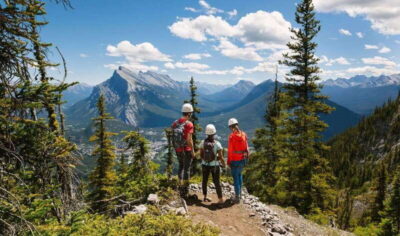
Banff: Mount Norquay 2.5 or 4-Hour Guided Via Ferrata Climb
Read our review →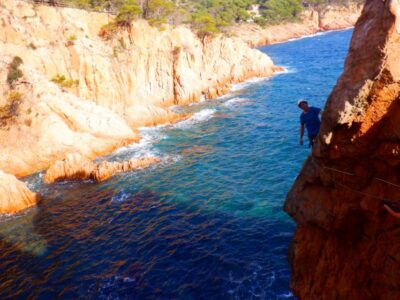
Sant Feliu de Guixols: Climb Via Ferrata Cala del Molí
Read our review →
Small-Group Guided Via Ferrata Climbing with Banff’s Best Views
Read our review →
Via Ferrata in Gran Canaria. Vertical adventure park. Small groups
Read our review →Browse the lists this tour appears in