
Review · SPAIN
Sant Feliu de Guixols: Climb Via Ferrata Cala del Molí
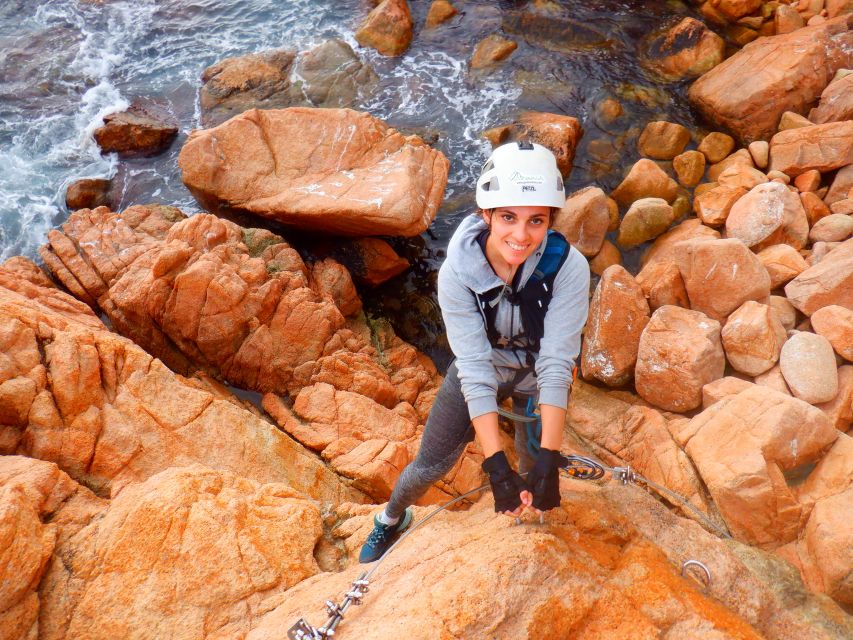
The sea is your climbing partner. This three-hour outing follows the Via Ferrata Cala del Molí along the Costa Brava cliffs, giving you a rare chance to climb above the Mediterranean rather than simply admire it from the beach. I like the small groups, limited to eight people, and the calm support provided by certified guides such as Cristina, Miguel, and Ariana. The main consideration is physical: this is not a gentle coastal walk, and people afraid of heights or with a low level of fitness should choose another activity.
I also like that the $41 price includes equipment, insurance, photos, and refreshments at the end. The course has a sensible halfway exit before its hardest sections, which lets you judge your energy as you go. Still, arrive early. The meeting point is uphill from the port, and parking below can mean a long climb up stairs before the activity even begins.
Key points to know before you climb
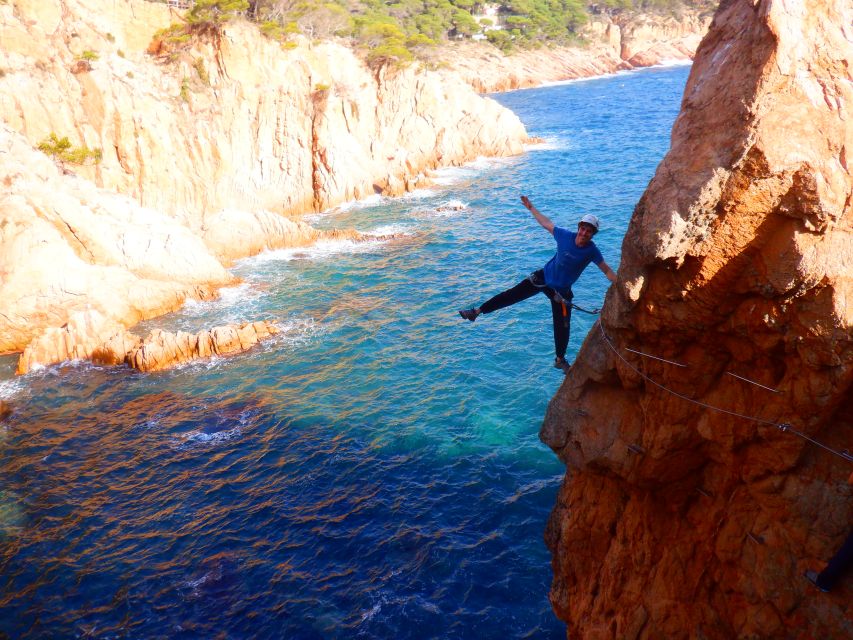
- The route runs directly above the Mediterranean: Cala del Molí is described as the only via ferrata in the world that follows the sea.
- Eight people is the maximum group size: That gives the guide room to help with challenging sections and keep the climb moving.
- The second section closes from December 1 to June 1: During that period, you complete only the first part of the route.
- The $41 fee covers the useful extras: Your guide, climbing equipment, insurance, photos, and end-of-climb refreshments are included.
- The climb is challenging but not all-or-nothing: You can leave at the midpoint before the more demanding section.
- The activity suits active adults and older children: Participants must be at least 10, weigh between 40 and 130 kilograms, and be comfortable with heights.
Why Cala del Molí feels different from a normal via ferrata
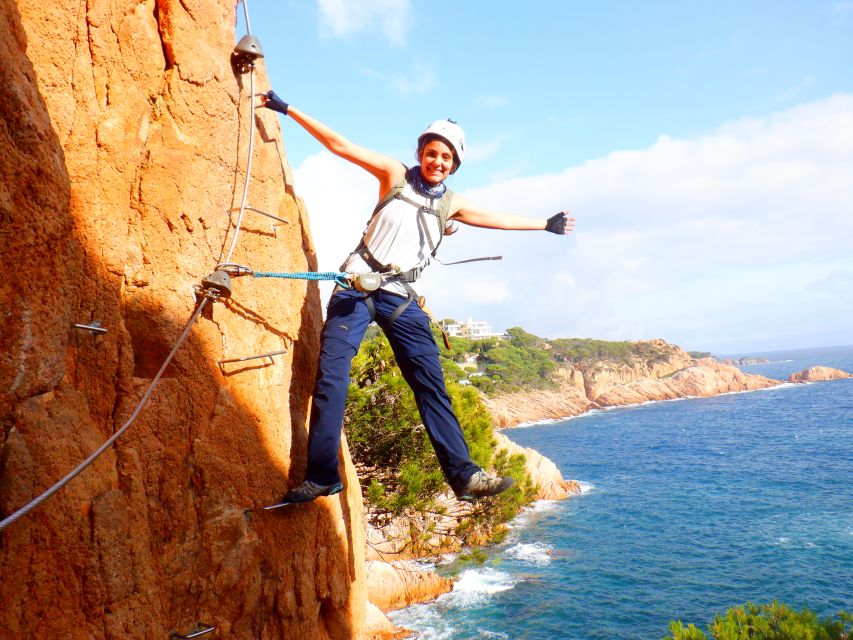
A via ferrata uses fixed cables, metal footholds, ladders, and climbing aids to let you move across rock with safety equipment attached. You still need to pull, step, balance, and manage your body, but you are not relying on bare rock alone.
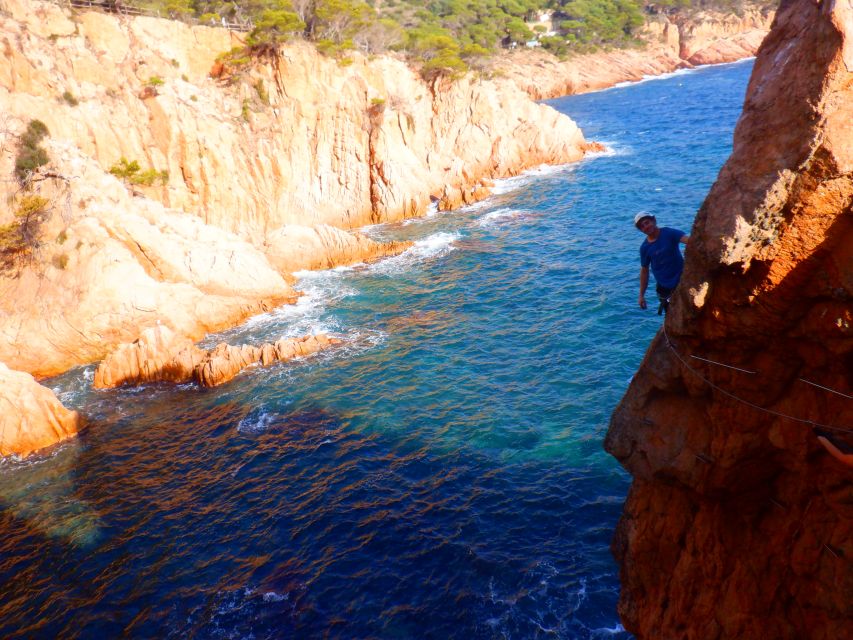
Cala del Molí adds a major twist: the route runs along cliffs above the sea. Instead of looking down into a valley or across a mountain range, you look toward the horizon and the Mediterranean. The setting changes the mood of the climb. You get the physical work of a mountain route with the open views and salt-air feel of the Costa Brava.
The activity is based in Sant Feliu de Guíxols, a coastal town in Catalonia. The advertised route is presented as the only via ferrata in the world above the sea, so this is not simply a standard climbing session moved to a shoreline. The cliffs and water are the central attraction.
I would not book this solely for the phrase only one in the world. The real value is more practical: you get a properly equipped climb, a trained guide, a small group, and a route with memorable views. The claim makes the setting unusual, but the quality of the experience depends just as much on your comfort with exposure and physical effort.
More Via Ferrata Routes in Spain
- Gran Canaria: Guided Via Ferrata Excursion
★ 4.9 · 198 reviews - Via Ferrata in Gran Canaria. Vertical adventure park. Small groups
★ 5.0 · 183 reviews - Gran Canaria: Cliff Climbing Via Ferrata Trip by Maspalomas
★ 4.9 · 177 reviews
Meeting at Calle Sicilia and getting ready
You meet the guide at Calle Sicilia number 50. Transportation to the activity is not included, so you must arrange your own way there. If you are driving, allow extra time to park at the port and walk uphill. One participant specifically noted the long, steep approach with many stairs, which is an important detail if you are arriving close to the start time.
Punctuality matters here more than it does on a casual walking tour. If you are late to the meeting point, the activity is considered completed. I would aim to arrive early enough to find parking, climb the stairs, use the restroom if needed, and meet the guide without rushing.
Wear comfortable clothes, hiking pants, outdoor clothing, and sports shoes. Bring water and a small daypack. Bare feet are not allowed, and alcohol and drugs are prohibited. The gear is supplied, so you do not need to bring your own climbing equipment.
The guide handles the equipment and safety briefing before you start. The multilingual team works in English, Italian, French, and Spanish. That language range is useful in a small group, especially when the guide needs to explain how to move through a tricky section or remain attached to the safety cable.
The first section: a real climb with sea views
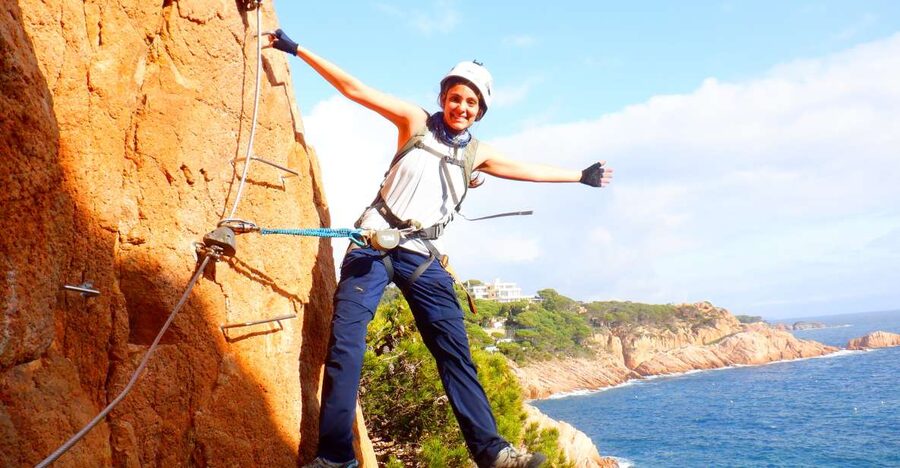
The first part introduces you to the route and the basic rhythm of a via ferrata. You follow the cliff, using the installed cable and metal aids while the guide watches the group. Expect some exertion, exposure, and moments that require concentration rather than speed.
The early section is also where you can work out how your body reacts to the height. Some people find the setting exciting right away. Others need time to trust their feet and equipment. The guides are there to provide encouragement and practical help, and several named guides, including Cristina and Miguel, have been praised for making people feel safe without turning the climb into a rushed exercise.
The views are a major reward. You see the Mediterranean horizon from a position that a normal seaside path cannot provide. The cliffs, rock, and water make strong holiday photographs, and the guide takes pictures during the activity. Those photos are included, with no extra charge reported by participants.
Do not mistake the attractive setting for an easy route. A participant who had completed via ferratas in Mürren and Telluride described this one as the most physically challenging of the three. That comparison is useful: previous experience does not automatically make the climb effortless.
At the same time, the first part can suit people with little or no via ferrata experience, provided they are fit enough and not afraid of heights. One participant described Phase 1 as enjoyable with little experience. The important difference is between being new to the sport and being uncomfortable with exposure. A beginner can learn the technique. Someone who strongly dislikes heights may find the setting difficult from the first cable.
The midpoint decision before the harder section
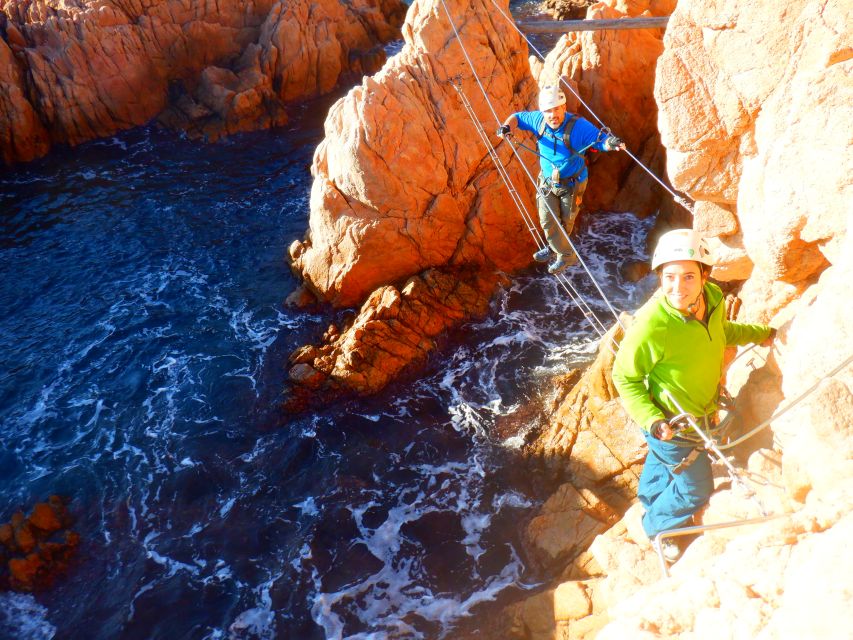
One of the best practical features is the chance to exit halfway through before the hardest parts. That gives you a useful choice rather than forcing you to finish the full route after your energy or confidence drops.
I like this arrangement for mixed groups. One person may want the full challenge while another prefers to stop after enjoying the first section and the views. A family or group of friends does not have to make everyone follow the same level of difficulty, although the guide will manage the group according to the activity’s rules.
The midpoint is also a sensible place to assess conditions. Ask yourself whether your arms and legs still feel strong, whether you are comfortable with the height, and whether you can listen carefully to the guide. If the answer is no, stopping is not failure. You have still completed the sea-cliff portion and experienced the defining feature of Cala del Molí.
The difficulty becomes more important in warmer weather. A July participant described the outing as very hot, even while praising the scenery and guide. Bring enough water, wear suitable outdoor clothing, and remember that a coastal location does not guarantee a cool climb.
Same rush, a different way to get it:
- Barcelona Costa Brava Kayak, Snorkel & Cliff Jump Day Tour
★ 5.0 · 3,872 reviews - Barcelona: Costa Brava Kayak, Snorkel & Cliff Jump & Lunch
★ 4.9 · 2,391 reviews - Mallorca: Quad Bike Tour, Snorkeling, and Cliff Jumping
★ 4.8 · 2,294 reviews - From Marbella: Guadalmina River Guided Canyoning Adventure
★ 4.9 · 1,486 reviews
The second section: more effort, more commitment
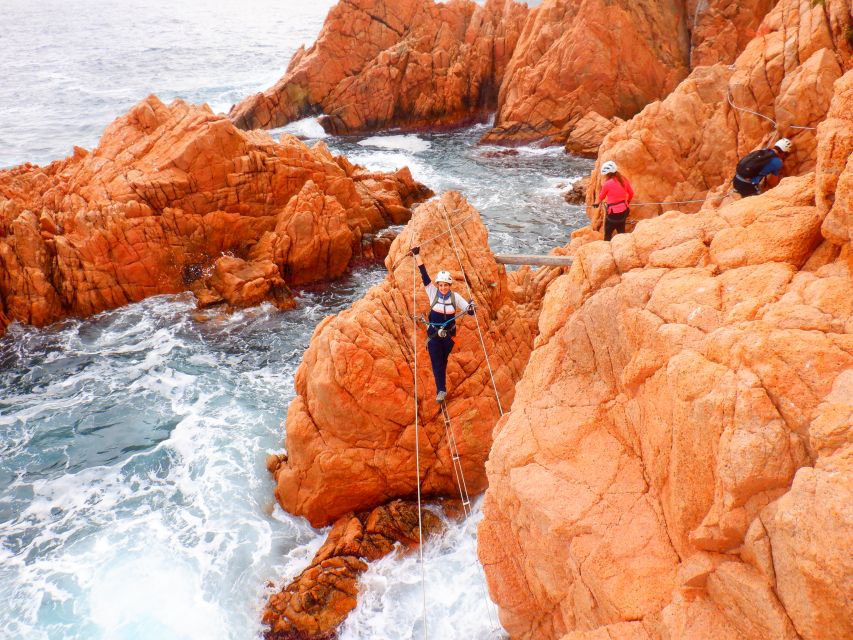
If you continue, the second part provides the bigger test. The available information does not specify every obstacle, so I would not promise a particular ladder, bridge, or overhang. What is clear is that this section is harder, and the midpoint gives you a chance to avoid it.
You should expect to spend more energy and pay close attention to foot placement and the cable system. The guide remains close enough to offer support, but you still need to do the physical work. This is why the activity is not suitable for people with low fitness, mobility impairments, or a strong fear of heights.
The maximum weight is 130 kilograms, and the minimum is 40 kilograms. Children under 10 cannot join. Pregnant women, wheelchair users, and people with mobility impairments should not book this climb.
Seasonal timing changes the route. The second part is closed from December 1 through June 1, so during that period you complete only the first section. This is not a minor scheduling detail. If you want the full challenge, check the date carefully before paying. If you prefer a shorter outing, the winter and spring version may suit you well, but you should understand exactly what is open.
Guides make the difference on exposed sections
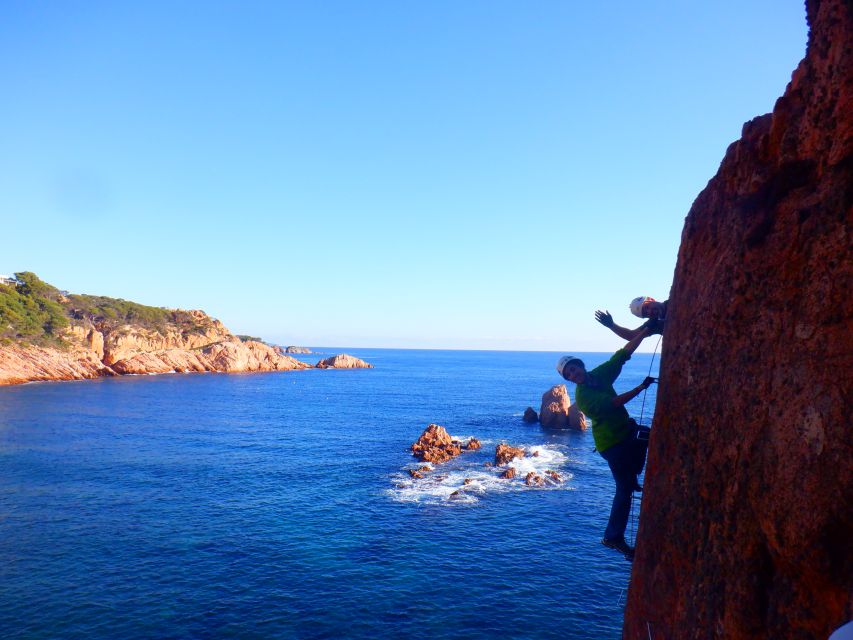
A via ferrata guide does more than point out the route. The guide helps you understand the equipment, keeps the group together, watches for hesitation, and offers encouragement when your arms are tired or the next move feels awkward.
That support appears to be one of the strongest parts of this activity. Cristina is repeatedly praised for patience, motivation, and clear help at difficult points. Miguel is described as friendly, funny, and attentive. Ariana and Kim also received strong praise for making the climb safe and enjoyable. The operation sometimes uses two guides for eight participants, which gives the group more individual attention.
That matters because confidence can change quickly on a cliff. A good guide does not erase the height or the effort, but can help you handle both. Several participants described the activity as scary while still feeling safe, which is the right balance for this sort of adventure.
The multilingual instruction is another practical plus. English, Italian, French, and Spanish are available. If your group includes different nationalities, the guide can explain key points in more than one language, though you should still be ready to pay close attention to demonstrations.
Photos, insurance, and the $41 value
At $41 per person, this is a strong value if you would otherwise need to rent gear, pay for photos, or arrange separate insurance. The price includes a certified guide, equipment, insurance, photos, and refreshments at the end.
The photo service is particularly useful. You cannot easily take good pictures of yourself while managing a harness and moving along a cliff. The guide can capture the setting and your progress without asking you to risk handling a phone at an awkward point.
The price does not include transportation, so add that cost and time to your plans. You may also need to account for parking and the uphill walk to Calle Sicilia. Those are not deal breakers, but they are part of the real cost and effort.
For a three-hour activity, $41 is reasonable. You are paying for instruction and route access as well as the equipment. The small group improves the value because the guide has time to help individual participants. I would be less enthusiastic if the group were large or if photos and insurance cost extra, but those inclusions make the fee easier to justify.
Ending with refreshments beside the coast
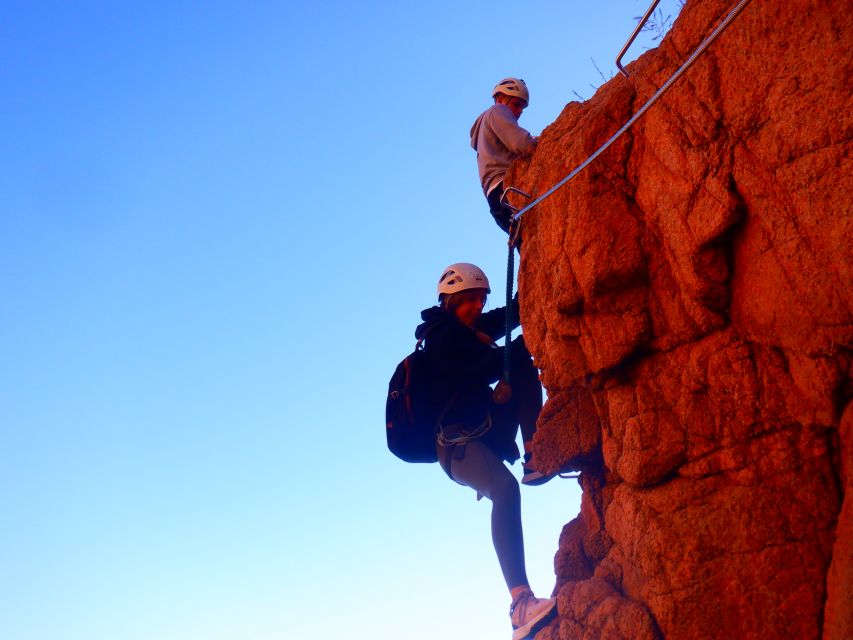
The activity ends with refreshments in an idyllic setting. This is a small touch, but it gives the outing a proper finish after the physical work. You can come down from the effort, look back at the cliffs, and enjoy the fact that the climb is complete.
Do not expect this final stop to replace lunch or provide a full meal. The information only promises refreshments. Treat it as a pleasant recovery moment, not a dining experience.
The ending also helps separate this from a simple equipment rental. You are not just handed a harness and sent toward the rocks. The activity includes a guide-led experience, photographs, and a little time to relax afterward.
Who should book this climb?
I would recommend Cala del Molí to you if you:
- Enjoy active outdoor activities with a clear element of excitement
- Have a reasonable level of fitness
- Are comfortable with heights or willing to manage some nervousness
- Want a distinctive Costa Brava experience beyond beaches and town streets
- Like small groups and direct support from a guide
- Are happy to follow safety instructions and arrive on time
It can also work for families with older children, as long as every participant is at least 10 and meets the fitness, weight, and height-comfort requirements. A parent should not book on the assumption that the route is easy because it is beside the sea.
I would skip it if you have mobility limitations, are pregnant, use a wheelchair, weigh outside the stated range, or have a low level of fitness. If you are simply unsure about the height, know that the experience can feel scary even when the equipment and guide make it safe. The midpoint exit helps, but it does not remove the exposure.
Practical details before you reserve
The activity lasts three hours, with start times based on availability. Check the exact time and plan to reach Calle Sicilia number 50 early.
You can cancel up to 24 hours in advance for a full refund, and you can reserve now and pay later. Those terms are useful if your Costa Brava plans are still changing, but they do not make lateness acceptable. Missing the meeting time means the activity is treated as completed.
The experience provider is Guies Arania. The group is limited to eight participants, and instruction is offered in English, Italian, French, and Spanish.
FAQ
How long does the Cala del Molí via ferrata activity last?
The activity lasts three hours.
Where is the meeting point?
Meet the guide at Calle Sicilia number 50 in Sant Feliu de Guíxols.
Is transportation included?
No. You must arrange your own transportation to the meeting point.
What is included in the price?
The $41 price includes a certified guide, climbing equipment, insurance, photos, and refreshments at the end.
What should I bring?
Bring water, comfortable clothes, sports shoes, outdoor clothing, a daypack, and hiking pants.
Can children join the activity?
Children must be at least 10 years old to participate.
Is the full via ferrata open all year?
No. The second part is closed from December 1 to June 1. During that period, you complete only the first part.
Can I stop before the most difficult section?
Yes. There is an exit halfway through before the hardest parts of the route.
Should you book it?
Book this if you want a genuine physical adventure with sea views, not a passive sightseeing stop. The combination of cliff climbing, a small group, certified guides, included photos, and a $41 price gives the experience real value.
The key question is your comfort with heights and effort. If you are reasonably fit and prepared for a challenge, Cala del Molí offers a memorable way to see the Costa Brava from an unusual angle. Arrive early, bring water, check the seasonal route, and be honest about your limits. If you do that, this is one of the strongest active excursions in Sant Feliu de Guíxols.
More Rock Climbing in Spain
- El Chorro: Climb Via Ferrata at Caminito del Rey
★ 5.0 · 22 reviews - Alicante: Redovan Via Ferrata, family Climb
★ 4.9 · 16 reviews - Alicante: Via Ferrata del Ponoig Guided Trek and Climb
★ 4.9 · 8 reviews - From Granada: Climb Zafarraya’s ‘Via Ferrata John Hogbin’
★ 5.0 · 6 reviews
Just added around Spain
- Redován: Family-friendly K2 via ferrata in a natural setting with rappelling★ 5.0 · 3 reviews
- Ordesa, Broto : Via Ferrata K3. Climbing Experience★ 5.0 · 4 reviews
- Murillo de Gállego Huesca: Bungee jumping over the river★ 5.0 · 3 reviews
- Marxuquera: La Falconera Via Ferrata★ 4.9 · 9 reviews
- Marbella: Beginner Canyoning Tour with Safety Equipment★ 4.9 · 82 reviews
- Mallorca: Visit Palma Speedboat adrenaline & snorkelling★ 4.9 · 48 reviews
- Mallorca: coasteering South★ 4.5 · 14 reviews
- Mallorca: 4-Hour Cliff Jumping Adventure★ 4.9 · 56 reviews
Via Ferrata Climbing, compared.
Banff: Mount Norquay 2.5 or 4-Hour Guided Via Ferrata Climb
Read our review →
Small-Group Guided Via Ferrata Climbing with Banff’s Best Views
Read our review →
Via Ferrata in Gran Canaria. Vertical adventure park. Small groups
Read our review →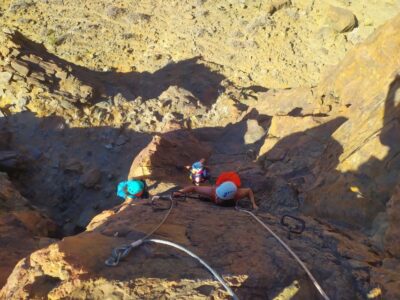
Browse the lists this tour appears in