
Review · CANADA
Squamish: Via Ferrata Climbing Adventure
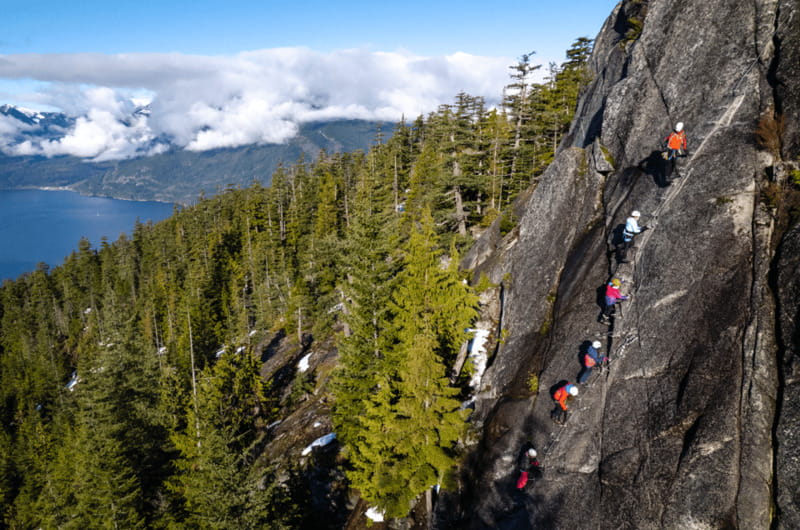
The mountain gives you a hand. Squamish’s Via Ferrata combines the thrill of rock climbing with a fixed steel cable, rungs, bridges, and a catwalk high above Howe Sound. I like the excellent views of Sky Pilot Mountain, and I like the calm, careful guidance that helps first-timers feel secure. The main consideration is that the 90-minute climb still requires confidence with heights and steady footing.
I also like the choice of a private or small-group outing, since that lets you pick between more personal attention and a livelier shared experience. Guides such as Victor, Fraser, Emile, and Victoria have been praised for clear instruction and a reassuring manner. The route may feel too easy for experienced climbers, so strong climbers should keep expectations in check.
Key points about the Squamish Via Ferrata
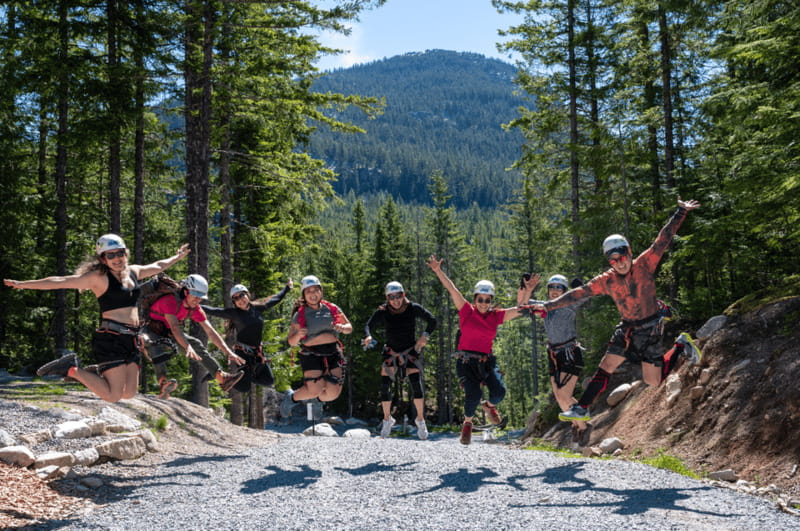
- You stay clipped to the cable: Two lanyards let you remain connected as you move along the route.
- The views arrive early: The flight deck opens onto Howe Sound and snowcapped Sky Pilot Mountain.
- The route mixes several challenges: Expect steel rungs, bridges, a catwalk, and glacier-worn granite.
- It suits beginners with confidence: No previous Via Ferrata experience is required, but you need to be comfortable with heights.
- The gondola ticket is optional: Pick an outing that includes the scenic ride, or arrange your own access to the summit.
- The price reflects a guided technical activity: At $94 per person, the cost includes instruction, equipment, and the climbing tour, with the gondola included only in selected options.
What this Squamish climbing adventure actually is
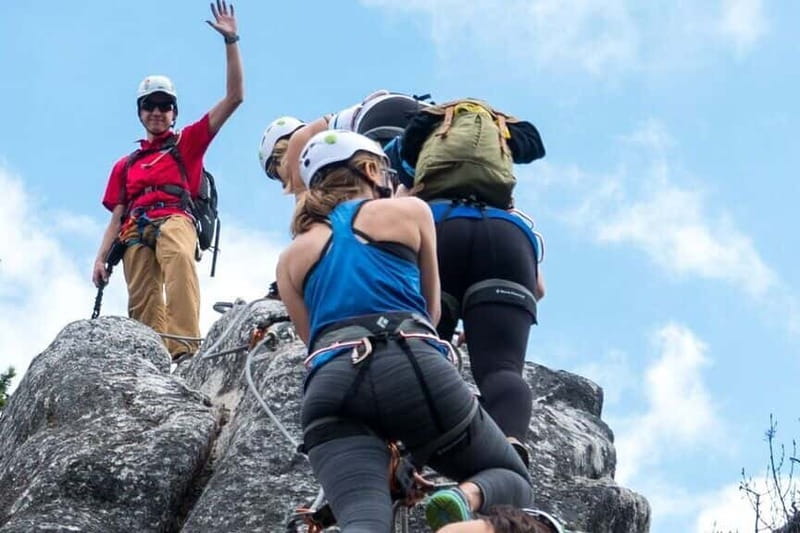
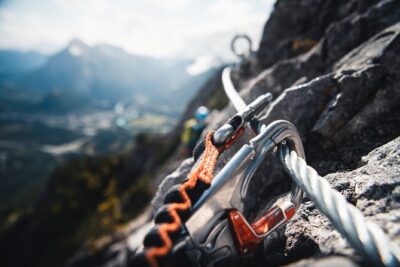
A Via Ferrata, Italian for iron way, uses fixed cables and metal footholds to create a protected climbing route on rock. You are not free-climbing the mountain. Instead, you wear a harness with two lanyards and keep them clipped to the cable as you progress.
That setup makes this a good introduction to climbing above the ground. You still need to pull yourself onto rungs, cross bridges, and move across granite, but the route has a built-in safety system. Your guide explains how to use the gear before the more exposed parts begin.
I like this format because it gives you a real sense of movement without asking you to bring technical climbing skills. You are actively climbing, rather than simply riding to a viewpoint, but the guide and cable system provide structure.
The experience is listed for ages eight and up. That makes it suitable for some families, though age alone does not tell you if a child will enjoy it. Your child should be able to follow safety instructions, walk on uneven ground, and stay calm around heights.
More Via Ferrata Routes in Canada
- Banff: Mount Norquay 2.5 or 4-Hour Guided Via Ferrata Climb
★ 4.9 · 305 reviews - Small-Group Guided Via Ferrata Climbing with Banff’s Best Views
★ 5.0 · 195 reviews - Whistler Via Ferrata Tour
★ 5.0 · 133 reviews
Starting at the Sea to Sky Gondola summit
The meeting point is the Summit Shelter at the top of the Sea to Sky Gondola, near the playground. Pay close attention to the ticket option you choose. Some bookings include the gondola ride, while others do not, and the listed Whistler Mountain access fee is not included.
After meeting your English-speaking guide, you receive a helmet, harness, and lanyards. This is also the point to ask questions and settle any nerves. Guides are central to the experience, and the strongest feedback focuses on their balance of safety, encouragement, and space to try things yourself.
Victor was praised for helping nervous climbers without hovering over more experienced people. Emile was described as friendly and calming, with useful information during the walk to the climbing section. Fraser and Victoria were also singled out for responsible, reassuring guidance.
That matters because the activity works best when the guide reads the group well. You want clear instructions before a tricky section, but you do not want someone grabbing your attention every second. The best guides appear to give you room while keeping safety first.
The forest walk to the flight deck
The route begins along the Sea to Summit Trail through old-growth forest. This approach is part of the experience, but it is not the main event. You are walking to the start of the protected climbing section, so wear proper hiking shoes and expect uneven ground.
The forest also gives you time to get comfortable with your equipment. Your helmet, harness, and lanyards may feel slightly awkward at first. That is normal. Use the approach to learn where the gear sits and to listen closely to your guide’s instructions.
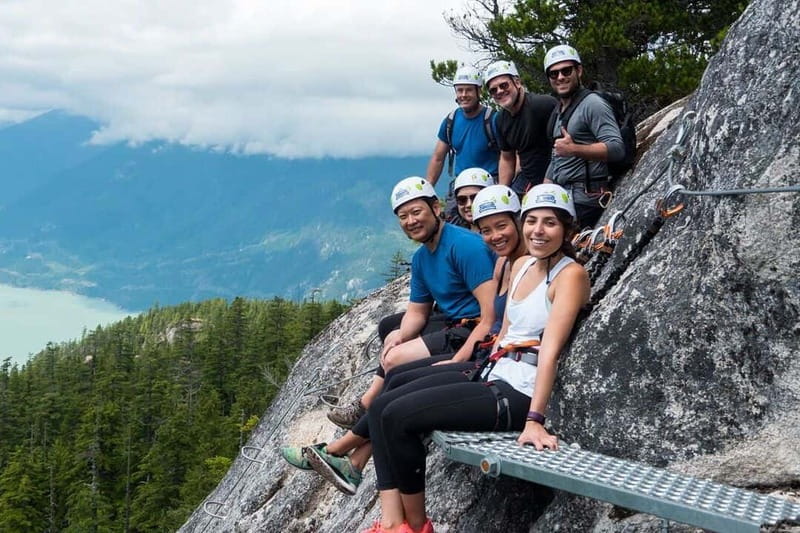
Eventually, the trees open at the flight deck. This is where the scenery changes quickly. Howe Sound spreads below, and Sky Pilot Mountain rises across the view with snow on its upper slopes. It is a strong reward before the technical route begins.
Bring sunglasses and sunscreen, even if the forest feels shaded at the start. You are exposed once the route reaches the rock, and a camera is useful if you can carry it safely. Large bags and luggage are not allowed, so keep your personal items small and manageable.
Clipping in above Howe Sound
At the flight deck, your guide clips you into the fixed safety cable. The two-leash system is an important detail. As you move from one section to the next, you keep one lanyard attached while transferring the other, helping you stay connected throughout the route.
Your guide should explain this process before you begin. Follow the instructions carefully and do not rush the transfers. The system is designed to make the climb safer, but it only works properly when you use it as instructed.
From here, the route becomes more physical. You hold steel rungs, place your feet on fixed footholds, and work your way across the rock. Some people find this exciting right away. Others need a few minutes to trust the equipment and their own balance.
That is where confidence matters more than climbing experience. The route is family-friendly in design, but it is not a passive sightseeing walk. If heights make you freeze, or if you are uncomfortable using your arms and legs on rock, this may not be the right activity.
Same rush, a different way to get it:
- Niagara Falls, ON: Jet Boat Tour on Niagara River
★ 4.8 · 1,128 reviews - Niagara Falls Canada Open-Top (Wet) Jet Boat Tour
★ 5.0 · 1,000 reviews - Montreal: Jet Boating on the Lachine Rapids
★ 4.9 · 360 reviews - Canmore Caving Adventure Tour
★ 5.0 · 356 reviews
Bridges, catwalk, and glacier-worn granite
The route changes character several times. Bridges add a small dose of sway and exposure. The catwalk gives you a narrow section to cross, while the granite requires you to use the fixed rungs and cable in a more direct climbing rhythm.
These changes keep the 90-minute outing from feeling repetitive. You are not simply walking beside a railing. Each section asks you to pay attention to your hands, feet, and cable connection.
The glacier-worn granite is especially important to the feel of the climb. The rock is not just scenery around you. It becomes the surface you climb across, giving the outing a more genuine mountaineering flavor than a standard viewpoint walk.
At the same time, expectations matter. One participant found the route too easy. If you already climb regularly or have tackled more demanding Via Ferrata routes, you may want a stronger physical challenge. For a first Via Ferrata, though, the moderate level can be a benefit rather than a flaw.
You can focus on learning the system, enjoying the views, and building confidence instead of struggling with a route beyond your ability.
Arriving at the Sea to Sky Summit Lodge
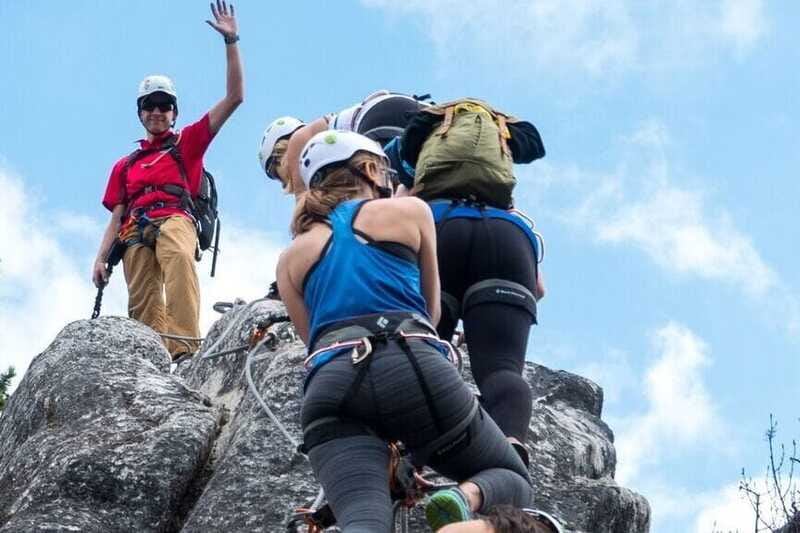
The Via Ferrata finishes at the Sea to Sky Summit Lodge. After the final climbing sections, you can relax on the sun deck before returning to the starting point.
This ending gives the activity a useful rhythm. You get an active middle section, then a chance to slow down and enjoy the setting. The lodge also makes the outing feel like more than a quick technical exercise, especially if you have chosen the gondola option and plan to spend additional time at the summit.
The duration is 90 minutes, so do not expect a full-day mountain outing. It is long enough to feel worthwhile, but short enough to fit into a wider Squamish plan. You might pair it with time at the summit, a meal, or another activity in the area, but allow enough time for preparation and the walk to the route.
The return to the starting point is part of the guided outing. Exact timing can vary with group pace, so avoid booking another activity too tightly against it.
Is $94 a fair price?
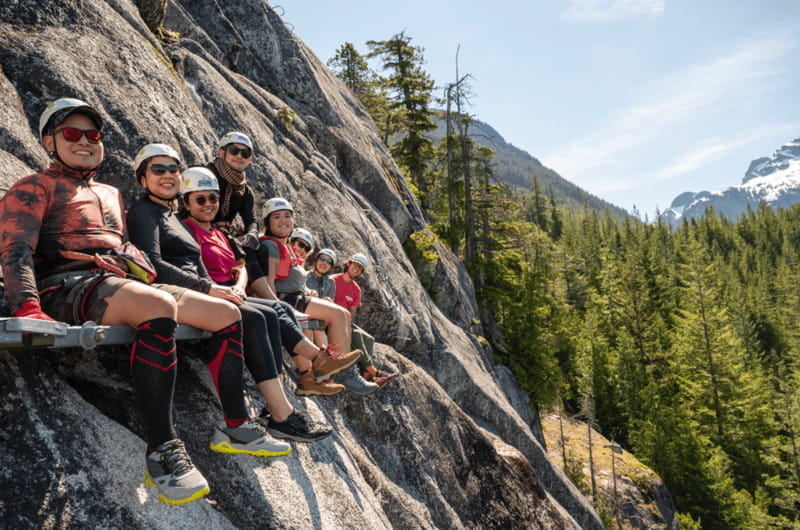
At $94 per person, the value depends on what you want from a mountain experience. The price includes the guided climbing tour, helmet, harness, and lanyards. You are paying for instruction, route management, and the chance to use a fixed climbing system without bringing your own equipment.
That is reasonable for a first-time technical adventure. A self-guided viewpoint visit would cost less, but it would not give you the same physical challenge or instruction. The guide is not an extra decoration here. The safety briefing, equipment setup, and supervision are core parts of the activity.
Check the booking choice carefully because the gondola ticket is included only with selected options. If your option excludes it, you need to account for the ride separately. The listed Whistler Mountain access fee is also not included.
A private outing may offer better value if you are traveling with family or a small group and want the guide’s attention focused on you. A shared small group may suit you better if you enjoy meeting other climbers and want to keep the cost controlled.
Who should book this activity?
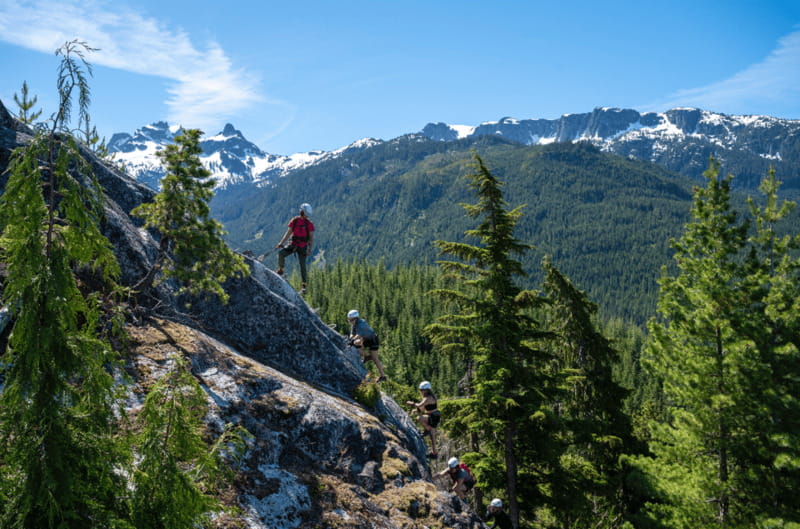
I would recommend it most strongly to first-time climbers, active families with children aged eight and older, and anyone who wants a short mountain adventure with striking views. You do not need advanced climbing experience, but you do need confidence and reasonable mobility.
It may also suit a nervous beginner who wants a guide who can offer calm support. The strongest guide feedback centers on making people feel safe without making the experience feel slow or overprotected.
You should reconsider it if you have a serious mobility impairment, use a wheelchair or mobility scooter, or weigh more than 350 pounds, or 159 kilograms. The activity is also not suitable for visually impaired participants according to the supplied restrictions.
The booking information lists cruise ship guests, vegetarians, and vegans among those for whom the tour is not suitable. That is an unusual restriction for an activity with no stated meal component, so check the provider’s current requirements before booking if it affects you.
You also need to be able to drive a manual transmission, according to the restrictions provided. No explanation is given, so confirm this point directly if it applies to your plans.
What to wear and what to leave behind
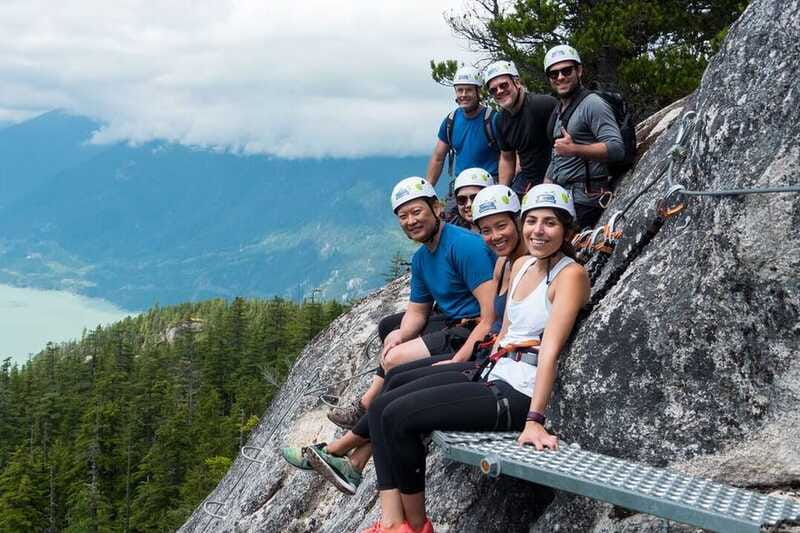
Wear hiking shoes with a secure fit. Sandals, flip flops, high heels, and bare feet are not allowed. Warm clothing is wise because conditions at the summit can feel cooler than they do below.
Rain gear is also important. The tour operates in rain or shine, so a wet forecast does not automatically cancel the outing. Lightning is the exception: if strikes occur within 60 kilometers of the mountain, the tour will be cancelled.
Bring sunglasses, sunscreen, a camera, food, and drinks. Keep everything compact because large bags and luggage are prohibited. Baby strollers, baby carriages, surfboards, skateboards, skates, fireworks, explosive substances, and electric wheelchairs are also not permitted.
Alcohol and drugs are prohibited, as is joining the tour while intoxicated. The restrictions even list red wine specifically, so do not plan on carrying a bottle to the summit.
Booking flexibility and group choices
You can choose a private or small-group format. A private tour makes sense if one person in your party is nervous, or if your group wants a more relaxed pace. A small group may feel more social and can be a good match if you are comfortable sharing the guide’s attention.
The activity is offered in English. You can cancel up to 24 hours before the scheduled start for a full refund, and the reserve-now, pay-later option helps keep your plans flexible.
The weather policy is worth remembering. Rain does not stop the tour, but lightning close to the mountain does. Bring suitable clothing and keep a little flexibility in your schedule if the forecast looks unsettled.
Should you book the Squamish Via Ferrata?
Book it if you want to do more than look at Howe Sound from a platform. The fixed cable makes the climb approachable, while the bridges, catwalk, steel rungs, and granite provide enough action to feel like a real adventure.
I especially like it for a first Via Ferrata. The route is short, the equipment is supplied, and guides such as Victor, Fraser, Emile, and Victoria have shown the calm style that helps beginners settle in. Experienced climbers should know that the route may feel easy, but that can be exactly right for a first attempt.
Choose the gondola-inclusive option if you want the simplest arrival at the summit. Pack warm layers, hiking shoes, rain gear, and only a small bag. If you can handle heights, follow instructions, and want a memorable view of Howe Sound from the rock itself, this is a strong use of 90 minutes.
FAQ
How long does the Via Ferrata tour last?
The activity lasts 90 minutes. This includes the guided climbing experience from the summit meeting point and the route to the Sea to Sky Summit Lodge.
Where do I meet the guide?
Meet at the Summit Shelter at the top of the Sea to Sky Gondola, near the playground.
Is the gondola ticket included?
The gondola ticket is included only when you choose an option that specifically lists it. Other options do not include the ticket, so check the booking choice carefully.
What equipment is provided?
The tour provides a helmet, harness, and lanyards. The climbing tour and guide are also included.
Do I need previous climbing experience?
Previous Via Ferrata or climbing experience is not stated as a requirement. The activity is suitable for beginners aged eight and older, but you need confidence with heights and the ability to follow safety instructions.
What age is the tour suitable for?
The tour is suitable for people aged eight and up. Children under eight cannot join.
What should I wear and bring?
Wear hiking shoes, warm clothing, and suitable rain gear. You can also bring sunglasses, sunscreen, a camera, food, and drinks. Large bags, luggage, sandals, flip flops, and high heels are not allowed.
Does the tour operate in bad weather?
The tour operates rain or shine. It will be cancelled if lightning strikes within 60 kilometers of the mountain.
Can I cancel the booking?
You can cancel up to 24 hours in advance for a full refund. A reserve-now, pay-later option is also available.
More Rock Climbing in Canada
- Nido de los Aguiluchos, Monterrey: Hiking + Rock Climbing + 3 Rappels
★ 5.0 · 713 reviews - Sant Feliu de Guixols: Climb Via Ferrata Cala del Molí
★ 5.0 · 253 reviews - Sagres: Coasteering – Swimming, Cliff Jump & Rock Climbing
★ 4.9 · 226 reviews - Gran Canaria: Cliff Climbing Via Ferrata Trip by Maspalomas
★ 4.9 · 177 reviews
Just added around Canada
- Whistler: Whistler Mountain Via Ferrata Climbing Experience★ 5.0 · 22 reviews
- Tyroparc: Via Ferrata Guided Tour and Zipline Combo Ticket★ 5.0 · 9 reviews
- Half Day Canyoning Experience in Revelstoke★ 5.0 · 16 reviews
- Mont-Catherine Ziplines and Via Ferrata★ 4.0 · 4 reviews
- Via Ferrata Mont-Catherine★ 4.0 · 4 reviews
- Extreme Whitewater Rafting on Kicking Horse River★ 5.0 · 77 reviews
- Beartooth Canyon- Half Day Canyoning Tour – Golden, BC★ 5.0 · 11 reviews
- Adventure Canyoning Kelowna★ 5.0 · 18 reviews
Via Ferrata Climbing, compared.
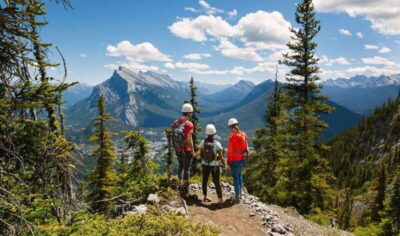
Banff: Mount Norquay 2.5 or 4-Hour Guided Via Ferrata Climb
Read our review →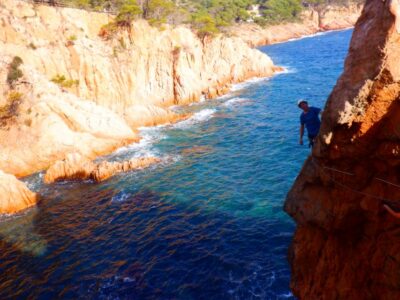
Sant Feliu de Guixols: Climb Via Ferrata Cala del Molí
Read our review →
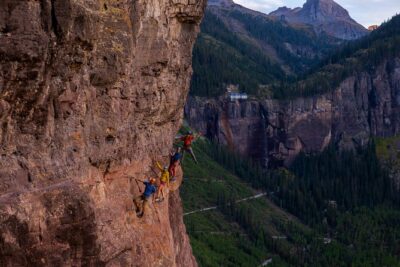
Small-Group Guided Via Ferrata Climbing with Banff’s Best Views
Read our review →
Via Ferrata in Gran Canaria. Vertical adventure park. Small groups
Read our review →Browse the lists this tour appears in