
Review · CANADA
Whistler Via Ferrata Tour
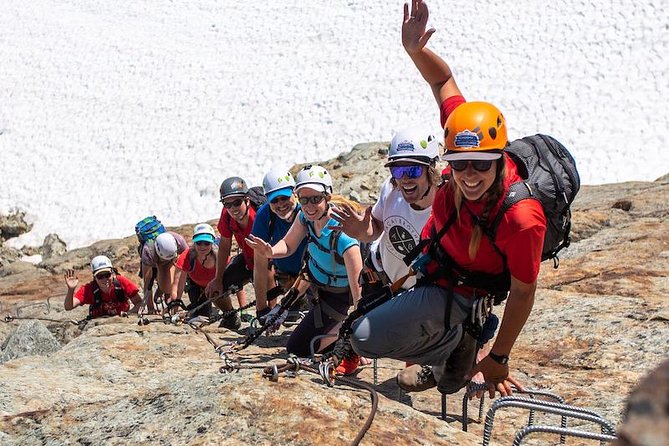
Hold on to the mountain, not your nerves. Whistler’s Via Ferrata gives you a guided route up the side of Whistler Mountain, using fixed cables, metal rungs, and footholds above the glacier. No climbing experience is required, but you do need steady legs, a reasonable fitness level, and a willingness to work for the views.
I like the small groups of up to six people, which gives your guide room to help with technique and nerves. I also like the mix of hiking, scrambling, snow, and actual climbing, rather than four straight hours on a ladder. The main drawback is that the climb can feel harder than the friendly beginner label suggests, especially for shorter people, anyone uneasy with heights, or anyone unused to mountain exertion.
This is a memorable Whistler activity for people who want more than a gondola ride. Guides such as Maya, Jeremy, Victor, Rob, Emile, Nicolas, and Erica have earned praise for patience, safety, encouragement, and local mountain knowledge. Bring gloves, water, snacks, sunscreen, and a rain jacket. You may be walking on snow in July, and the weather can change quickly.
Key points to know before you go
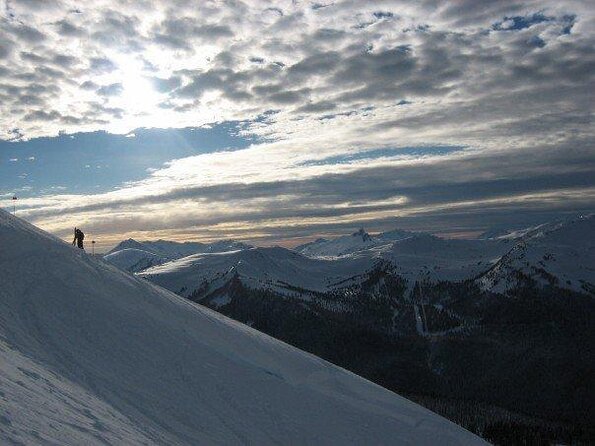
- You hike across a glacier base before climbing: The approach takes about 30 to 45 minutes and helps you get used to the altitude and terrain.
- The route is secured but still physical: You clip into fixed safety cables and climb metal rungs with your hands and feet.
- Small groups make a real difference: A maximum of six people allows for close guidance and a calmer pace.
- The gondola ticket costs extra: You need a Peak 2 Peak Gondola ticket, so add that expense to the tour price.
- Snow can remain in midsummer: Conditions have included snow in July and even a snowstorm, so dress for alpine weather rather than town weather.
- The morning start leaves more mountain time afterward: A 9:00 am departure gives you the afternoon to explore Whistler Mountain or continue toward Blackcomb.
What the $149.46 price really covers
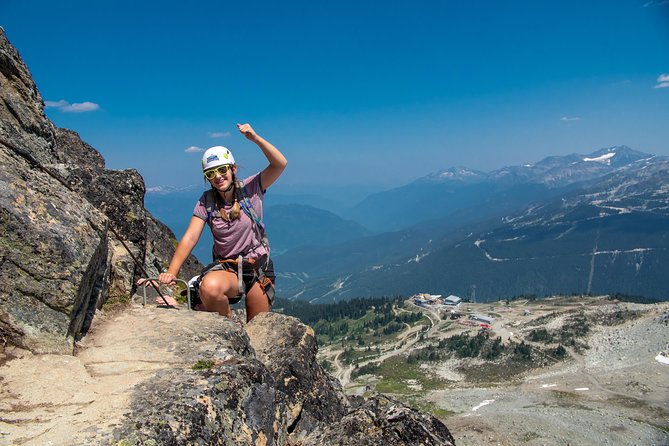
The tour costs $149.46 per person. That is not a bargain activity, but the price includes a professional local guide, helmet, harness, and the climbing and glacier equipment. Hiking boots are available if needed, which may help if your footwear is not suitable for the route.
The major extra cost is the required Peak 2 Peak Gondola ticket. Transportation to the meeting point is also not included, as are food, water, and a guide gratuity. The gondola requirement matters because it can catch people off guard. Contact Mountain Skills Academy & Adventures about purchasing the lift ticket, and handle that detail before your start time so you are not sorting it out while the group waits.
I see the price as fair for a specialized alpine activity with a six-person limit and a guide handling the safety system. You are paying for more than equipment. The guide explains how to use the cable and rungs, manages the group on exposed sections, and helps you keep moving if a steep section or a fear of heights slows you down.
The value is strongest if you want an active half-day and would not feel comfortable attempting a mountain route alone. It is weaker if you mainly want panoramic views with little effort. For that, the gondola ride and mountain trails are the better fit.
More Via Ferrata Routes in Canada
- Banff: Mount Norquay 2.5 or 4-Hour Guided Via Ferrata Climb
★ 4.9 · 305 reviews - Small-Group Guided Via Ferrata Climbing with Banff’s Best Views
★ 5.0 · 195 reviews - Squamish Via Ferrata Adventure
★ 5.0 · 71 reviews
Meeting at Garbo’s Cap Bar
The tour begins at Garbo’s Cap Bar, 4804 Glacier Lane, Whistler, British Columbia. The listed start time is 9:00 am, though morning and afternoon departures are available. Check your confirmed start time carefully, since the meeting point and lift arrangements are important parts of the schedule.
You will meet the guide, organize your equipment, and take the gondola toward Whistler Mountain. The guide fits you with a helmet and harness and explains the system before the climb begins. This is a good moment to speak up about fear of heights, limited mobility, or concerns about your reach. The small group format gives the guide a better chance to adjust the pace and position people thoughtfully.
The activity ends back at the meeting point. Transportation is not provided, so you need to arrange your own way to Garbo’s Cap Bar.
The 30 to 45 minute glacier approach
After leaving the gondola, you hike across the base of the glacier for roughly 30 to 45 minutes. This part is not just a warm-up walk. It gives you a first look at the snow and rock underfoot, the mountain above, and the valleys around Whistler.
The approach includes a small scrambling section before you reach the fixed cables. Scrambling means using both hands and feet over uneven ground. It is not described as technical climbing, but it is more involved than a regular path. Wear hiking shoes with a solid grip, and keep your small backpack light.
Snow may be present even in summer. One July outing included snow, and another took place during a snowstorm. That can make the route feel more alpine and dramatic, but it also means you should not dress only for a warm day in Whistler village.
The weather can also hide the views. On an overcast day, you may see less of the valleys and peaks, but the activity still works as a physical challenge. The fixed cable system and the guide’s support remain central to the experience even when the scenery disappears into cloud.
Clipping into the cable system
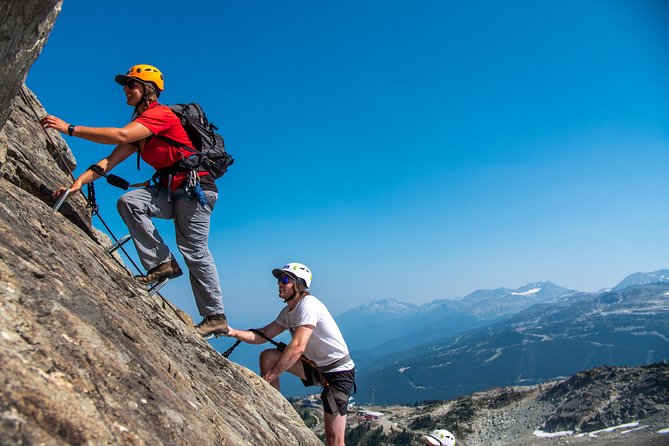
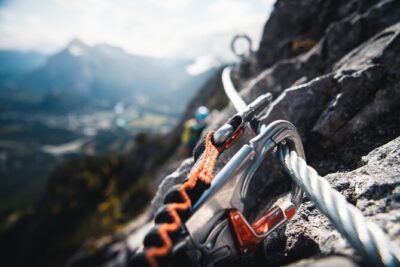
Once you reach the climbing route, you clip into the safety cables. The guide shows you how to move along the system and how to use the metal rungs set into the rock. You step up with your feet, pull with your hands, and continue from one foothold or handhold to the next.
The system reduces the risk of a long fall, but it does not turn the route into an easy walk. You still need to lift your body, reach for the next rung, and stay focused. The climb can be tiring in your arms and legs, especially on steeper sections.
This is where the route’s moderate rating needs a little context. Strong walkers who are comfortable with uneven ground may find it manageable. You do not need prior climbing experience, but you should be able to handle a sustained physical activity in mountain conditions.
Shorter climbers may find some transitions awkward. One 57-year-old participant found the reach between footholds challenging and felt the altitude added to the effort. That is useful information, not a warning to stay home. It simply means you should arrive prepared to work, take your time, and tell the guide when you need help.
A fear of heights also changes the experience. The height is real, and you will see open space below you. Still, the guides have helped people who nearly backed out at the gondola and then completed the route. Victor, Maya, Jeremy, Theresa, and others have been praised for staying patient and encouraging rather than rushing anyone.
Same rush, a different way to get it:
- Niagara Falls, ON: Jet Boat Tour on Niagara River
★ 4.8 · 1,128 reviews - Niagara Falls Canada Open-Top (Wet) Jet Boat Tour
★ 5.0 · 1,000 reviews - Montreal: Jet Boating on the Lachine Rapids
★ 4.9 · 360 reviews - Canmore Caving Adventure Tour
★ 5.0 · 356 reviews
The halfway break for water, snacks, and photos
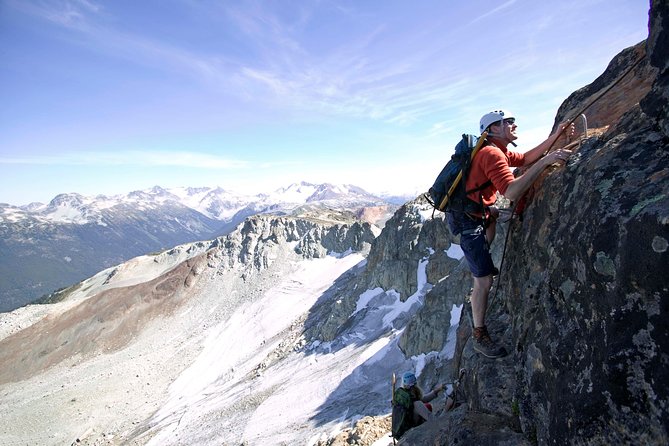
About halfway up, the group stops for water, snacks, and photographs. Bring your own supplies because food and water are not included. A small backpack is enough, but make sure it does not interfere with your harness or catch on the equipment.
This break has practical value. It lets you catch your breath, eat something, and take in the setting before the second half of the climb. It also gives you a natural point to check how your legs and arms feel. If you are already struggling badly, tell the guide rather than treating the break as a race checkpoint.
Bring sunscreen even on a cool day. Snow and rock can reflect strong sunlight, and the mountain weather may not feel hot while still leaving you exposed. Gloves are especially useful. One useful tip from the experience is that gloves help protect your hands from rough rungs and reduce the chance of calluses.
The upper climb and Whistler Mountain views
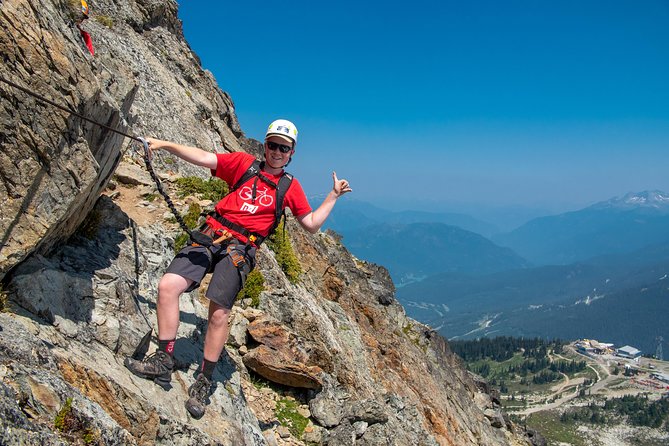
After the break, you continue up toward the peak of Whistler Mountain. The views change as you climb, with wider views of the mountain and valleys opening around you. On clear days, the setting is the payoff for the work below.
At the top, you may also reach a bridge that adds another memorable moment to the route. The upper section can feel like the reward for all the careful footwork and hand strength required earlier. Guides also point out glaciers, geological formations, and features around the mountain, giving the scenery some context instead of leaving you to guess what you are seeing.
Rob has been especially praised for sharing his affection for the mountain and explaining the area along the way. Other guides, including Maya, Jeremy, Victor, Emile, and Nicolas, have been singled out for creating a safe, friendly atmosphere. Guide quality matters here because the route is not just about reaching the top. You want clear instructions when you are clipped to a cable and standing on a narrow foothold.
Cloud can change the reward. You may get a dramatic walk in the clouds instead of broad valley views. That is not a reason to cancel automatically, since the climbing remains enjoyable in poor visibility, but you should set realistic expectations. The mountain controls the scenery.
Choosing morning or afternoon
You can choose a morning or afternoon departure. A 9:00 am start has one clear advantage: it leaves the rest of the day for more time on the mountain. After the climb, you may have time to explore additional trails on Whistler Mountain or take the Peak 2 Peak Gondola toward Blackcomb, provided your lift arrangements allow it.
There is also an interesting sun consideration. The morning route may feel hotter than the afternoon route because of the sun’s position. That does not mean morning is always uncomfortable, and weather changes from day to day, but it is worth considering if you are sensitive to heat.
The afternoon option may suit you if you prefer a slower morning or want to fit the climb around another plan. The tradeoff is less time afterward for exploring the mountaintops. Since the activity lasts about four hours, build in room for the gondola, the approach hike, the climb, the break, and your return.
What to wear and pack
Use hiking shoes or sturdy hiking boots. Hiking boots are available if required, but do not assume ordinary sneakers will be the best choice for snow, scrambling, and metal footholds.
Pack:
- Gloves
- Water
- Snacks
- Sunscreen
- A small backpack
- A rain jacket
- Hiking shoes or boots
- Warm layers suitable for changing weather
The tour operates in all weather conditions, so dress for the mountain rather than the forecast in Whistler village. Rain, cloud, snow, and sun can all affect the day. The equipment is supplied, but comfort items and food are your responsibility.
You should have a moderate level of physical fitness. No climbing background is needed, but this is not a sightseeing walk. You will hike, scramble, pull and step on rungs, and continue uphill for several hours.
Who will enjoy this most
I would recommend this to an active adult, older child, or family group looking for a real challenge with a safety system and professional instruction. The minimum age is 12, and children must be accompanied by an adult.
It also suits people who are new to Via Ferrata but curious about climbing. The route lets you try the sport without needing to bring technical climbing skills or personal equipment. You can focus on moving well, listening to the guide, and enjoying the mountain.
It is a less obvious choice for anyone with very limited mobility, a low fitness level, or a strong fear of heights that does not improve with reassurance. The guides can support nervous participants, but they cannot remove the physical demands or the exposure.
If you are compact in height or have limited flexibility, prepare for some reaches to feel long. That does not rule you out, but it makes honest self-assessment important. You may find the route thrilling and manageable, or you may find it more strenuous than the short tour description suggests.
Booking, cancellation, and group size
Confirmation is provided when you book. The maximum group size is six, which is one of the strongest practical features of this outing. A small group means less waiting at the cables and more direct contact with the guide.
Free cancellation is available up to 24 hours before the start time for a full refund. Changes or cancellations made less than 24 hours before the activity are not accepted for a refund. The operator also requires a minimum number of participants. If that minimum is not met and the activity is canceled, you will be offered another date or experience, or a full refund.
The tour is offered in English and uses a mobile ticket.
FAQ
Do I need climbing experience?
No. The tour is suitable for beginners and includes instruction, a professional guide, and all climbing equipment. You still need moderate physical fitness because the route includes hiking, scrambling, and sustained climbing.
How long does the Via Ferrata tour take?
The activity lasts approximately four hours. The hike across the glacier base takes about 30 to 45 minutes before the climbing section begins.
What equipment is included?
A helmet, harness, and all climbing and glacier equipment are included. Hiking boots are available if required.
Is the Peak 2 Peak Gondola ticket included?
No. A Peak 2 Peak Gondola ticket is required but is not included in the tour price. You should contact Mountain Skills Academy & Adventures about purchasing the lift ticket.
What should I bring?
Bring hiking shoes, gloves, a small backpack, water, snacks, and a rain jacket. Sunscreen and warm layers are also sensible for the mountain conditions described for this activity.
What is the minimum age?
The minimum age is 12. Children must be accompanied by an adult.
Does the tour operate in bad weather?
Yes. The activity operates in all weather conditions, so you should dress appropriately. Snow and cloudy conditions can occur even during summer.
Can I cancel for a full refund?
Yes, if you cancel at least 24 hours before the experience start time. Cancellations made less than 24 hours before the start time are not refunded.
Should you book the Whistler Via Ferrata?
Book it if you want an active, guided mountain challenge and you are ready to use your hands as well as your feet. The combination of glacier approach, cable climbing, small-group support, and high mountain views makes this more memorable than a standard gondola outing.
Go in with clear expectations. You need to pay for the gondola separately, carry your own food and water, and accept that the climb may be demanding. Gloves, sunscreen, and proper footwear are not minor extras here.
For a first Via Ferrata experience, this is a strong choice. The guides have repeatedly been praised for safety, patience, and encouragement, while the route offers a genuine sense of achievement. If you are moderately fit, comfortable trying something new, and willing to work for the view, I would book it.
Just added around Canada
- Montreal Bungee: The highest bungee jump in Canada★ 5.0 · 2 reviews
- Kelowna: Adrenaline Canyoning Tour★ 4.9 · 34 reviews
- Kelowna: Adventure Canyoning Tour★ 5.0 · 2 reviews
- Heart Creek Canyoning tour – Beginner friendly – Near Banff★ 5.0 · 5 reviews
- Tyroparc: Via Ferrata and Hiking in the Laurentians★ 5.0 · 5 reviews
- Adrenaline Canyoning Tour★ 4.2 · 2 reviews
- Squamish Via Ferrata Adventure★ 5.0 · 71 reviews
- Adrenaline Canyoning Tour★ 5.0 · 39 reviews
Via Ferrata Climbing, compared.
Banff: Mount Norquay 2.5 or 4-Hour Guided Via Ferrata Climb
Read our review →
Sant Feliu de Guixols: Climb Via Ferrata Cala del Molí
Read our review →
Small-Group Guided Via Ferrata Climbing with Banff’s Best Views
Read our review →
Via Ferrata in Gran Canaria. Vertical adventure park. Small groups
Read our review →Browse the lists this tour appears in