
Review · SPAIN
El Chorro: Climb Via Ferrata at Caminito del Rey
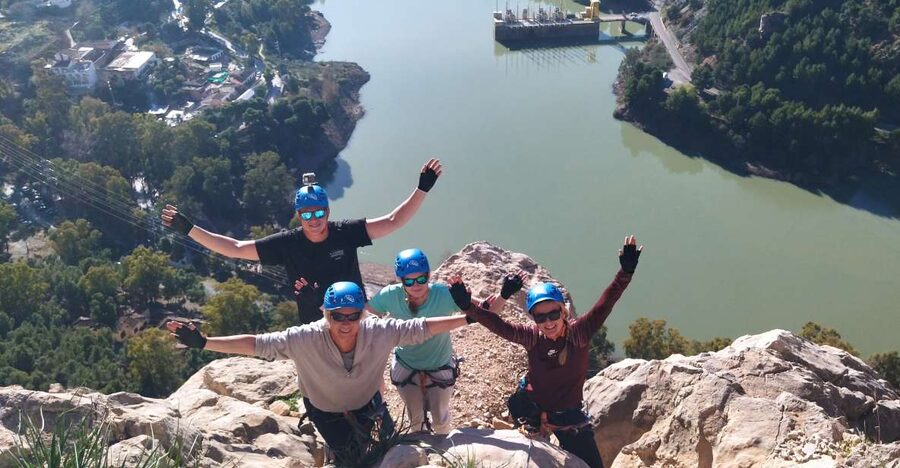
Hold tight, the mountain starts here. This seven-hour El Chorro outing combines a 250-meter climb, a 35-meter zipline, two very different bridges, and wide views around Caminito del Rey. I like the careful safety briefing and the personal guidance from Harry, whose calm teaching has helped nervous climbers feel secure. I also like that the price includes Granada transfers, equipment, insurance, photos, food, water, and snacks.
The main consideration is simple: this is not a gentle sightseeing walk. You need reasonable fitness, proper sports shoes, and a head for height. The bridges and exposed climbing can feel serious, even though beginners can take part with patient instruction and, when needed, an alternate route.
Key points to know before you book
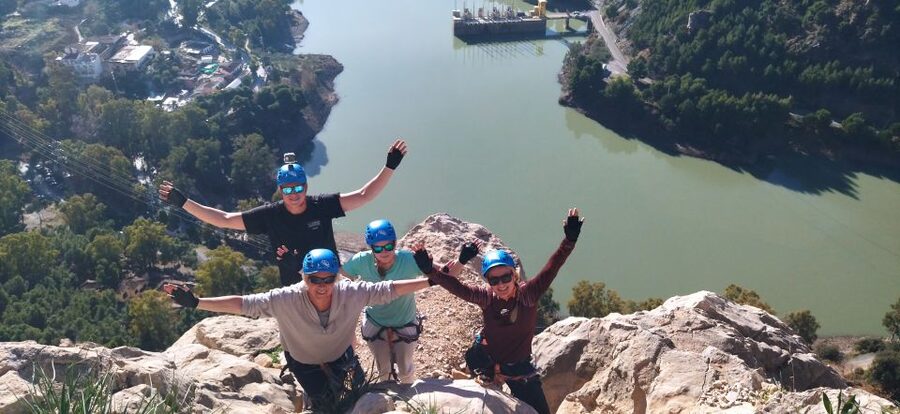
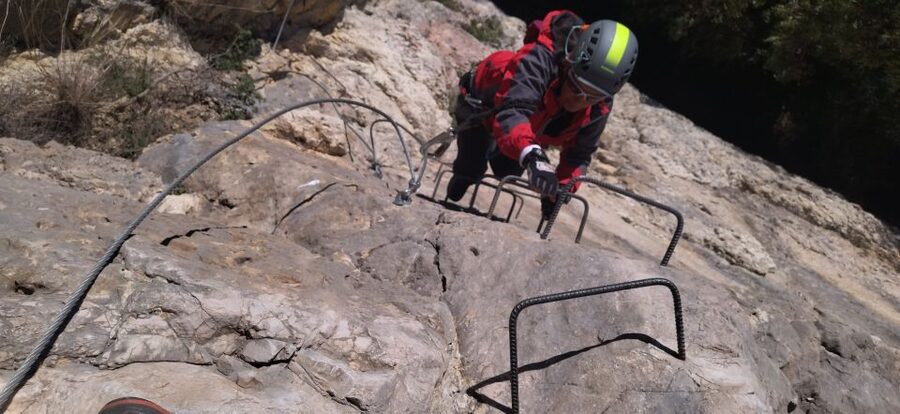
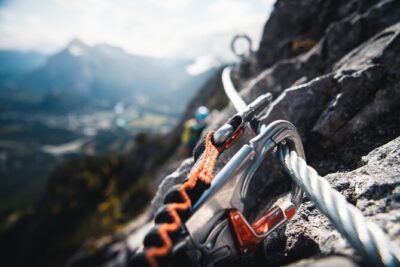
- 250 meters of climbing: You ascend iron steps fixed to the rock, protected by a steel safety line.
- A 35-meter zipline: You glide across a dramatic gap after receiving a step-by-step briefing.
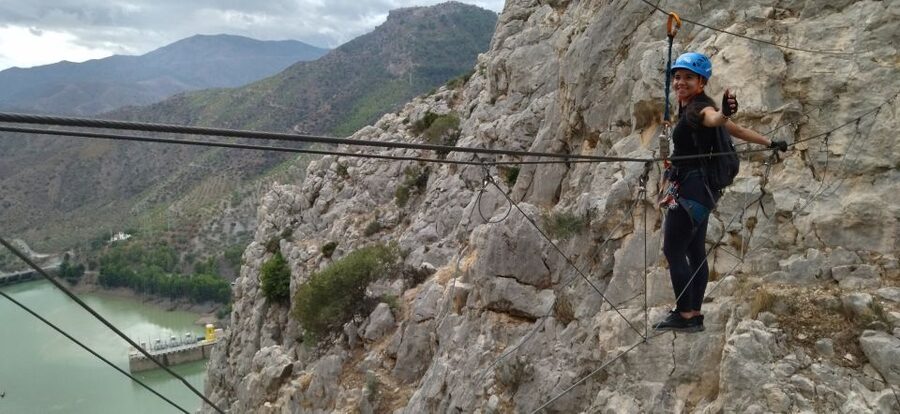
- Two bridge styles: The Tibetan bridge and Monkey walk test balance in different ways.
- Small groups of up to 10: The guide can give more direct help than on a large coach excursion.
- A proper finish: Picnic food, a drink, water, snacks, and digital photos are included.
- Granada transfers included: Meet at Centro Comercial Neptuno, stand 75, before heading to El Chorro.
From Granada to the cliffs of El Chorro
The day begins at Centro Comercial Neptuno in Granada, at stand number 75. Round-trip transport is included, which makes this outing easier to arrange than finding your own way to El Chorro. The total activity takes about seven hours, so plan it as a major part of your day rather than a quick add-on to a Granada sightseeing schedule.
The group is limited to 10 people. That matters here. Via Ferrata equipment needs checking, instructions need to be clear, and people move at different speeds when they are clipped to a steel line above a drop. A small group gives the guide more room to watch each person and pause when someone needs another explanation.
The exact starting time changes by date, so check availability before booking. You should also leave enough space around the activity. One useful tip from a participant was to avoid planning anything tight afterward. The route may be physically manageable, but you will want time to enjoy the climb and the picnic instead of watching the clock.
Operational changes can happen. During maintenance at El Chorro, one group was taken to the John Hobin Via Ferrata instead. That does not mean every departure changes, but it is worth understanding that the guide may use an alternate route when local conditions require it.
More Via Ferrata Routes in Spain
- Sant Feliu de Guixols: Climb Via Ferrata Cala del Molí
★ 5.0 · 253 reviews - Gran Canaria: Guided Via Ferrata Excursion
★ 4.9 · 198 reviews - Via Ferrata in Gran Canaria. Vertical adventure park. Small groups
★ 5.0 · 183 reviews
Getting fitted and learning the safety system
Before climbing, you receive the Via Ferrata equipment and learn how it works. The guide explains the safety rules and shows you how to use the gear before you leave the starting area. You are not expected to guess which attachment goes where while standing on a cliff.
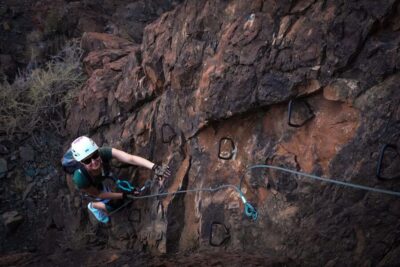
This opening lesson is one of the most important parts of the experience. Your harness connects to a steel walking line, allowing you to move along the route while remaining protected. The guide goes first, and you can copy each movement after watching the technique. That is especially helpful on the first few sections, when the equipment may feel unfamiliar.
Harry has earned particular praise for patient instruction and a relaxed manner. He has also been described as explaining the day in clear English while preparing the equipment and supplying water and snacks. English and Spanish are the working languages, so you should be comfortable understanding safety directions in one of those languages.
Do not treat the briefing as a formality. Ask questions while you are still on the ground. If you feel unsure about clipping, stepping, or moving around the cables, this is the best time to sort it out.
Climbing 250 meters on iron steps
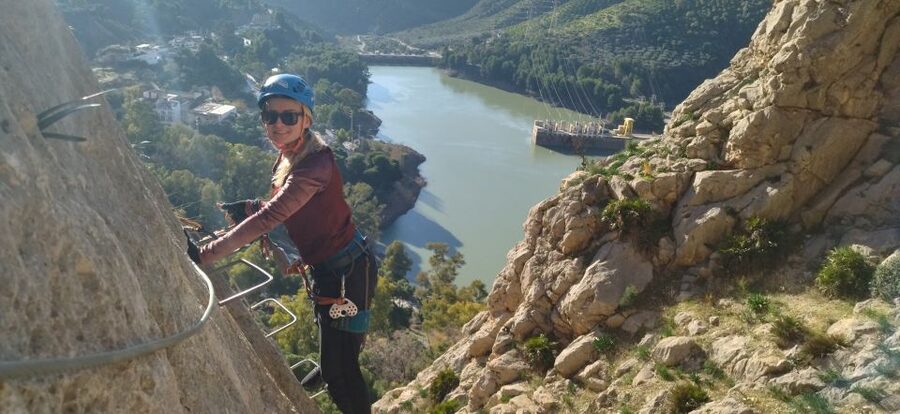
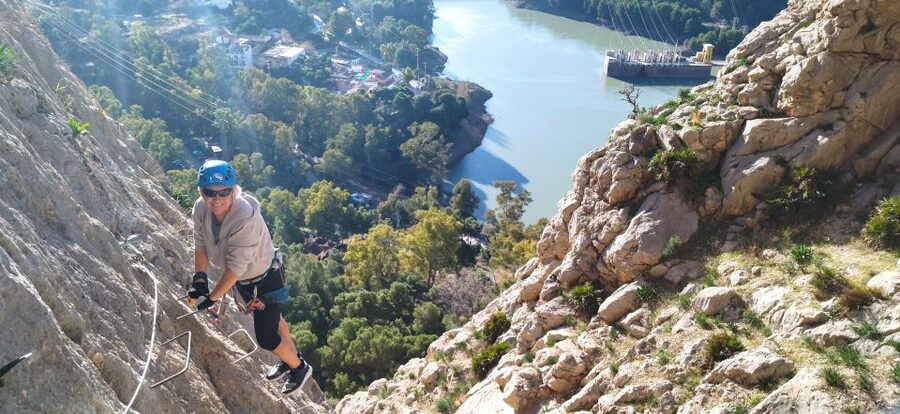
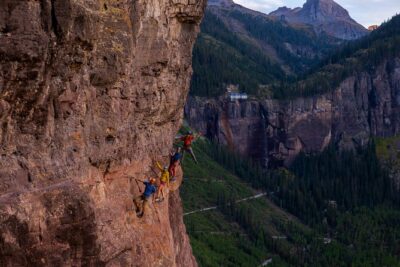
The main climb uses iron steps attached to the rock. You work upward for about 250 meters, secured to a steel line. This is the part that gives the day its physical character. Your legs do the work, while your hands help with balance and the fixed equipment.
The route is not described as a technical climbing course requiring advanced skills. It is better suited to an active beginner than to someone who wants a passive mountain view. You need enough stamina to keep climbing and enough coordination to manage the attachments.
The height changes how the effort feels. Even if the steps are straightforward, looking out from the route can make your body tense. I would expect the first section to feel more demanding for someone with a fear of heights than for someone who regularly hikes or climbs.
The guide’s position is useful here. By going first, Harry can demonstrate how to approach each section. He can also keep an eye on the group and offer reassurance. One person with a mild fear of heights felt safe throughout, while another participant found the final section too adventurous and was given an alternate route. That is a good sign for flexibility, but you should still be honest about your comfort level before starting.
The zipline across a 35-meter gap
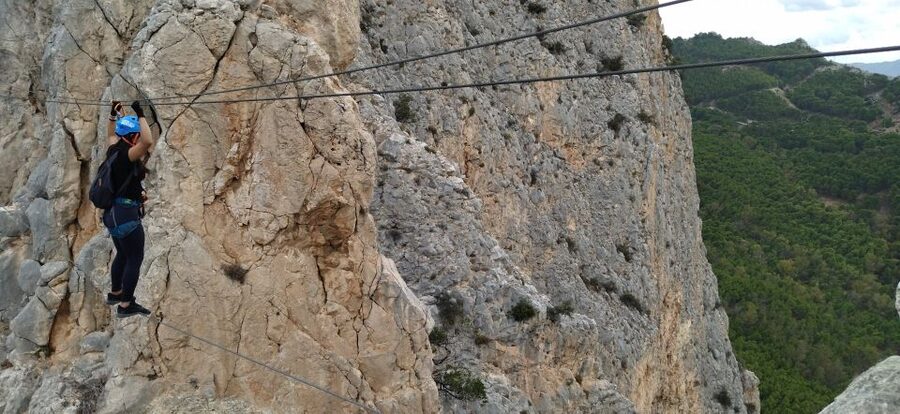
The zipline is the day’s fastest moment. At about 35 meters long, it carries you across an impressive crevice after the climb. The short flight gives the outing a burst of fun without turning the whole day into a series of stunts.
The guide explains the procedure carefully before anyone goes. You should expect a pause at the platform while the equipment is checked and the instructions are repeated. That pause is helpful. A zipline looks simple from the outside, but the correct body position and attachment points matter.
For many people, this is the highlight because it breaks up the steady upward movement. For anyone uneasy with height, it may be the point where nerves return. You do not need to pretend to be fearless. Listen closely, move at the pace the guide sets, and let the safety system do its job.
The scenery is part of the appeal. You cross over a gap rather than merely looking at it from a trail, giving you a different view of the rock and surrounding area. It is also a good place for a photo, although you should focus on the instructions first and the camera second.
Same rush, a different way to get it:
- Barcelona Costa Brava Kayak, Snorkel & Cliff Jump Day Tour
★ 5.0 · 3,872 reviews - Barcelona: Costa Brava Kayak, Snorkel & Cliff Jump & Lunch
★ 4.9 · 2,391 reviews - Mallorca: Quad Bike Tour, Snorkeling, and Cliff Jumping
★ 4.8 · 2,294 reviews - From Marbella: Guadalmina River Guided Canyoning Adventure
★ 4.9 · 1,486 reviews
Two bridges, two different tests
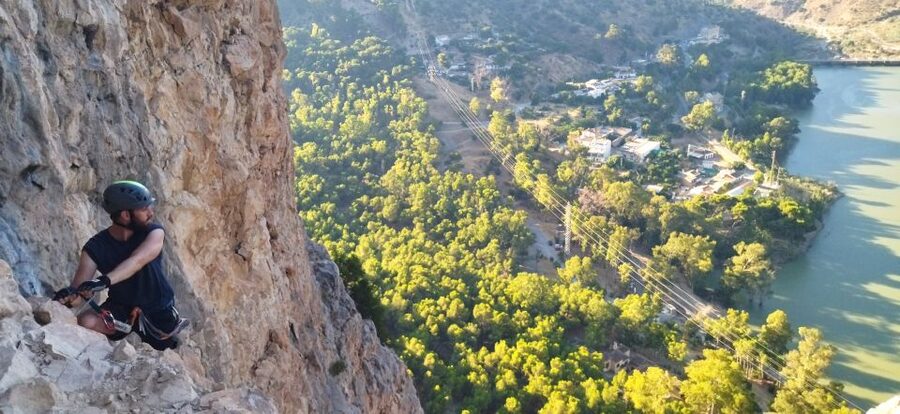
After the climbing and zipline, you cross two bridge types. The Tibetan bridge and the Monkey walk do not feel identical, which keeps the route varied.
A Tibetan-style bridge usually asks you to manage a narrow crossing with movement under your feet. The Monkey walk has its own rhythm and balance challenge. Here, the difficulty is not only height. You must place your feet carefully, hold the available lines, and stay calm when the structure moves.
These crossings are short compared with the overall day, but they create some of the most memorable moments. They also show why this activity is more than a hike with a view. You are actively negotiating the rock, cables, steps, and bridges.
The guide’s supervision matters most on these sections. Follow the demonstrated technique rather than rushing to keep up with a stronger member of the group. A small group helps because the guide can give direct reminders and allow spacing between people.
Views, photos, and the walk back down
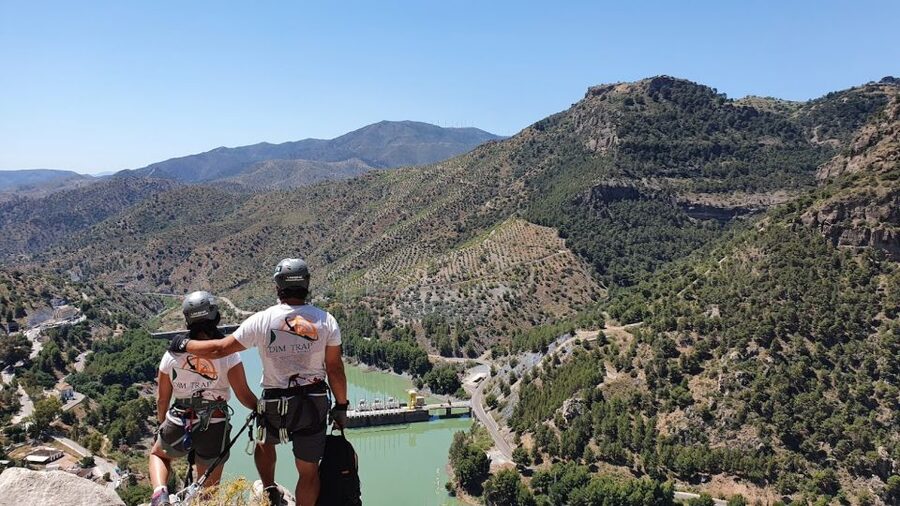
The upper sections open to broad views over the El Chorro area. You get a changing outlook as you climb instead of one fixed lookout point. The scenery is a reward for the effort, but it also helps you pause and reset before the next obstacle.
Digital photos are included. This is a valuable touch because taking your own pictures can be awkward when both hands are busy with the safety system. Harry has been praised for taking good-quality photos during the climb and sharing them with participants afterward.
The route does not end the instant you finish the last obstacle. A hike back down follows the Via Ferrata, and this gives the day a calmer second half. One participant appreciated hearing about the area’s history during the descent. After concentrating on steps, cables, and bridges, the walk down lets you look around without quite so much physical tension.
You should still wear proper sports shoes. The activity information specifically recommends them, along with clothing suited to the weather. Mountain conditions can make a big difference to comfort, and you will be outside for several hours.
A picnic that gives the day a proper finish
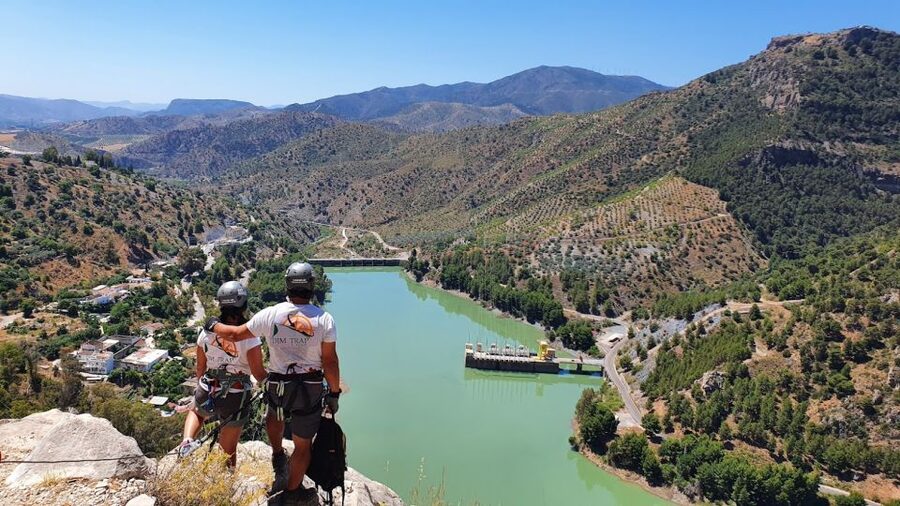
After the climb, you receive a picnic and a drink. Water and snacks are also provided during the outing. The meal is more than a minor extra. After a long climb, food at the end gives the group a chance to sit down, talk through the best moments, and let the adrenaline settle.
The picnic has been described as homemade and, in one case, as a generous lunch with a drink of choice. The guide has also been praised for making the ending feel friendly rather than rushed. That personal touch helps the day feel like a guided outdoor experience, not simply a paid sequence of obstacles.
If you are comparing this with a cheaper self-guided option, include the food and drink in your calculation. You would also need to arrange equipment, transport, route knowledge, and safety planning on your own. Here, those elements are bundled into the $112 price.
Is $112 good value?
At $112 per person, the cost is not low, but the package covers a lot. You receive a certified English and Spanish-speaking guide, Via Ferrata equipment, civil liability and accident insurance, round-trip transfers from Granada, digital photos, a picnic lunch, water, and snacks.
The transfer is particularly useful if you are staying in Granada and do not want to manage the journey to El Chorro yourself. The equipment is another meaningful saving. Buying or renting climbing gear for a single day, then learning the route without a guide, would not offer the same ease or support.
The price also buys supervision. That is the part you should value most. The guide leads the route, explains each obstacle, checks the process, and can adjust the experience when a participant needs an alternate section. For a first Via Ferrata, that support can make the difference between enjoying the day and spending it tense and uncertain.
The value is weaker if you already have extensive Via Ferrata experience and your main goal is simply to reach Caminito del Rey cheaply. This is an organized adventure with transport and a full-service finish, not a basic trail transfer.
Who should book this experience?
I would recommend it to active adults, first-time Via Ferrata participants, and anyone who wants a more physical way to see the El Chorro area. You do not need to be an expert climber, but you should be comfortable with a long outdoor activity and some exposure.
It suits people who appreciate patient instruction. Harry and his team have been praised for making participants feel safe, including people with some fear of heights. That does not remove the height, but it gives you a calm structure for dealing with it.
I would not choose it if you are pregnant, weigh under 40 kilograms, or dislike heights and exposed routes. The activity is also a poor match if you want a relaxed sightseeing day with little exertion.
Bring sports shoes and weather-appropriate clothing. Take the safety briefing seriously, listen in English or Spanish, and tell the guide early if you need extra help. You should also leave the rest of the day open enough to enjoy the picnic and return transfer without rushing.
Booking flexibility and practical details
You can cancel up to 24 hours in advance for a full refund. The reserve-now, pay-later option can help if your Granada plans are still shifting.
Meet the local guide at Centro Comercial Neptuno, stand number 75, in Granada. The guide and activity operate in English and Spanish, and groups are limited to 10 participants. The experience provider is D.I.M. TRAP S.L.
Should you book the El Chorro Via Ferrata?
Book it if you want a guided day with real physical action, not just a view from a path. The combination of the 250-meter climb, zipline, two bridges, photos, transport, and picnic gives you a full experience for the price.
I especially like the patient approach associated with Harry, the small group size, and the option of an alternate route when a section feels too much. Just go in prepared for height, effort, and a few moments when your stomach notices the drop. If that sounds exciting rather than alarming, this is a memorable way to experience El Chorro.
FAQ
Where does the El Chorro Via Ferrata experience begin?
The Via Ferrata begins in El Chorro, near Caminito del Rey. If you are using the included Granada transfer, meet the local guide at Centro Comercial Neptuno, stand number 75.
How long does the experience last?
The activity lasts about seven hours. Check availability for the starting time on your chosen date.
What is included in the price?
The price includes a certified guide, Via Ferrata materials and equipment, civil liability and accident insurance, round-trip transfers from Granada, digital photos, a picnic lunch, water, and snacks.
How high is the climb?
The route takes you about 250 meters upward on iron steps attached to the rock. A steel walking line protects you during the ascent.
Is a zipline included?
Yes. The route includes a 35-meter zipline that crosses an impressive crevice.
What languages does the guide speak?
The instructor speaks English and Spanish.
Who should not take part?
The experience is not suitable for pregnant women or people weighing under 40 kilograms. Participants should also bring sports shoes and clothing suitable for the weather.
More Rock Climbing in Spain
- Gran Canaria: Cliff Climbing Via Ferrata Trip by Maspalomas
★ 4.9 · 177 reviews - Climbing + Zipline + Via Ferrata + Cave. Adventure route in Gran Canaria
★ 5.0 · 149 reviews - Climbing the John Hogbin Via Ferrata with Lunch
★ 5.0 · 94 reviews - Alicante: Redovan Via Ferrata, family Climb
★ 4.9 · 16 reviews
Just added around Spain
- Redován: Family-friendly K2 via ferrata in a natural setting with rappelling★ 5.0 · 3 reviews
- Ordesa, Broto : Via Ferrata K3. Climbing Experience★ 5.0 · 4 reviews
- Murillo de Gállego Huesca: Bungee jumping over the river★ 5.0 · 3 reviews
- Marxuquera: La Falconera Via Ferrata★ 4.9 · 9 reviews
- Marbella: Beginner Canyoning Tour with Safety Equipment★ 4.9 · 82 reviews
- Mallorca: Visit Palma Speedboat adrenaline & snorkelling★ 4.9 · 48 reviews
- Mallorca: Speleo-Coasteering Tour along the Coast of Alcudia★ 5.0 · 5 reviews
- Mallorca: coasteering South★ 4.5 · 14 reviews
Via Ferrata Climbing, compared.
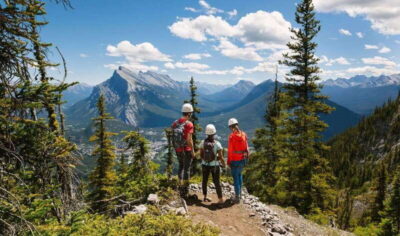
Banff: Mount Norquay 2.5 or 4-Hour Guided Via Ferrata Climb
Read our review →
Sant Feliu de Guixols: Climb Via Ferrata Cala del Molí
Read our review →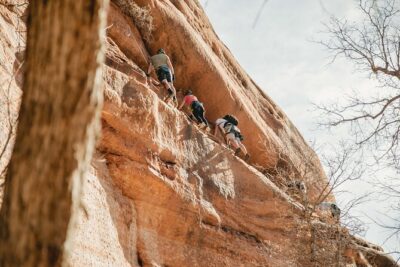
Small-Group Guided Via Ferrata Climbing with Banff’s Best Views
Read our review →
Via Ferrata in Gran Canaria. Vertical adventure park. Small groups
Read our review →Browse the lists this tour appears in