
Review · SPAIN
Costa Brava: Via Ferrata Cala del Molí
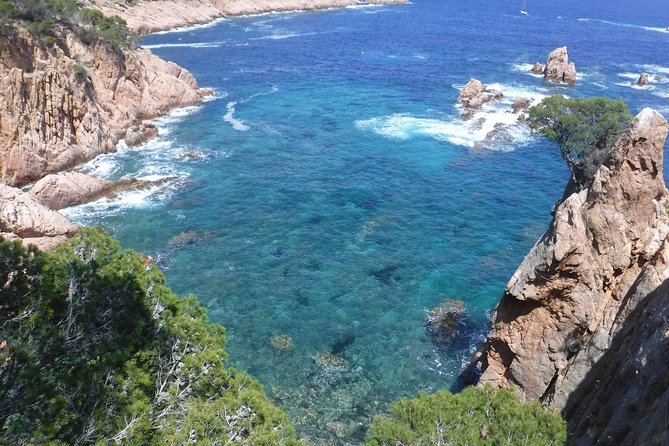
Climb above the Mediterranean on a steel road. The Via Ferrata Cala del Molí combines metal steps, fixed cables, bridges, and rocky coastal paths in a way that lets you reach dramatic parts of the Costa Brava without traditional rock-climbing experience. I like the rare setting, with the sea beside you, and the two-part route, which gives beginners a gentler start before the harder section. The main point to consider is physical effort: the second half demands solid upper-body strength, and some people may be advised to stop after the first section.
This is an active outing rather than a sightseeing walk. You clip into a safety cable, move along cliffs and rocky walls, and cross sections that feel part climbing route, part mountain trek. Guides such as Miguel, Matías, and Lorenzo receive frequent praise for clear instructions, encouragement, and safety awareness, though guide style can vary, and a few participants felt their abilities were judged too quickly.
Key points to know before you book
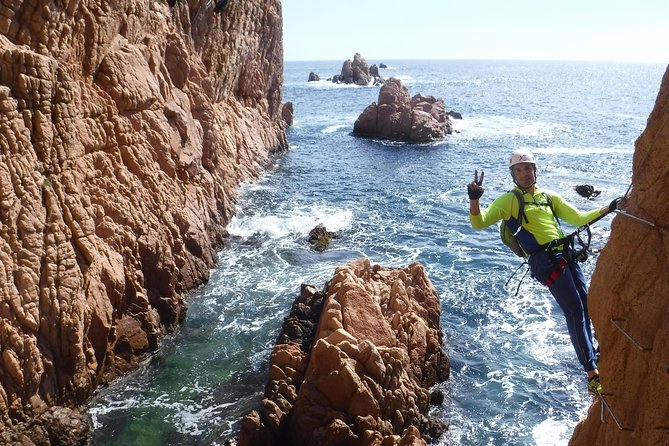
- The route sits directly beside the Mediterranean: The sea views are the star, with cliffside movement that feels very different from an inland via ferrata.
- Two sections let you choose your challenge: The first part is suitable for beginners, while the second is harder and requires more stamina and arm strength.
- Miguel is especially praised for safety and photos: He regularly helps with clipping technique and takes pictures so you can concentrate on the route.
- The experience lasts about three to four hours: The approach from the meeting point takes only about two minutes.
- Small groups can make a real difference: The stated maximum is six people, although one account describes a group of seven, so confirm the current group size when booking.
- The price includes more than equipment: At $48.31 per person, you receive a qualified guide, technical gear, accident and liability insurance, a small picnic, and a photographic report.
Starting at Sant Feliu de Guíxols
The activity begins at Carretera de Sant Pol, 200, in Sant Feliu de Guíxols, in Girona province. The booking information may identify the wider area as Figueres, but the actual meeting point is in Sant Feliu de Guíxols on the Costa Brava. Put the precise address into your navigation app rather than relying on the broader destination label.
The approach to the route takes about two minutes. That is a useful detail if you dislike long hikes before the main activity. You are not spending an hour walking uphill in a harness before reaching the rock. The short approach also helps the guide get everyone fitted with technical equipment and ready to move.
The tour ends back at the same meeting point. Public transportation is available nearby, though the supplied information does not specify a particular bus or train connection. If you are coming from Barcelona, one account describes driving for a little less than an hour and a half, with easy roads to follow. Allow extra time for traffic, parking, and finding the exact starting point.
More Via Ferrata Routes in Spain
- Sant Feliu de Guixols: Climb Via Ferrata Cala del Molí
★ 5.0 · 253 reviews - Gran Canaria: Guided Via Ferrata Excursion
★ 4.9 · 198 reviews - Via Ferrata in Gran Canaria. Vertical adventure park. Small groups
★ 5.0 · 183 reviews
How a via ferrata works here
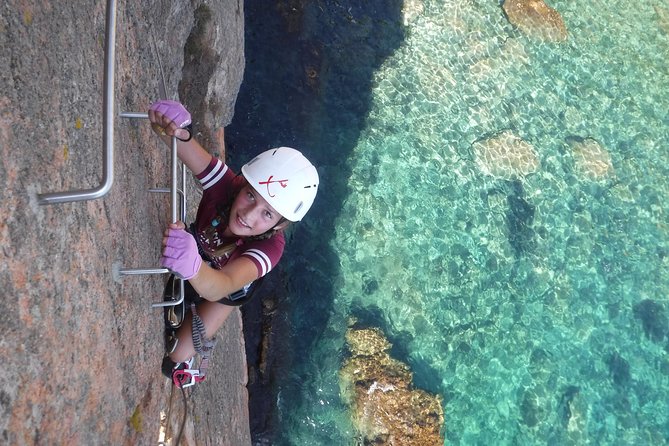
A via ferrata is a protected climbing route. You wear a harness with safety attachments and clip onto a fixed steel cable. Metal rungs, steps, chains, and other aids provide a route up, across, or around the rock.
You are not expected to find every handhold or foothold in the stone as you would during ordinary rock climbing. At Cala del Molí, much of the movement uses installed metal steps, D-rings, chain ropes, and the cable system. That makes the route accessible to people who have never climbed outdoors, though it does not make the activity effortless.
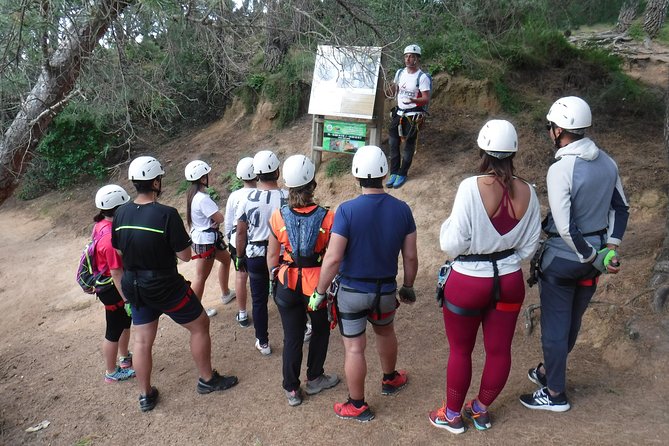
The guide first explains how to use the equipment and move the clips along the cable. This instruction matters. You must transfer your safety attachments correctly at protected points, and a calm explanation at the start can make the rest of the route far less stressful.
The route passes through rocky walls and coastal vegetation, with the sea visible beside and below you. The experience is active, but the setting keeps pulling your attention outward. You may be concentrating on your next step one moment, then looking across the water the next.
The first section: a useful introduction
The opening section is the gentler part of the route. It introduces the basic movement: clipping along the cable, stepping between fixed footholds, and managing your body on the rock. For a first-time participant, this section gives you time to learn without immediately facing the most demanding sections.
I like this built-in progression. You do not have to decide before starting whether you can handle the full route. The guide can see how you move, and you can judge your own comfort. A stopping point in the middle allows you to finish after the first portion if you are tired, uncomfortable with the height, or simply prefer a shorter outing.
That option makes the experience workable for mixed groups. One person can continue while another chooses to stop, depending on the guide’s safety assessment and the arrangements of the day. The first portion is still a proper activity, not just a warm-up walk, and it offers the coastal views that make this route special.
Do not confuse beginner-friendly with completely easy. You still need to support yourself on the metal aids, stay focused, and keep moving along the cliff. A person with reasonable fitness and enthusiasm may manage this section, but anyone with serious concerns about heights, balance, or physical exertion should think carefully before booking.
The second section: where the route earns its reputation
The later section is harder. The difference is not only height. It also involves more sustained effort and greater demand on your arms and shoulders. Several people have described this part as challenging but rewarding, especially on a hot day.
If you have done via ferratas in Colorado or elsewhere, you may still find Cala del Molí surprisingly demanding. The route is not simply a walk with a cable. You may need to pull, reach, pause, and reposition yourself repeatedly. One participant with previous experience on routes in Ouray, Red River Gorge, and Royal Gorge considered this route slightly harder than those examples.
The guide assesses the group after the first section and may recommend that someone stop. That judgment can be frustrating if you feel stronger than the guide expects. At the same time, a guide has to consider fatigue, height exposure, grip strength, and the safety of the entire group, not just whether you can complete one individual move.
This is the part where honest self-assessment helps. If you can comfortably use your arms for repeated support, keep a steady pace, and remain calm when tired, you have a better chance of enjoying the full route. If your upper-body strength is limited, the first section may be the wiser goal.
The route can also be shortened if you are unable or unwilling to continue. That escape option is valuable, but it does not remove the need to choose an appropriate activity. You should not book this expecting a relaxed coastal stroll.
Same rush, a different way to get it:
- Barcelona Costa Brava Kayak, Snorkel & Cliff Jump Day Tour
★ 5.0 · 3,872 reviews - Barcelona: Costa Brava Kayak, Snorkel & Cliff Jump & Lunch
★ 4.9 · 2,391 reviews - Mallorca: Quad Bike Tour, Snorkeling, and Cliff Jumping
★ 4.8 · 2,294 reviews - From Marbella: Guadalmina River Guided Canyoning Adventure
★ 4.9 · 1,486 reviews
The sea views are the real reward
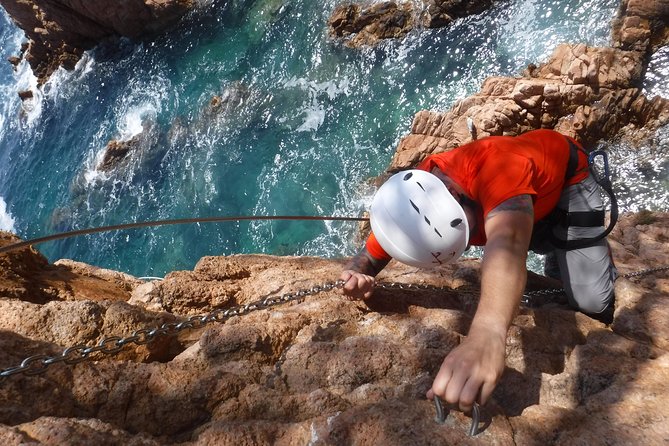
Cala del Molí is unusual because the climbing route runs beside the Mediterranean. The combination of sea, rock, and mountain scenery gives the activity a sense of place that an indoor climbing wall cannot provide.
You see the coast from changing angles as you move. Sometimes the route keeps you close to the rock, with the cable and steps occupying all your attention. At other points, the view opens enough for you to appreciate the water and the rugged shore. The movement helps you reach viewpoints that would not be available from a normal footpath.
The setting also gives the activity a strong emotional lift. A difficult section feels more worthwhile when you pause and look out over the coast. Several people describe the views as breathtaking, but you should remember that photography can be difficult while clipped to the route and managing your balance.
That is where the included photographic report has real value. Guides, particularly Miguel, are praised for taking many pictures during the activity. You can focus on moving safely instead of trying to hold a phone while attached to the rock. Ask how and when the images will be delivered, since the supplied details only confirm that a photographic report is included.
Guides, instruction, and group dynamics
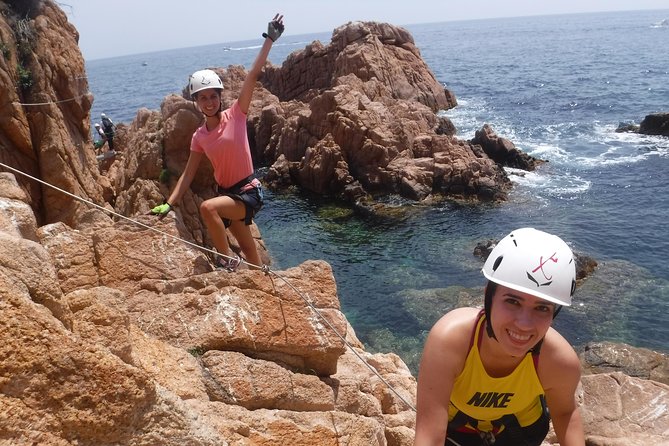
The guide is central to this experience. Miguel is repeatedly praised for patience, clear equipment instruction, encouragement, and careful positioning along the route. Matías is also described as helpful and fun by several people, while Lorenzo receives both strong praise and serious criticism.
That mixed picture is worth taking seriously. One account describes Lorenzo as an excellent guide who helped a first-time group feel comfortable and supported. Another says he was too quick to decide who should stop and made dismissive comments about a family member’s ability. These different accounts may reflect different group needs and personalities, but they also show why guide communication matters.
The company says guides make decisions based on safety and real-time assessment. That is normal for a technical activity. Still, you should feel able to ask why a guide is recommending that you stop, especially if you feel capable of continuing. A good guide should explain the concern clearly and respectfully.
Group size affects the experience. The advertised maximum is six people, which is small enough for more direct help than a large commercial outing. Several people valued the personal attention, particularly when learning how to clip and move. One account describes a larger group of seven, so confirm the current number if a small-group experience is important to you.
Safety, fitness, and what to bring
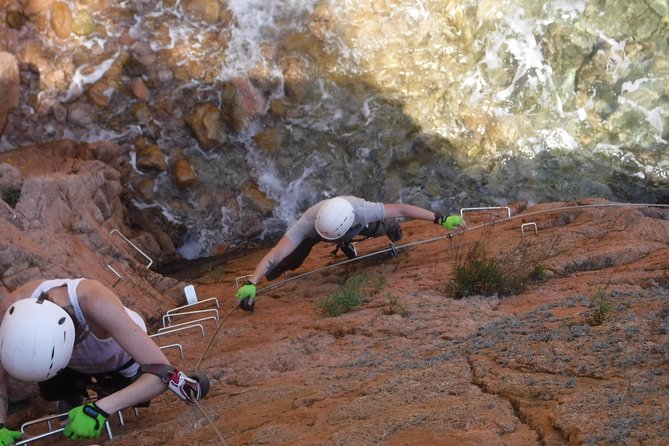
The activity includes technical equipment, a qualified guide, liability insurance, and accident insurance. The guide gives instructions before you begin and monitors the group during the route. Some people have reported falls being caught securely by the equipment, though you should never treat the safety system as permission to climb carelessly.
You need a moderate level of physical fitness. The most important requirement is not advanced climbing skill. It is the ability to move for several hours while using your arms, legs, and grip repeatedly. The second section places the greatest demand on upper-body strength.
Wear practical clothing and footwear suited to an active rocky route. The supplied information does not list a detailed packing guide, so confirm the operator’s current instructions before setting out. Bring water, particularly because one account describes the second section as tough in hot weather. The included mini picnic is a pleasant extra, but it should not be treated as a substitute for whatever hydration and food you normally need during physical exercise.
Height matters too. The stated minimum height is 1.50 meters. If you are close to that limit, ask how the equipment and reach requirements apply to you before booking.
English is offered. One person who had requested French did not receive a French-speaking guide but was able to manage with an English-speaking guide. If you need instruction in a language other than English, confirm this in advance rather than assuming it will be available.
Price and overall value at $48.31
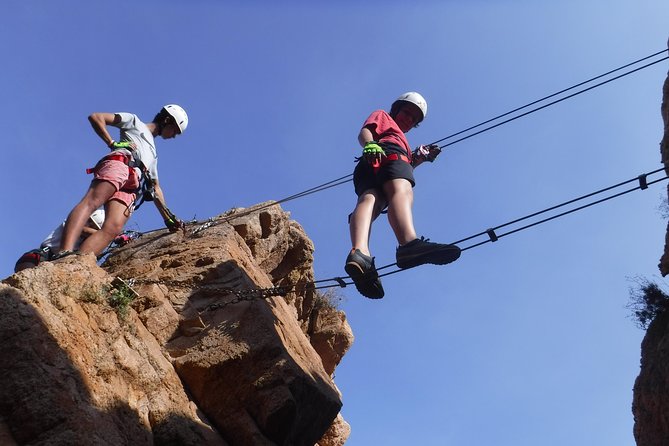
At $48.31 per person, this is a strong value if you want a guided activity rather than simply a coastal walk. The fee includes the guide, safety equipment, insurance, photographs, and a small picnic. You are also paying for access to a protected route that would be difficult to experience safely without the fixed cable system and instruction.
The photos improve the value. During a climbing activity, stopping to take your own picture can be awkward or unsafe. Having the guide document the outing lets you keep both hands focused on the route.
The price is less attractive if you are unsure about completing the second section. You may still enjoy the first half, but you should book because you want the full experience of a guided coastal via ferrata, not because you expect guaranteed value from every minute. The activity can also be shortened for safety, and the total time may vary from about two hours to four hours depending on the group and route progress.
Booking, weather, and cancellation details
The experience is usually booked about 11 days ahead, which suggests that popular dates can fill before your trip. Confirmation is provided when you book, and the activity has free cancellation up to 24 hours before the start time. Changes or cancellations made within 24 hours are not accepted for a refund under the stated terms.
Weather matters. Poor conditions can lead to cancellation, in which case you are offered another date or a full refund. The activity also requires a minimum number of participants. If that minimum is not reached, you are offered another date or experience, or a full refund.
There have been reports of late cancellations and confusion over time-slot availability. The operator has also received a complaint about a booking that was not canceled clearly through the booking platform. To protect yourself, keep all cancellation and schedule changes in writing through the booking service, not only in a messaging app.
Who should book Cala del Molí?
I would choose this for an active couple, a fit family with older children who meet the height requirement, or anyone who wants a strong coastal experience without taking a full rock-climbing course. It also suits people who have done climbing or other outdoor sports and want something more unusual than a standard hike.
First-timers can enjoy it, provided they have reasonable fitness and accept that the second section may be demanding. A fear of heights does not automatically rule it out, since the equipment and fixed route give you something concrete to focus on, but you should be honest about your comfort level.
I would be cautious if you dislike group activities, have limited upper-body strength, or need very detailed instruction in a language other than English. The guide’s decisions affect how far you go, and guide communication can shape the day.
Should you book this Costa Brava via ferrata?
Yes, if you want sea views, a clear physical challenge, and a guided route that lets you try before committing to the harder section. The setting is special, the price is fair for the equipment and photo service, and Miguel in particular receives strong praise for making first-timers feel safe.
Go in prepared for real exertion, not a gentle walk. Confirm the meeting time, group size, language needs, and cancellation arrangements before you leave. If you can handle several hours of movement and are comfortable using your arms on fixed metal aids, Via Ferrata Cala del Molí is one of the Costa Brava’s most memorable active outings.
FAQ
Where does the Via Ferrata Cala del Molí begin?
It begins at Carretera de Sant Pol, 200, 17220 Sant Feliu de Guíxols, Girona, Spain.
Where does the activity end?
The activity returns to the original meeting point.
How long does the via ferrata take?
The stated duration is approximately three to four hours, though the total time can vary with the group and route conditions.
How far is the approach to the route?
The approach takes about two minutes.
What is the minimum height requirement?
The minimum stated height is 1.50 meters.
Is previous climbing experience required?
No. The route has an initiation section and is suitable for beginners with a moderate level of physical fitness. The second section is more demanding.
What does the price include?
The price includes a qualified guide, technical equipment, a photographic report, a mini picnic, liability insurance, and accident insurance.
Is the activity offered in English?
Yes. English is one of the offered languages.
What happens if bad weather cancels the activity?
You are offered a different date or a full refund if the activity is canceled because of poor weather.
Just added around Spain
- Sierra de las Nieves: Zarzalones Canyoning For Rappel Lovers★ 5.0 · 11 reviews
- Wild canyoning in Sierra de las Nieves, Málaga★ 5.0 · 22 reviews
- Villena: Tour Guide Via Ferrata Climbing with Abseiling★ 5.0 · 2 reviews
- Via Ferrata Adventure in Costa Brava + Transport★ 5.0 · 3 reviews
- Via Ferrata Gran Canaria: Rock Climbing for beginners★ 5.0 · 11 reviews
- Barcelona: Via Ferrata Baumes Corcades in Centelles★ 5.0 · 7 reviews
- Valencia: Guided Via Ferrata Experience★ 3.8 · 4 reviews
- Valencia: Coasteering Adventure in Cullera Lighthouse★ 4.8 · 4 reviews
Via Ferrata Climbing, compared.
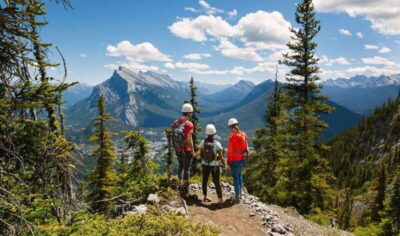
Banff: Mount Norquay 2.5 or 4-Hour Guided Via Ferrata Climb
Read our review →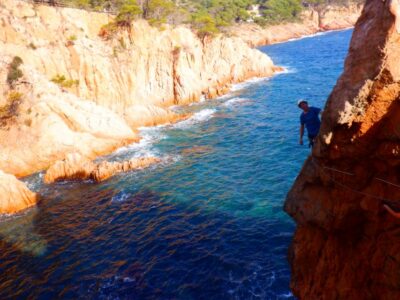
Sant Feliu de Guixols: Climb Via Ferrata Cala del Molí
Read our review →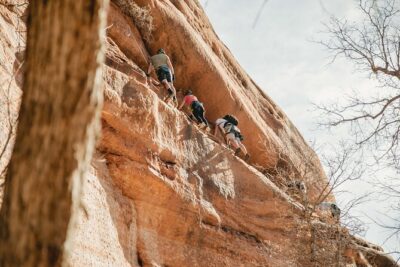
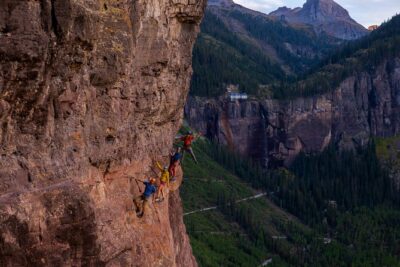
Small-Group Guided Via Ferrata Climbing with Banff’s Best Views
Read our review →
Via Ferrata in Gran Canaria. Vertical adventure park. Small groups
Read our review →Browse the lists this tour appears in