Review · GRAN CANARIA
Agaete: Gran Canaria Coasteering. Marine Ferrata and Zipline
Gran Canaria gets wild above Agaete. This five-hour coasteering adventure links a cliff hike, an ancient Aboriginal cave, rope abseiling, a marine via ferrata, snorkeling, and a 35-meter zipline above the Atlantic. I like the way Pablo and the guide team mix safety with humor, and I love that the hike includes real context about Agaete’s volcanic past and early inhabitants rather than treating the coast as one big adventure playground.
The strongest parts are the dramatic route and the small group, limited to eight people. At $81 per person, the price is fair for a guided activity that includes specialist equipment, insurance, snacks, photos, and several different challenges. The catch is clear: this is not a gentle sightseeing trip. Heights, rough rock, a solid walk, and cold sea water make it a poor choice for anyone with low fitness, vertigo, or limited swimming ability.
Key points to know before you book
- The route starts above the sea: You hike along the cliff before reaching the abseiling point, so sports shoes and practical clothes matter.
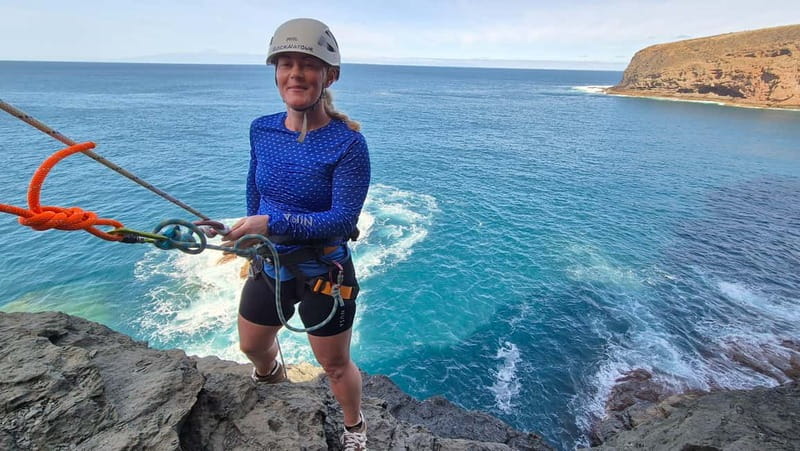
- The abseil is professionally belayed: You use a harness, helmet, and ropes, with a mountain guide controlling the safety system.
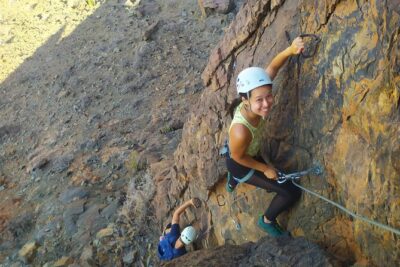
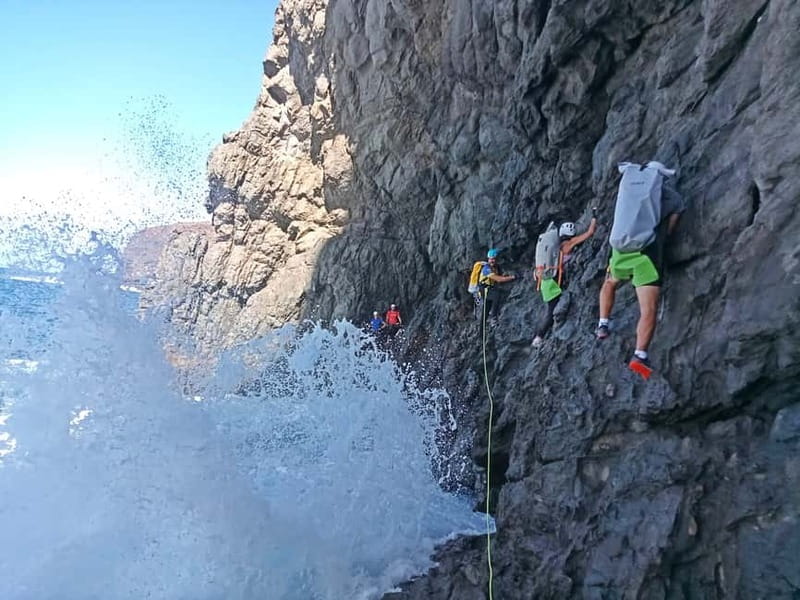
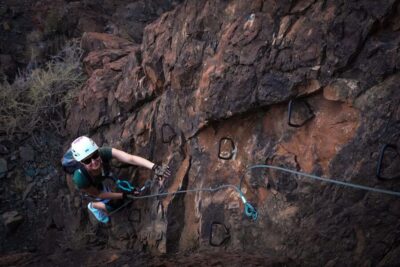
- The marine via ferrata is the tour’s signature section: You climb along the rock beside the ocean, including the chain pass.
- The zipline crosses 35 meters above the waves: It is a short flight, but the height and open sea make it memorable.
- Snorkeling provides a calmer finish: After the hardest sections, time in the water offers a welcome change of pace.
- Bad weather can change the route: The guide may cancel the ferrata or zipline if conditions make them unsafe.
What this Agaete coasteering tour actually involves
Coasteering can sound like a single sport, but this route is a chain of activities. You hike, climb, descend by rope, move across rock beside the sea, cross a zipline, and finish with time in the water. The variety keeps the five hours moving, though it also means you need energy and a willingness to follow instructions.
You meet near the parking area by the roundabout at Playa de Caleta in Agaete. There is no hotel pickup, so you need to arrange your own way to the meeting point. The guide welcomes the group, checks the plan, and provides the main equipment: harness, helmet, wetsuit, snorkel kit, and other safety gear.
The group limit of eight is important here. On a technical route, a small party gives the guide more time to explain each movement and watch people closely. It also makes the day feel less like a conveyor belt of tourists waiting for a turn.
English and Spanish are available. The guides, especially Pablo, are praised for explaining things clearly and keeping the mood light. That matters when you are standing near a drop and trying to remember what your feet are supposed to do.
More Coasteering Tours in Spain
- Gran Canaria: Adrenaline-Filled Coasteering Experience
★ 4.5 · 65 reviews - Las Palmas: Coastering, Via Ferrata, Water Jumping & Snorkel
★ 4.9 · 40 reviews - Mallorca: Half-Day Coasteering Experience
★ 4.7 · 447 reviews
The cliff walk and the old Aboriginal cave
The outing begins on foot, not in the sea. You hike along the cliff toward a higher point, building up to the more demanding sections while the guide talks about the area’s geology, volcanic origins, and Aboriginal past.
An ancient Aboriginal cave is one of the first notable stops. It gives the route a sense of place. You are not simply being led from one piece of equipment to the next. The cave connects the rock formations to the people who used this coast long before modern adventure tours arrived.
The walk also provides the best chance to look at Agaete from above. From a high rock formation, you can see the town, the coast, and a beach that is not obvious from the road. This is a useful part of the experience for anyone who wants some island context along with the adrenaline.
Do not underestimate the opening hike. It is described as the first part of the activity, and you should wear hiking boots or sports shoes with a firm grip. Breathable sports clothing works well, but bring a jacket because conditions can change on the exposed coast.
Abseiling down to the Atlantic
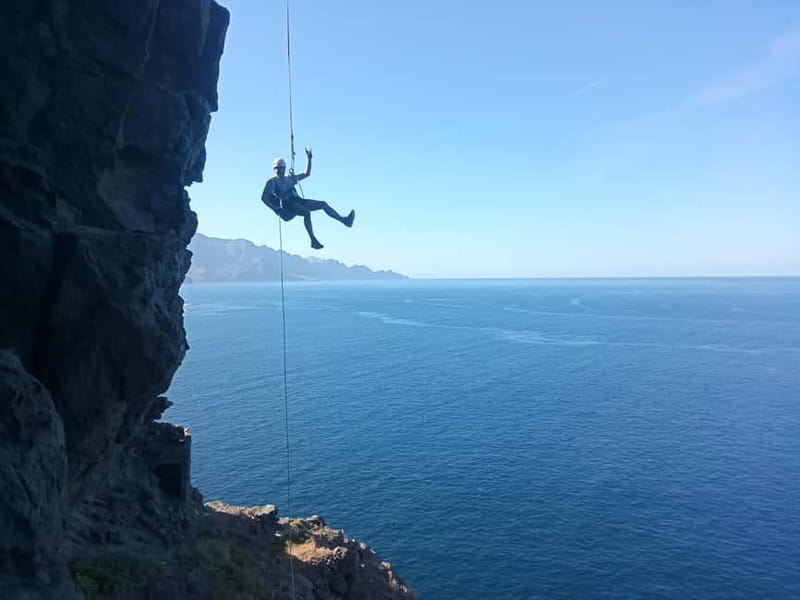
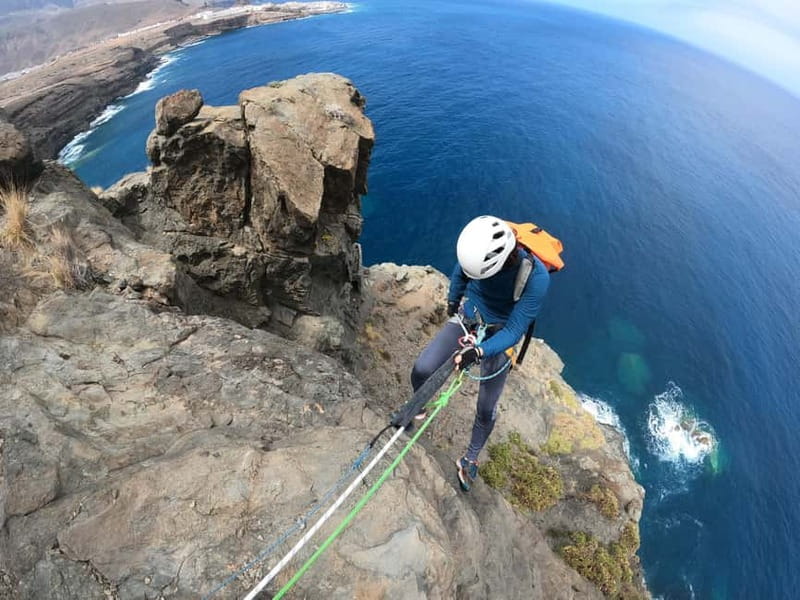
The route then reaches the first major test: a rope descent from the cliff toward the coastline. You are secured with a harness and helmet, and a professional mountain guide keeps you attached to a safety rope while you descend.
This is the point where the tour becomes serious for many people. Several participants began nervous and later described the activity as a favorite part of their holiday, but that does not mean the abseil feels easy. You need to trust the equipment, listen carefully, and control your body rather than rush.
The guide teaches you the technique before you start. The safest approach is to focus on one instruction at a time: where to place your feet, how to lean back, and how to move the rope. You do not need to arrive as an expert climber, but you do need enough strength and coordination to manage a rock descent.
One practical warning: do not wear shorts. The rocks can scratch your legs, and the route includes close contact with rough surfaces. Tight clothes are acceptable and may be useful because clothing is stored in dry bags, where space is limited.
The marine via ferrata and the chain pass
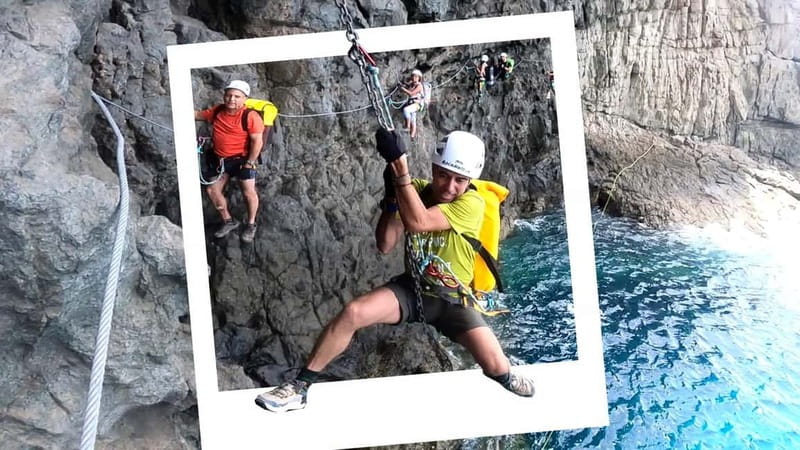
At coastal level, the adventure shifts from descent to sideways movement. You follow a climbing route along the sea, using fixed protection and handholds as the guide teaches you the required techniques.
The marine via ferrata is likely to be the most unusual part of the trip. A normal mountain via ferrata often gives you a protected route across a cliff. Here, the rock meets the Atlantic, so the ocean is beside you as you move along the course.
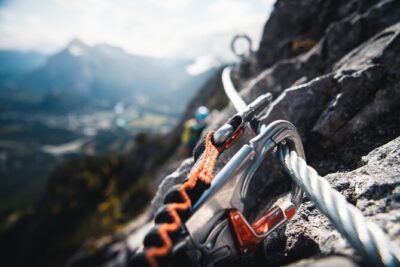
The chain pass adds another challenge. You use the installed chains and the equipment provided by the guide to get across the rock safely. The route calls for concentration more than raw speed. If you become anxious, the small group and direct guidance should help, but this is still not suitable for anyone who is genuinely afraid of heights.
The activity description presents the overall effort as moderate, though the adrenaline can make it feel harder. That distinction is useful. You may not be hiking all day with a heavy pack, but the technical sections demand repeated bursts of balance, grip, and courage.
More Via Ferrata Routes in Spain
- Gran Canaria: Guided Via Ferrata Excursion
★ 4.9 · 198 reviews - Via Ferrata in Gran Canaria. Vertical adventure park. Small groups
★ 5.0 · 183 reviews - Gran Canaria: Cliff Climbing Via Ferrata Trip by Maspalomas
★ 4.9 · 177 reviews - Climbing + Zipline + Via Ferrata + Cave. Adventure route in Gran Canaria
★ 5.0 · 149 reviews
The 35-meter zipline over the waves
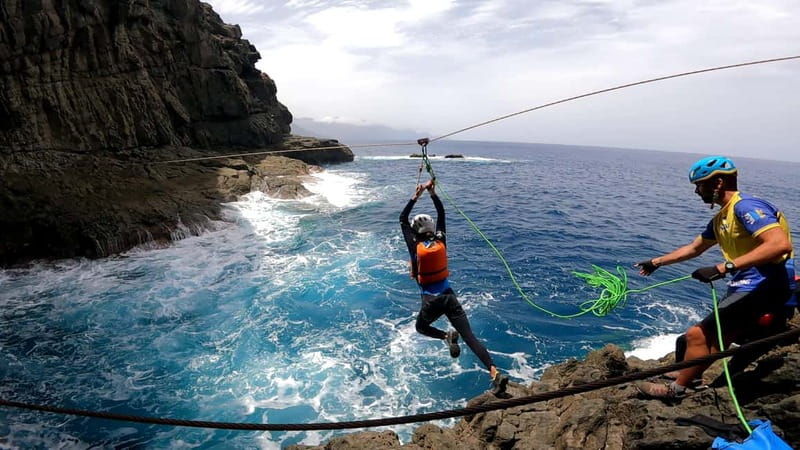
The zipline is the headline moment for many people. You fly about 35 meters above the sea before returning toward the rock and continuing upward.
It is not a long ride, but the setting does the work. You have open water below, a cliff route behind you, and the strange sensation of moving through air instead of across the rock. If you enjoy heights, this should be a thrilling payoff. If you have vertigo, it may be the moment to choose another activity.
After the zipline, you use straightforward climbing techniques to reach the top of the rock formation. The route rises to a point more than 125 meters above sea level, giving you a final high view over the coast and the route you have just completed.
The weather policy is worth taking seriously. In poor conditions, the guide may cancel the marine ferrata or zipline. That can be disappointing, especially if these are the sections you most want, but it is the correct call. A recent outing had those parts removed because continuing would have been too risky. A safe partial route is better than a dramatic mistake over the ocean.
Snorkeling brings the pace down
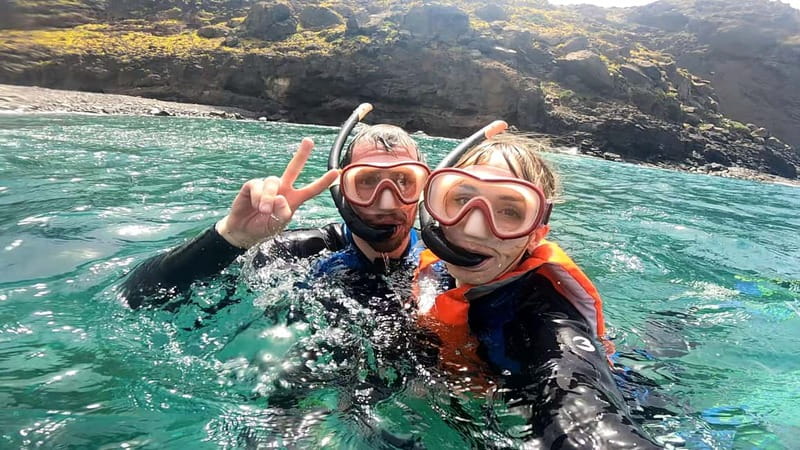
The water section provides a welcome contrast to the height and ropes. The tour includes a wetsuit and snorkel kit, and the route ends with time in the sea near the coast.
For some people, snorkeling may become the favorite part. After the concentration needed for the ferrata, floating in clear water offers a quieter way to experience Agaete. It also gives the day a better balance. You are not spending five hours in a constant state of nerves.
You must be able to swim. The tour is not suitable for non-swimmers, and the sea is not simply a decorative backdrop. If you are comfortable in open water and can manage the earlier physical sections, this finale should feel refreshing.
Bring swimwear and a towel. Sunscreen, water, and an extra jacket are also sensible. The activity includes a snack at the end, but you should not rely on one small snack to fuel a long, active outing. One participant specifically advised bringing extra food and plenty of water, especially since the experience can run beyond five hours.
How much value do you get for $81?
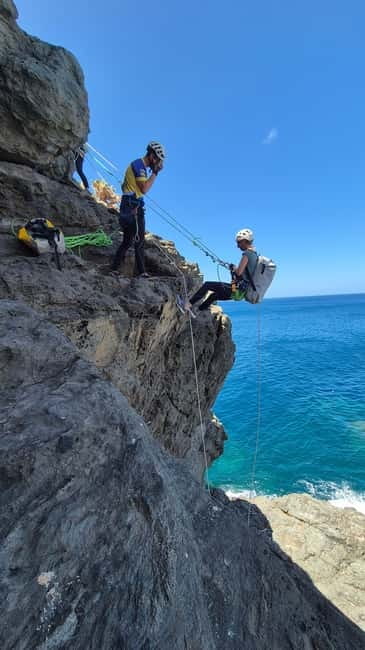
At $81 per person, this is more expensive than a basic coastal walk but much better value than booking several separate activities. The fee covers a professional guide, insurance, harness, helmet, wetsuit, snorkel equipment, a snack, and a photo report.
The included photos are especially useful. You cannot easily photograph yourself while abseiling, clipped into a ferrata, or flying over the sea. A free photo report lets you keep evidence of the day without asking a stranger to handle your phone near a cliff.
You are also paying for route planning and safety management. The value is not just the equipment. It is having a guide choose the safest line, explain the techniques, monitor the group, and cancel exposed sections when the weather is poor.
Still, the price only makes sense if you want an active day. If you mainly want views of Agaete, a normal coastal excursion will cost less and demand far less from you. This tour earns its price through variety, instruction, safety cover, and access to parts of the coast you would not reach on a standard walk.
What to wear and carry
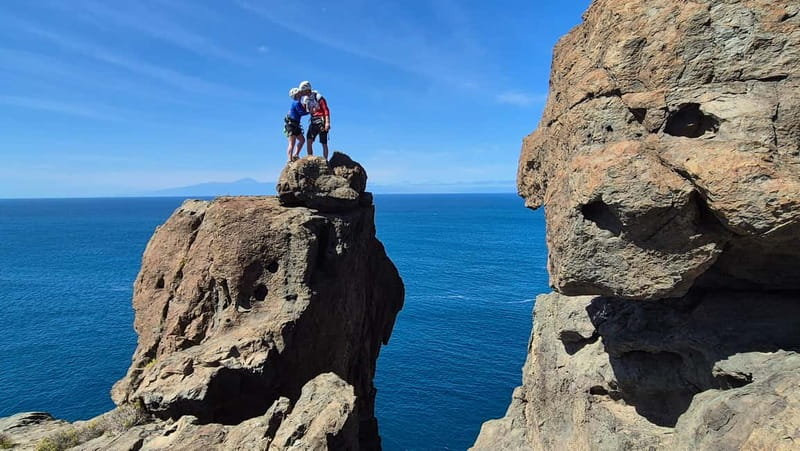
Use hiking boots or sturdy sports shoes rather than casual trainers with smooth soles. You need footwear that can cope with a cliff path and rough rock.
Wear sports clothes that allow movement. Avoid shorts because of the rock, and keep clothing reasonably compact because it will be stored in dry bags with limited room. The provider supplies the wetsuit, harness, helmet, and snorkel equipment.
Bring:
- Swimwear
- A towel
- Sunscreen
- Plenty of water
- Breathable clothing
- A jacket
- Sports shoes
- A small amount of extra food
You should also arrive ready for changing conditions. Agaete may feel warm at the start, but the route includes exposed heights, sea spray, and time in the water. A light jacket can make the difference between a comfortable outing and a cold one.
Who should book, and who should skip it?
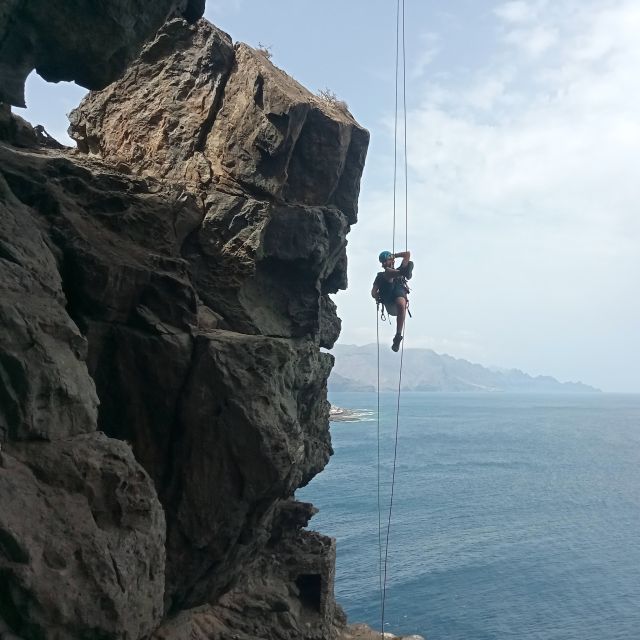
This is a strong choice for fit adults who want a full-body outdoor challenge and enjoy trying several activities in one day. You do not need previous climbing experience, but you do need a reasonable level of fitness, a steady head for heights, and comfort in the sea.
The experience is not suitable for children under 16, pregnant women, people with back problems, people with mobility impairments, people afraid of heights, people with vertigo, non-swimmers, or anyone over 110 kilograms. It is also not recommended for people over 55 or those with a low level of fitness.
The age guidance is stricter than you might expect for an adventure tour, so take it seriously when planning. If you are close to one of those limits, contact RockNatour before booking rather than assuming the rule is flexible.
Pablo’s guiding style appears to be a major part of the experience. He explains the techniques, adds humor, and gives historical information during the walk. That combination helps first-timers, who may otherwise spend the whole day worrying about the next obstacle.
The repeated praise for his calm, supportive approach is useful, but it does not remove the physical demands. A kind guide can help you manage fear. He cannot make a steep cliff, rough rock, or open water feel like a flat walking path.
Booking flexibility and timing
The advertised duration is five hours, with the guided activity portion listed at about four hours. Allow extra time rather than scheduling a tight connection afterward, since the day can run longer depending on the group and conditions.
You can cancel up to 24 hours before the activity for a full refund, and the reserve-now, pay-later option gives you some flexibility while finalizing your Gran Canaria plans. Starting times depend on availability.
The tour meets at the parking area close to the Playa de Caleta roundabout in Agaete. Hotel transfers are not included, so check your route to the meeting point before booking.
Should you book the Agaete coasteering tour?
Book it if you want an active, high-adrenaline day with real variety: a cliff hike, local stories, an Aboriginal cave, abseiling, a marine ferrata, a sea zipline, snorkeling, and a final view from above. The small group, included gear, photos, and careful guiding make $81 a reasonable price for the amount packed into the day.
Skip it if you dislike heights, cannot swim, have limited fitness, or want a relaxed coastal outing. You should also accept that weather may remove the ferrata or zipline, even when you have paid for them.
For the right person, this is one of the more memorable ways to see Agaete. You get the Atlantic from several angles: above it, beside it, and finally in it.
FAQ
Where does the Agaete coasteering tour meet?
The meeting point is in the parking area near the roundabout at Playa de Caleta in Agaete. Hotel pickup and drop-off are not included.
How long does the experience last?
The activity lasts about five hours. The guided tour portion is listed as approximately four hours, so allow some extra time in your schedule.
What equipment is included?
The tour includes a harness, helmet, wetsuit, snorkel kit, insurance, a professional guide, a snack, and photos.
Do I need previous climbing experience?
Previous climbing experience is not stated as a requirement, and the guide teaches you the techniques. You do need a reasonable fitness level and must be comfortable with heights, ropes, rough rock, and the sea.
Can children join the activity?
No. The experience is not suitable for children under 16 years old.
What happens if the weather is bad?
The guide may cancel the marine via ferrata or zipline if conditions make those sections unsafe. The decision is made for safety, and the route may not include every planned activity in poor weather.
More Via Ferrata Routes in Gran Canaria
- Banff: Mount Norquay 2.5 or 4-Hour Guided Via Ferrata Climb
★ 4.9 · 305 reviews - Sant Feliu de Guixols: Climb Via Ferrata Cala del Molí
★ 5.0 · 253 reviews - Via Ferrata / Rappel Adventure in East Zion
★ 5.0 · 224 reviews - Telluride Via Ferrata – Private Trip
★ 5.0 · 214 reviews
More Zip Lines in Spain
- Gran Canaria: Guided Via Ferrata and Zipline Adventure
★ 4.1 · 36 reviews - Caminito del Rey – Via Ferrata & Zip Line Adventure
★ 5.0 · 26 reviews - Caminito del Rey: Vía Ferrata Rappeling & Zip-Lining
★ 5.0 · 22 reviews - Bosc Aventura Salou: Extreme Ziplines
★ 4.8 · 5 reviews
Just added around Gran Canaria
- Las Palmas: Coastering, Via Ferrata, Water Jumping & Snorkel★ 4.9 · 40 reviews
- Las Palmas, Gran Canaria: Canyoning Adventure★ 4.8 · 33 reviews
- Gran Canaria: Canyoning Adventure in the Green Heart Jungle★ 4.9 · 45 reviews
- Gran Canaria: Canyoning in the rainforest★ 5.0 · 4 reviews
- Gran Canaria: Adrenaline-Filled Coasteering Experience★ 4.5 · 65 reviews
- Canyoning in the Rainbow Mountain Gran Canaria★ 4.6 · 5 reviews
- Gran Canaria: Canyoning in the Rainforest★ 4.8 · 48 reviews
- Gran Canaria: Guided Via Ferrata and Zipline Adventure★ 4.1 · 36 reviews
Via Ferrata Climbing, compared.
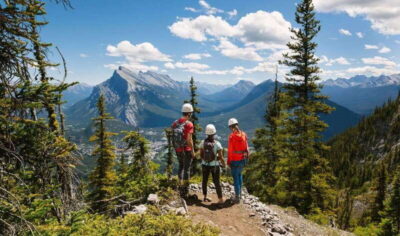
Banff: Mount Norquay 2.5 or 4-Hour Guided Via Ferrata Climb
Read our review →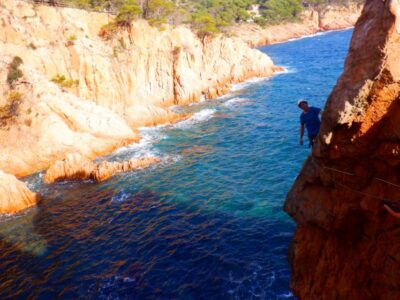
Sant Feliu de Guixols: Climb Via Ferrata Cala del Molí
Read our review →
Small-Group Guided Via Ferrata Climbing with Banff’s Best Views
Read our review →