
Review · SPAIN
Villena: Tour Guide Via Ferrata Climbing with Abseiling
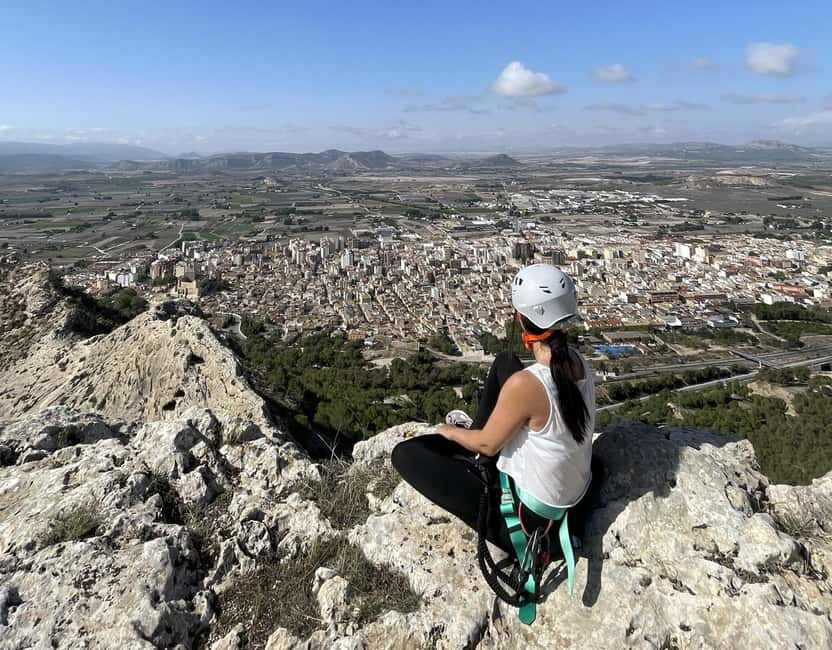
The mountain asks you to trust your feet. This four-hour Villena outing mixes via ferrata climbing, suspension bridges, and abseiling into one lively morning, with views toward Salvatierra Castle and the valley from above 750 meters. I especially like the small group of no more than 10 people and the calm, encouraging guidance from Tomás, also called Tomy by participants.
I also like the choice between a shorter and longer route, which lets you match the challenge to your nerve and energy. The main caution is simple: heights are part of the deal. Metal ladders, exposed crossings, and abseiling will not suit anyone with vertigo or altitude sickness.
Key points before you book
- Three mountain skills in one outing: You combine climbing, via ferrata sections, and abseiling rather than doing a single short activity.
- A summit above 750 meters: The reward is a broad view across Villena and its region, with Salvatierra Castle in the distance.
- Tibetan cable bridges: These crossings bring the sharpest dose of exposure and excitement.
- A small group of up to 10: You get a more personal setting than on a large adventure excursion.
- A guide-led first attempt: Tomás, known as Tomy, is praised for clear instructions, humor, and helping beginners stay calm.
- Good booking flexibility: You can reserve now and pay later, with free cancellation up to 24 hours before the activity.
Why Villena is a fine place for a via ferrata
Villena gives this adventure a strong sense of place. You are not doing an indoor climbing session or repeating a small artificial course. You meet in the village, collect your equipment, and head toward the Mirador de la Sierra, where the route begins above the town.
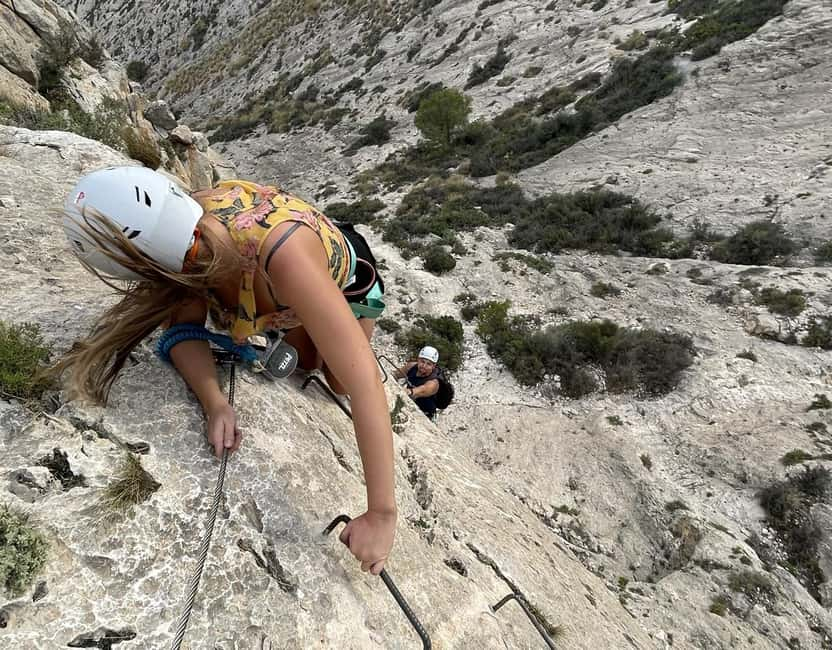
The setting matters. A via ferrata lets you move across rock using fixed metal steps, ladders, cables, and other installed aids. You do not need to be an expert climber, but you do need to stay alert and use the equipment correctly. The appeal is the mix of physical effort and open views. You are working with your hands and feet while the valley spreads out below.
I like that the route is described as varied rather than one long ladder. You can expect climbing on metal steps, wall sections, exposed crossings, and a descent that includes abseiling. That variety keeps the four hours from feeling repetitive.
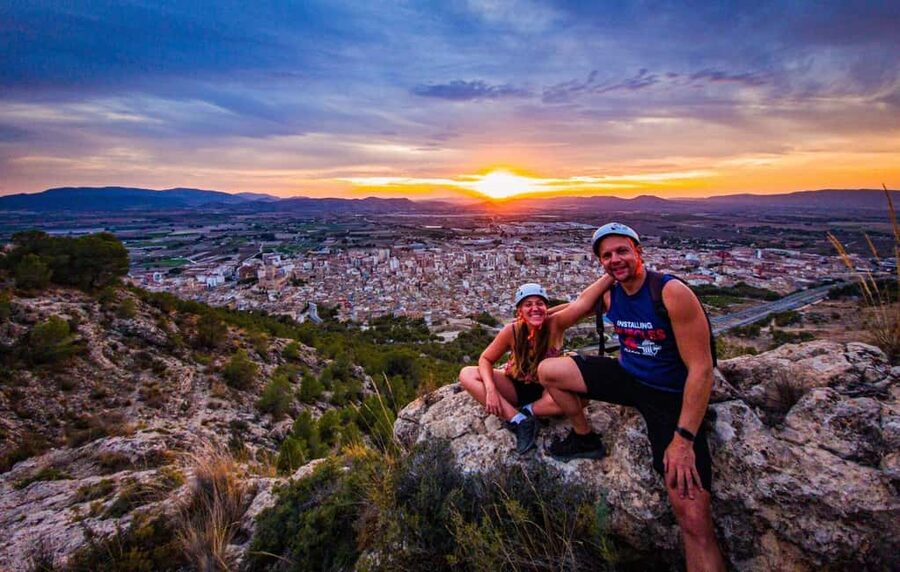
The scenery also gives the activity a clear payoff. From the summit, you look over Villena and the surrounding region, with Salvatierra Castle serving as a memorable point in the view. This is the kind of stop where you will want a few photographs, but take the time to enjoy the moment too. After concentrating on every handhold, a quiet pause at the top feels well earned.
More Via Ferrata Routes in Spain
- Sant Feliu de Guixols: Climb Via Ferrata Cala del Molí
★ 5.0 · 253 reviews - Gran Canaria: Guided Via Ferrata Excursion
★ 4.9 · 198 reviews - Via Ferrata in Gran Canaria. Vertical adventure park. Small groups
★ 5.0 · 183 reviews
Meeting the guide and getting ready
The tour begins in the village, where you meet a guide wearing a green Masaventura.es shirt with the company logo. That detail is useful, especially if several people are gathering nearby. You receive the safety equipment, including a helmet and harness, then get an explanation of how it works.
This briefing is one of the most important parts of the morning. A first via ferrata can look intimidating because the equipment and route are unfamiliar. Clear instructions help you focus on moving well instead of worrying about every cable and clip.
The guides speak English, Spanish, Portuguese, Catalan, and French. That language range is helpful in a small group, especially when the guide needs to explain safety procedures quickly and clearly. The activity is not self-guided, and professional guides accompany you throughout.
Tomás, referred to as Tomy by participants, receives particularly warm praise for his approach. His style combines confidence, humor, and reassurance. That matters when you are about to climb a metal ladder on a cliff for the first time. A good guide cannot remove the height, but can make the challenge feel manageable.
You should still treat the briefing seriously. This is an active mountain route, not a casual walk with a few photos. Listen carefully, ask questions before leaving the meeting point, and tell the guide if you feel uncertain.
Walking to the Mirador de la Sierra
After the equipment check, you climb toward the Mirador de la Sierra, the starting point of the route. The information provided does not give a separate walking time, so you should think of this approach as part of the four-hour experience rather than a long independent hike.
The viewpoint gives you an early look at the reward ahead. Before the most demanding sections begin, you can start to see the surrounding area from higher ground. This helps you understand the route as a journey from village to mountain rather than a disconnected climbing exercise.
The approach may also be your last easy chance to settle your nerves. Adjust your helmet and harness, drink some water, and make sure you are comfortable with the pace. Bring water and food, as neither is included.
Because the group is limited to 10 people, the guide can keep an eye on the participants as the route develops. That does not mean everyone moves at the same speed or has the same comfort level. It does mean the outing has a more personal feel than a large group activity.
Metal steps, rock walls, and the first real test
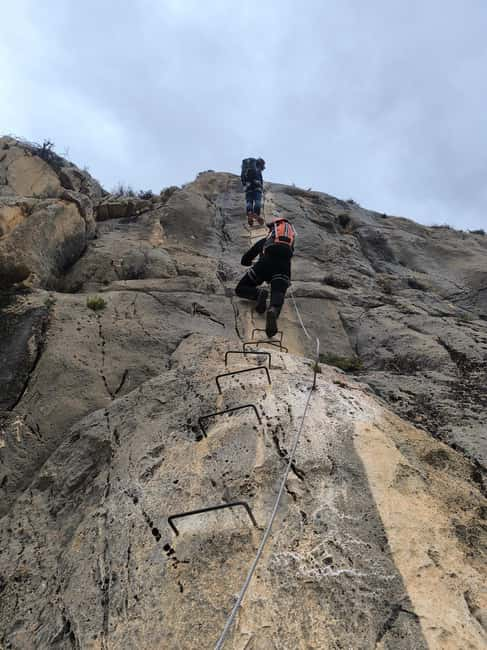
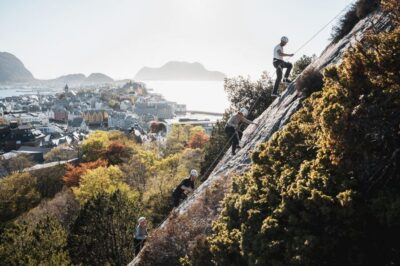
The via ferrata section uses metal steps fixed into the wall. You climb upward one step at a time, using the installed protection and following the guide’s instructions.
This is where the activity becomes more than a scenic walk. You need to pay attention to your feet, hands, balance, and the route ahead. The movement is not described as technical climbing in the traditional sense, but it still asks for concentration and a willingness to work vertically.
For a first-timer, the first wall can feel like the biggest mental hurdle. The height becomes real once you are above the ground, and the metal structure may look more dramatic from below than it feels once you find a steady rhythm. The experience of one first-time participant shows the value of a positive guide: with Tomás offering clear, upbeat support, a difficult first climb became an achievement rather than a reason to turn back.
Still, you should not book this simply because the price looks attractive. The activity is not suitable for children under 6, pregnant women, people with vertigo, or people with altitude sickness. Those restrictions are not minor fine print. They describe the central demands of the route.
Same rush, a different way to get it:
- Barcelona Costa Brava Kayak, Snorkel & Cliff Jump Day Tour
★ 5.0 · 3,872 reviews - Barcelona: Costa Brava Kayak, Snorkel & Cliff Jump & Lunch
★ 4.9 · 2,391 reviews - Mallorca: Quad Bike Tour, Snorkeling, and Cliff Jumping
★ 4.8 · 2,294 reviews - From Marbella: Guadalmina River Guided Canyoning Adventure
★ 4.9 · 1,486 reviews
Tibetan bridges over the open air
The Tibetan cable bridges are likely to be the most memorable section. You cross above the void on a suspended route, with the valley visible around you and below.
This is the point where the tour earns its adventure label. A metal ladder tests your climbing rhythm, but a suspension bridge adds movement and exposure. You may feel the bridge shift as you cross, which is precisely why the guide’s instructions and your safety equipment matter.
The bridges also provide a natural choice about how much intensity you want. The route can be taken in a shorter or longer version, according to the information provided. The longer option is not simply extra time on a path. It offers a fuller challenge for people who want more climbing and exposure.
I would ask the guide about the route choice early in the outing. If you feel strong and comfortable, the longer version may give you the most satisfying morning. If your nerves are already working hard, the shorter option may be the smarter decision. Finishing a route you enjoyed is better than pushing past your limits to prove something.
The bridge sections are also where a small group helps. You may need to wait while another person crosses, and a group of 10 or fewer keeps that process more controlled. The exact pace will depend on the people in your group and the guide’s safety decisions.
The summit above 750 meters
The route reaches a summit above 750 meters, where you stop to take in the view. This is more than a quick photo stop. The top gives the activity a clear sense of purpose after the concentration of the climb.
From here, you can look across Villena and its region, with Salvatierra Castle as a backdrop. The view connects the physical challenge to the area’s character. You are not just high above a cliff. You are seeing the town, valley, and castle from a position that ordinary sightseeing does not provide.
This is also the right time for photographs. Keep your camera or phone secure, and follow the guide’s advice about where it is safe to stop. The information does not specify photography equipment or storage, so bring only what you can carry comfortably and safely.
I like the pause at the summit because it prevents the outing from becoming a race. You get time to breathe, enjoy the fresh air, and feel the satisfaction of reaching the top. For many people, that emotional reward may be as important as the physical activity.
The descent and abseiling finish
The descent completes the triple adventure with abseiling. After climbing up the wall and crossing suspended sections, descending by rope gives you a different way to use the mountain.
The provided details do not specify the exact abseiling height, number of descents, or rope setup, so you should ask the guide for those particulars at the start. What is clear is that the activity includes a guided descent and that the equipment and instructions are part of the safety process.
Abseiling can feel strange at first because you lean back into the harness and control your downward movement rather than simply walking down. The guide will explain the system and help you proceed safely. If you are nervous, say so. Tomás’s reassuring style is especially useful at moments like this.
The descent also gives you a different view of the rock. Climbing makes you focus on the next step. Abseiling lets you look outward more often, although you still need to follow the guide’s instructions and manage your position carefully.
The four-hour duration gives the activity room to include preparation, the approach, the route, the summit stop, and the descent. It is not a quick thrill squeezed into a short slot. At the same time, it is a half-day commitment, so plan the rest of your day around being outdoors and active.
Is $58 a fair price?
At $58 per person, I see solid value if you want a guided mountain activity rather than a simple viewpoint visit. The price covers a four-hour experience with professional guides, safety equipment provided at the meeting point, climbing, via ferrata sections, bridge crossings, and abseiling.
The value is strongest for beginners. You are paying for instruction, route management, and a guide who can help you handle the mental side of the activity. A self-guided mountain outing might cost less, but it would not provide the same structure or professional supervision.
The small group limit also supports the price. With no more than 10 participants, the outing has a better chance of feeling personal and controlled. I would not call it cheap entertainment, especially once you add the effort involved. But for a four-hour, guide-led adventure with several distinct elements, the cost is reasonable.
Food and drinks are not included. Bring water and something to eat. The tour data does not specify a meal stop, so do not count on lunch being supplied during the activity.
The reserve-now-pay-later option is useful if your schedule is still moving. You can reserve a place without paying immediately, and cancellation is free up to 24 hours before the activity for a full refund. Check the available start times before booking, since the activity lasts four hours.
Who will enjoy this most?
I would recommend this for adults and older children who enjoy active outings, can manage exposed heights, and want a clear challenge with professional guidance. It is especially well suited to first-timers who like the idea of climbing but want a guide nearby.
It also works well for friends looking for a shared achievement. The route gives you several moments to encourage one another, from the first ladder to the bridge crossings and the summit. Just remember that group fun does not remove the need for personal responsibility.
You should skip it if you have vertigo or altitude sickness, are pregnant, or are bringing a child under 6. You also need to be comfortable with the possibility that a vertical route and suspended bridge will test your nerves.
Language should not be a major barrier, since guides operate in English, Spanish, Portuguese, Catalan, and French. If you need a specific language, confirm it when checking availability.
Practical tips for a smoother morning
Wear clothing that lets you move freely and shoes suited to a mountain route. The supplied information does not name a required shoe type, so choose secure footwear you already trust outdoors rather than arriving in casual shoes.
Bring water and food, and keep both compact enough to carry safely. A helmet and harness are provided, but you are responsible for arriving ready for several hours of physical activity.
Arrive with enough time to meet the guide and understand the equipment. The green Masaventura.es shirt is the visual clue at the meeting point. If you are unsure about the route length, ask about the shorter and longer choices before you start climbing.
Do not measure success by choosing the longest option. The best route is the one that leaves you feeling challenged but still in control. If you are new to via ferrata, the guide’s advice should carry more weight than a desire to impress your friends.
Should you book the Villena via ferrata?
I would book this if you want a compact, well-supported mountain adventure with real height, varied movement, and a worthwhile view at the top. The combination of metal climbing steps, Tibetan bridges, and abseiling gives you more variety than a single activity, while the small group and multilingual guide support make it approachable for beginners.
I would not book it as a casual family outing or if heights make you uneasy. For the right person, $58 buys a memorable half-day challenge and the satisfaction of reaching a summit above 750 meters. Choose the shorter or longer route honestly, listen closely to the guide, and bring water. That is the sensible way to enjoy Villena from above.
FAQ
Where does the Villena via ferrata activity take place?
The activity takes place in the mountains of Villena in Spain’s Valencian Community. The route begins at the Mirador de la Sierra and reaches a summit above 750 meters.
How long does the activity last?
The activity lasts four hours. Check the available start times when booking.
What does the tour include?
Professional tour guides are included. Safety equipment such as a helmet and harness is provided at the meeting point for the activity.
Is abseiling part of the experience?
Yes. The activity combines climbing, via ferrata sections, and abseiling as part of the mountain adventure.
How large is the group?
The activity is offered as a small group with a maximum of 10 participants.
Which languages are available?
Guides operate in English, Spanish, Portuguese, Catalan, and French.
What should I bring?
Bring water, food, and drinks. You should also arrive prepared for an active mountain outing.
Who should not take part?
The activity is not suitable for children under 6, pregnant women, people with vertigo, or people with altitude sickness.
Can I cancel or pay later?
You can reserve now and pay later. Cancellation is free up to 24 hours in advance for a full refund.
More Rock Climbing in Spain
- Gran Canaria: Cliff Climbing Via Ferrata Trip by Maspalomas
★ 4.9 · 177 reviews - Climbing + Zipline + Via Ferrata + Cave. Adventure route in Gran Canaria
★ 5.0 · 149 reviews - Climbing the John Hogbin Via Ferrata with Lunch
★ 5.0 · 94 reviews - Ronda: Tajo de Ronda Via Ferrata Guided Climbing Tour
★ 5.0 · 74 reviews
More Abseiling and Rappelling in Spain
- Estany d’en Mas: Coastal Hike, Abseil & Sea Cave Exploration
★ 4.9 · 162 reviews - Río Verde, Otivar, Granada: canyoning, crystal clear waters, jumps, and rappelling.
★ 4.9 · 12 reviews - Sierra de las Nieves: Zarzalones Canyoning For Rappel Lovers
★ 5.0 · 11 reviews - Adventure Cahorros, Monachil/ Climbing and abseiling Granada
★ 5.0 · 5 reviews
Just added around Spain
- Sierra de las Nieves: Zarzalones Canyoning For Rappel Lovers★ 5.0 · 11 reviews
- Wild canyoning in Sierra de las Nieves, Málaga★ 5.0 · 22 reviews
- Via Ferrata Adventure in Costa Brava + Transport★ 5.0 · 3 reviews
- Via Ferrata Gran Canaria: Rock Climbing for beginners★ 5.0 · 11 reviews
- Barcelona: Via Ferrata Baumes Corcades in Centelles★ 5.0 · 7 reviews
- Valencia: Guided Via Ferrata Experience★ 3.8 · 4 reviews
- Valencia: Coasteering Adventure in Cullera Lighthouse★ 4.8 · 4 reviews
- Valencia: Canyoning Half-Day Adventure Tour★ 4.9 · 5 reviews
Via Ferrata Climbing, compared.
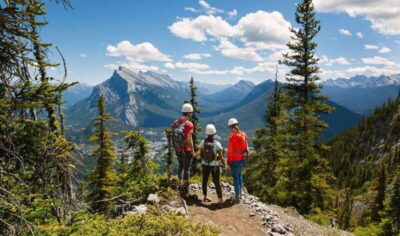
Banff: Mount Norquay 2.5 or 4-Hour Guided Via Ferrata Climb
Read our review →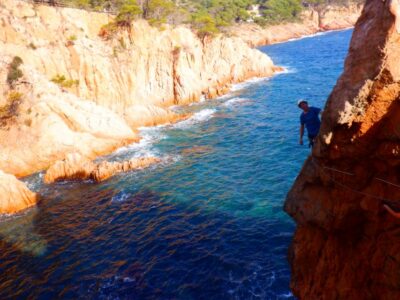
Sant Feliu de Guixols: Climb Via Ferrata Cala del Molí
Read our review →
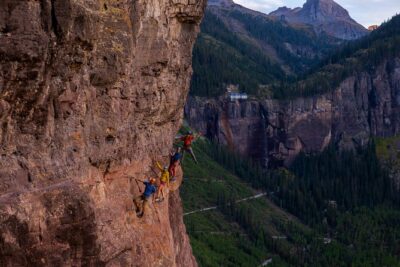
Small-Group Guided Via Ferrata Climbing with Banff’s Best Views
Read our review →
Via Ferrata in Gran Canaria. Vertical adventure park. Small groups
Read our review →Browse the lists this tour appears in