
Review · NORWAY
Hornelen Via Ferrata Wall of Witches Climbing Adventure
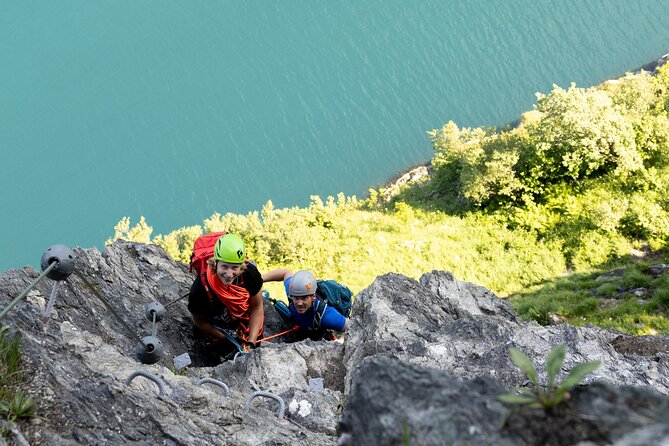
The sea is your climbing backdrop. Hornelen’s Wall of Witches gives you exposure above the fjord and a route with enough variety to keep the day interesting. I especially like the shoreline approach and the chance to eat with your feet hanging high above passing ships. The guides also get strong praise for calm, careful instruction, including Felix, Paul, and Ian.
The main caution is simple: this is not a casual walk. The route is graded C/D, and the operator asks for strong physical fitness. You will hike before the climbing starts, then spend much of the route attached to steel cables on exposed rock. Rain and wind can make the outing feel much harder.
At about five hours, with groups limited to eight people, this is a focused half-day adventure rather than a quick photo stop. You get the helmet, harness, and via ferrata safety set, but you must bring suitable boots, outdoor clothing, and a backpack.
Key points to know before climbing
- Climb above the sea: The Wall of Witches rises directly over the water, with ships and eagles potentially far below and nearby.
- Moderate does not mean easy: The C/D rating suits active people and climbers who can handle sustained effort and exposure.
- A scenic approach comes first: You begin by hiking along the shoreline before reaching the rock section.
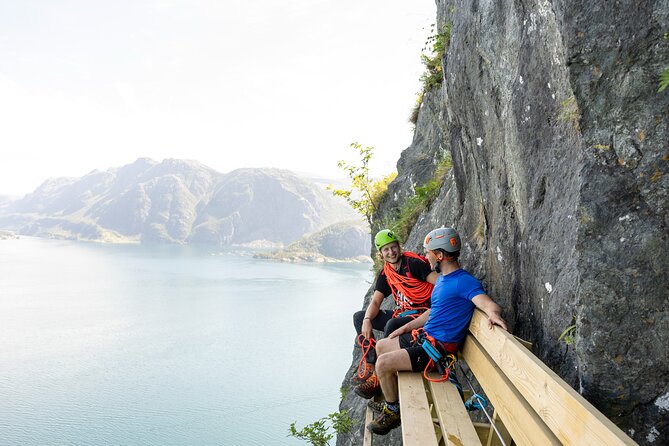
- Lunch comes with a view: Breaks can include time to eat with your feet dangling several hundred meters above the sea.
- Small groups matter: The maximum group size is eight, and private departures have sometimes meant very close guide attention.
- It ends halfway up Hornelen: This route does not summit the mountain. The harder Olavsrute is the option for a full summit climb.
Why the Wall of Witches feels different
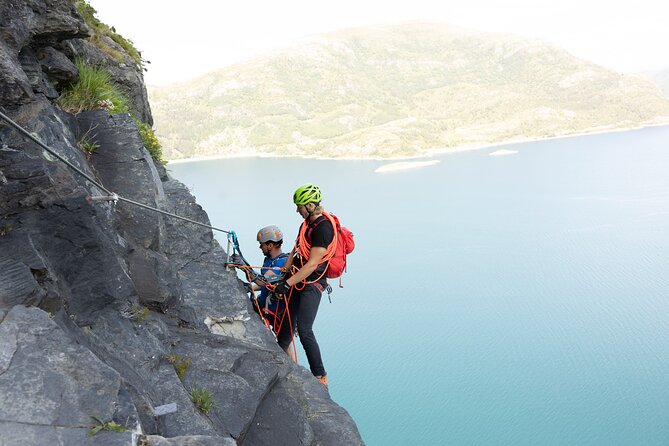
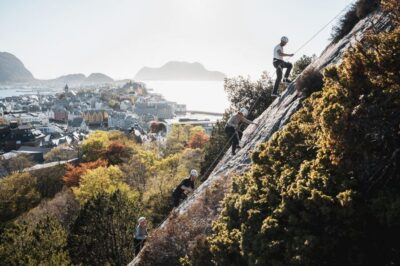
Many via ferratas trade on height, but Hornelen adds a rare sense of open water beneath you. The climbing takes place directly above the sea, so your view is not just a valley or a distant ridge. You look across the fjord, down toward ships, and out into wide Norwegian air.
That setting changes the mood of the climb. A steep section is exciting on its own, but a steep section with open water far below feels more serious. The route gives you a clear reason to keep moving, then rewards you with big pauses where you can look around.
I also like that this is not simply a ladder fixed to a cliff. The outing begins with hiking along the shoreline, then shifts into a technical route. That change gives the day a natural rhythm: walk, prepare, climb, rest, and climb again.
The route is called the Wall of Witches, or Hekseveggen in Norwegian references. It is the moderate route in the Hornelen system, graded C/D on a scale from A to F. In practical terms, that places it well above a beginner stroll but below the hardest via ferrata levels.
More Via Ferrata Routes in Norway:
- Ålesund: Via Ferrata tour
★ 4.9 · 203 reviews - Odda: Full-Day Trolltunga Via Ferrata & Sky Ladder Adventure
★ 4.8 · 115 reviews - Via Ferrata Åndalsnes Intro Wall
★ 5.0 · 84 reviews
The shoreline approach sets the pace
Your meeting point is Hornskorvegen 22, 6719 Skatestraumen, Norway, with a 9:00 am start. The supplied location is also described as Skjolden, so check the exact meeting details carefully when booking and planning your drive.
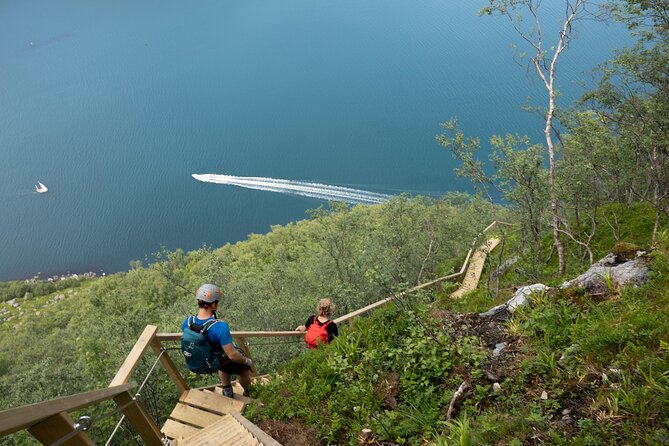
The first part is a hike along the shoreline. This is useful rather than wasted time. You get a chance to warm up, see the rock from below, and settle into the group before the route turns upward.
The approach also helps explain why good footwear matters. Personal equipment is not included, and the operator specifically asks you to bring good hiking boots, outdoor clothing, and a backpack. The approach may be scenic, but it still adds physical work before you reach the cables.
I would keep your pack light. Bring only what you need for the half-day outing, including food and suitable clothing for changing weather. The route has high exposure, and a wet or windy day can make ordinary tasks feel more demanding.
Getting fitted for the via ferrata
The tour provides the main safety equipment: a helmet, harness, and via ferrata set. That removes the need to own or transport specialized climbing gear, which is a real part of the tour’s value.
Your own clothing still matters. The supplied information does not give a complete equipment checklist, so you should think in simple outdoor terms: firm hiking footwear, clothing suited to rain and wind, and a backpack that stays secure while you climb.
The guides are an important part of the package. The strongest praise goes to their safety work and personal attention. One guide, Paul, was singled out for creating a safe experience for a mixed group in which one person climbed regularly and the other did not. Felix was praised for handling rain and gusts, while Ian and Felix were noted for keeping track of everyone in the group and explaining what they knew.
That matters on a route rated C/D. The equipment clips you to the cable, but a guide still helps you read the route, manage your energy, and stay calm when the rock becomes steep or exposed.
Climbing the C/D route above the fjord
Once the climbing begins, expect varied movement rather than one long, uniform wall. The route has sections of rock climbing linked by the protected via ferrata system. You use the fixed cable and installed aids while choosing your own footholds and hand placements.
The grade gives you a useful warning. C/D is called moderate by the operator, but moderate in a mountain setting can still be tiring. You need enough strength to pull yourself through awkward moves, enough balance to use small footholds, and enough stamina to keep working after the approach hike.
The height is the route’s main attraction and its main challenge. You may feel your pulse rise simply from looking down. That is normal. The sea below gives the route a strong sense of exposure, even when the cable and harness make the climbing system feel secure.
One useful detail from the outing is that the route allows both shorter and longer breaks. That makes the day more manageable for a mixed group. You are not expected to rush every section, and you can pause to recover, eat, or take in the view.
One account also noted a toilet and running water from a small water feature along the route. Treat that as a practical feature of the setting, not as a promise of full facilities. You should still arrive prepared, since this is a mountain activity rather than a developed attraction.
More Rock Climbing in Norway:
- Mountain-climbing adventure in Mosjøen Via Ferrata
★ 4.7 · 3 reviews - Stavanger: Månafossen Waterfall and Via Ferrata Bouldering
★ 5.0 · 2 reviews - Nido de los Aguiluchos, Monterrey: Hiking + Rock Climbing + 3 Rappels
★ 5.0 · 713 reviews - Banff: Mount Norquay 2.5 or 4-Hour Guided Via Ferrata Climb
★ 4.9 · 305 reviews
Lunch with your feet above the sea
The lunch stop is one of the most memorable parts of the route. The setting allows you to eat with your feet dangling several hundred meters above the sea while ships pass below. Eagles may even be flying at a similar height.
That is not a minor photo opportunity. It gives the climb a proper pause and lets you understand the scale of the cliff. You can look back at the shoreline approach, study the water below, and see how far the route has taken you.
Bring food that is easy to handle. A complicated meal is not a good match for a harness, a backpack, and a narrow mountain setting. The supplied information does not specify whether lunch is provided, so plan to carry your own food unless the operator tells you otherwise.
The weather can change the tone of this stop. On a clear day, the view should feel open and bright. In rain or gusts, the same perch may feel more exposed. Felix was praised for guiding safely through rain and strong wind, but poor conditions can still make the day colder, harder, and less comfortable.
Where the Wall of Witches ends
The Wall of Witches route ends halfway up the mountain. This is important because the dramatic views may make you want to keep going, but this half-day outing is not a summit climb.
The operator offers the Olavsrute for people who want the hardest route and a summit of Hornelen. That makes the Wall of Witches a sensible first step for active people who want to test themselves before committing to the full mountain.
You should choose this route if you want a demanding climb with a clear finish. You should consider the Olavsrute only if you specifically want the summit and are ready for a harder day. The two options serve different purposes, and the Wall of Witches is not a shortened version of the full summit in terms of ambition.
One person who began on the lightest option, Ørnelia, found that the early section followed the same way as the harder Hekseveggen before the routes separated. That suggests the lower part of the Hornelen system can help you judge how you feel before choosing a greater challenge, though your exact route should be confirmed with the operator.
A closer look at the guides
Guiding is where this tour earns much of its appeal. Via ferrata equipment gives you a protection system, but a good guide makes the whole route easier to understand.
Paul received especially warm praise for working with mixed abilities. That is useful if your group includes one confident climber and one person who is new to the sport. A guide who watches both people can keep the day safe without making the stronger climber feel held back.
Felix was praised for being trustworthy and skilled during rain and gusts. That is exactly the sort of judgment you want in a mountain setting. Ian and Felix were also praised for noticing individuals in the group and sharing practical knowledge along the way.
The maximum group size is eight. That is small enough to allow more direct contact than a large commercial outing. Some departures have been private or nearly private, including a single-person booking and a two-person group. You cannot assume that every departure will be private, but the eight-person limit is still helpful.
What the $201.14 price gives you
At $201.14 per person, this is not a cheap walk. The value depends on what you would otherwise need to arrange yourself.
The price includes the via ferrata equipment and access to the route. You are also paying for a guided outing on a specialized cliff route, route supervision, and the time needed to manage a small group safely. For a first via ferrata, that guidance may be more valuable than the equipment alone.
You still need to provide your own boots, clothing, backpack, and likely your own food. Transport to the meeting point is not listed as included, so you should plan that separately. The tour lasts about five hours and returns to the meeting point, which keeps the day easier to organize than a one-way mountain route.
I see the price as reasonable for someone who wants a guided, protected climb in a highly unusual setting. It is harder to justify if you already have extensive via ferrata experience, your own equipment, and the ability to plan routes independently. Even then, Hornelen’s sea-level exposure and local guiding may make the fee worthwhile.
Who should book this climb?
I would recommend it to active people who want a serious half-day challenge rather than a gentle hike. It also suits climbers who want a different setting, especially if the thought of climbing above open water appeals to you.
It can work for mixed groups, provided everyone has a strong physical fitness level and is comfortable with height. The examples include young people aged 12, 14, and 15 completing the route with adults, but the supplied rules do not set a formal minimum age. Do not assume children are accepted without confirming first.
This is less suitable if you dislike exposed heights, struggle with sustained exertion, or want a relaxed sightseeing tour. The route is protected, but protected does not mean flat, easy, or free of nerves.
The outing has a 100 percent recommendation rate from the supplied ratings and a five-star overall score based on 10 reviews. That is a small sample, so I would treat it as encouraging rather than final proof. The repeated praise for safety, scenery, route design, and guide quality is more useful than the score alone.
Practical details before you commit
The tour starts at 9:00 am and ends back at the meeting point after roughly five hours. Confirmation is provided at booking, and mobile tickets are available.
The activity is non-refundable and cannot be changed for any reason. That makes weather and fitness planning especially important. Since rain and gusts have occurred during successful outings, the key issue is not simply a cloudy forecast, but whether you are prepared for a colder and more demanding day.
Bring good hiking boots, outdoor clothing, a backpack, and food unless the operator gives you different instructions. The helmet, harness, and via ferrata set are provided.
FAQ
Where does the Hornelen Wall of Witches tour meet?
The meeting point is Hornskorvegen 22, 6719 Skatestraumen, Norway. The activity ends back at the meeting point.
What time does the tour start?
The stated start time is 9:00 am.
How long does the experience last?
The activity lasts approximately five hours.
What equipment is included?
The tour includes a helmet, harness, and via ferrata set, along with use of the via ferrata route.
What do I need to bring?
You need to bring personal equipment, including good hiking boots, a backpack, and suitable outdoor clothing.
How difficult is the Wall of Witches route?
The Wall of Witches is graded C/D on a via ferrata scale from A to F. The operator recommends a strong physical fitness level.
How many people can join the tour?
The maximum group size is eight people.
Should you book the Wall of Witches?
Book it if you want a guided, physically demanding climb with views that ordinary mountain walks cannot match. The combination of shoreline hiking, exposed rock, sea views, passing ships, and a lunch stop high above the fjord gives the day a clear sense of place.
I would skip it if you want a simple hike, dislike heights, or cannot prepare for a fixed, non-refundable booking. For everyone else, the Wall of Witches is a strong choice, especially as a first serious via ferrata at Hornelen before considering the harder Olavsrute.
Just added around Norway
- Extreme Canyoning With Waterfall Rappelling near Geilo in Norway★ 5.0 · 10 reviews
- High Adrenaline Rafting in Dagali near Geilo in Norway★ 5.0 · 17 reviews
- Canyoning Adventure in Hidden Mountain Rapids near Geilo★ 4.5 · 16 reviews
- Full Day Combo Kayak and Rappel – Northern Explorer★ 5.0 · 25 reviews
- Half-Day Hiking in Mosjøen Via Ferrata★ 4.5 · 7 reviews
- Stavanger: Månafossen Waterfall and Via Ferrata Bouldering★ 5.0 · 2 reviews
- Sjoa: Spectacular Via Ferrata★ 5.0 · 2 reviews
- Overnight: Trolltunga Via Ferrata Sky Ladder Glamping★ 5.0 · 33 reviews
Via Ferrata Climbing, compared.
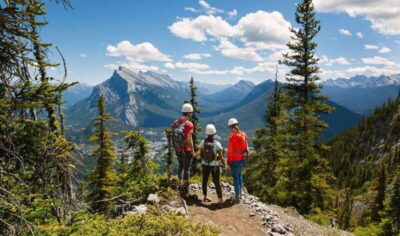
Banff: Mount Norquay 2.5 or 4-Hour Guided Via Ferrata Climb
Read our review →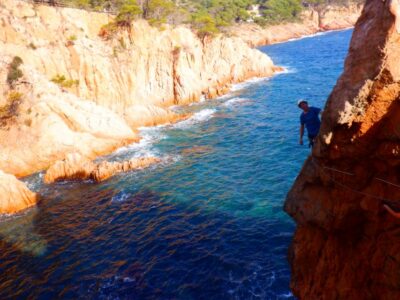
Sant Feliu de Guixols: Climb Via Ferrata Cala del Molí
Read our review →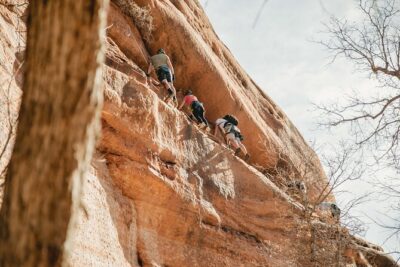
Small-Group Guided Via Ferrata Climbing with Banff’s Best Views
Read our review →
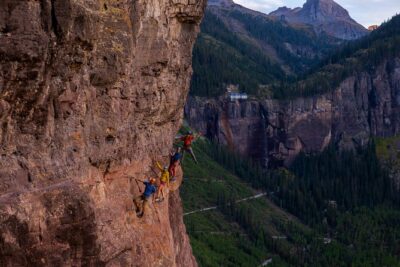
Via Ferrata in Gran Canaria. Vertical adventure park. Small groups
Read our review →Browse the lists this tour appears in