
Review · NORWAY
Via Ferrata Åndalsnes West Wall
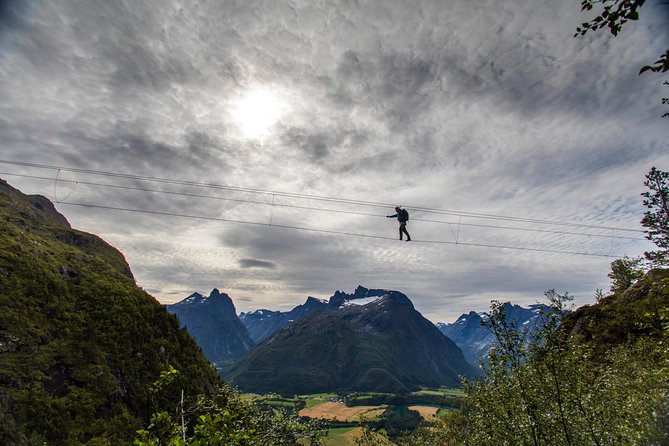
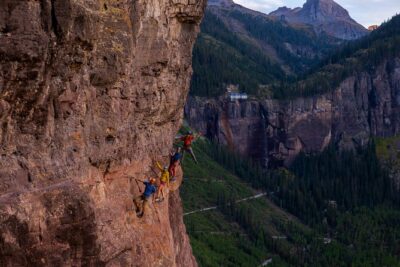
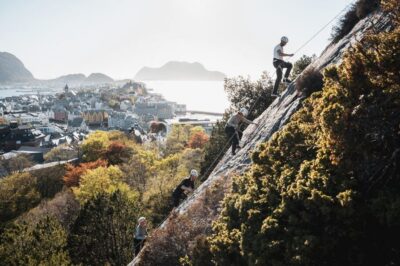
The wall delivers big mountain drama. Via Ferrata Åndalsnes West Wall combines exposed climbing, metal footholds, and sweeping views over Romsdalen Valley, all with a professional guide close by. I like that the technical equipment is included, and I like the carefully guided format for anyone trying via ferrata for the first time. The walk from the Norwegian Mountaineering Center also gives you a simple start in town before the climb begins.
This is not a casual sightseeing walk. You need strong physical fitness, some stamina, and comfort with steep uphill movement. Shorter climbers may find a few reaches awkward, and wet conditions can make the rock and approach more demanding.
Key things to know before climbing
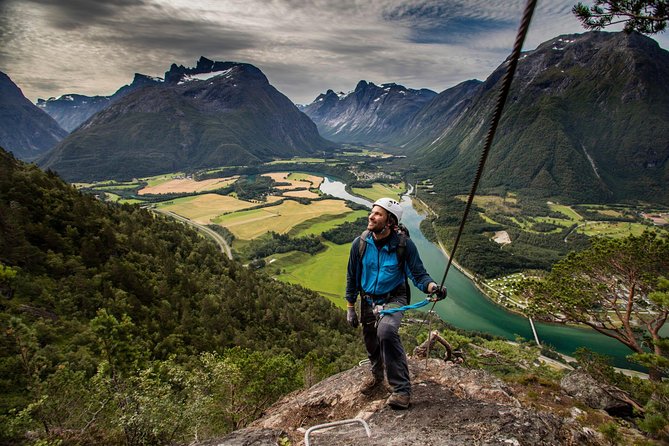
- The climb begins at the Norwegian Mountaineering Center, with a 9:30 am meeting time and a 20-minute walk to the route.
- The route has three main sections, including exposed vertical walls and several short overhangs.
- A guide and all technical equipment are included, but hiking shoes, food, drinks, and rubber gloves are not.
- The full outing takes about six hours, though strong, experienced climbers may complete the climbing section much faster.
- The views are a major part of the reward, with Romsdalen Valley below and a finish near Nesaksla and Rampestreken.
- The group is limited to 16 people, which matters on a route where people may need time at harder sections.
Starting at Norsk Tindesenter in Åndalsnes
Your morning begins at Norsk Tindesenter, the Norwegian Mountaineering Center at Havnegata 2 in Åndalsnes. The meeting time is 9:30 am, so arrive ready to listen and move. The guide handles the safety briefing, checks the required declarations, and fits you with the equipment used on the route.
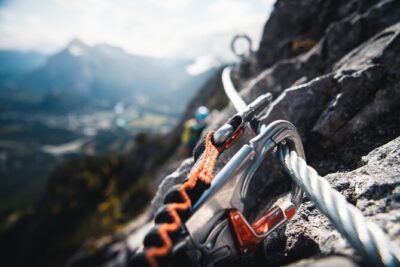
This opening matters more than it may seem. Via ferrata equipment is simple in principle, but you need to understand how the safety system works before reaching the first cable. Your guide will explain what you need for the climb and help you feel comfortable with the setup.
The activity is offered in English. Guides named in feedback include Mathias, Isaac, and Axel. Their style appears to be one of the strongest parts of the experience. Mathias was praised for keeping the mood light, explaining the route, and helping when a shorter climber got stuck. Isaac added local stories about trolls, while Axel helped first-time climbers understand tricky sections before reaching them.
The group can include up to 16 people. That is a reasonable limit, but it can affect the pace. A small private-feeling group may move quickly, while a full group could take closer to the advertised six hours, especially if several people need help at the harder points.
If you drive, use the long-term parking at Viktoria, opposite the railway station on Isfjordvegen. There is no parking at the climb start. That detail is easy to miss, so plan for it before the morning meeting.
More Via Ferrata Routes in the world:
- Via Ferrata / Rappel Adventure in East Zion
★ 5.0 · 224 reviews - Via Ferrata in Gran Canaria. Vertical adventure park. Small groups
★ 5.0 · 183 reviews - Climbing + Zipline + Via Ferrata + Cave. Adventure route in Gran Canaria
★ 5.0 · 149 reviews
The 20-minute approach to the West Wall
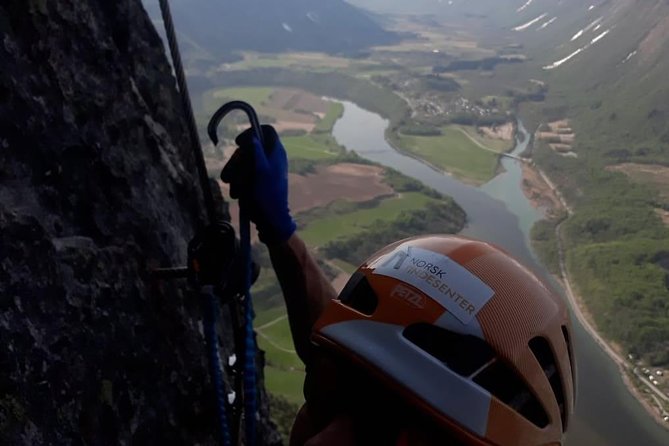
After the equipment briefing, you walk for about 20 minutes to the starting point. This is not a decorative stroll. It gets your legs working before the climbing begins, and the route itself includes steep uphill sections between parts of the wall.
The exact effort can vary depending on the group and route conditions. One experienced pair reached the gondola in about two hours and 45 minutes from the end of the pavement, but they were moving independently and did not wait behind other climbers. A guided group may take much longer, which is why the six-hour estimate is sensible.
Take this approach seriously. You are not walking straight from a car to a ladder and spending the day on metal steps. The day includes a walk to the route, steep ground, three climbing sections, and a hike down afterward. Eat beforehand and bring enough water.
A hydration system can be useful because the harness stays on during the climb. One practical tip is to use a camelback-style water system for easier drinking, and use the restroom before starting. You cannot simply remove the harness during the route.
Three climbing sections with real exposure
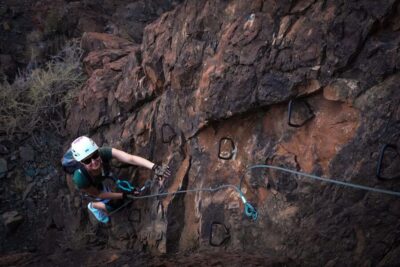
The West Wall route is built around three main sections. It uses metal bars, rings, cables, and footholds, with a few places where natural rock becomes more important. You clip your safety system along the cable as you climb, while the guide helps with technique and route finding.
The first steep sections can be physically demanding even if you have climbing experience. The hardest part for some people is not pulling over a difficult hold, but the repeated uphill movement between sections. Your legs, grip, and stamina all get tested.
The second section includes two small overhanging areas. Several accounts also describe roughly four overhangs across the route. These sections have good holds, but they require extra upper-body strength and a willingness to keep moving when the wall angles away from you.
The route is not described as technically extreme for a fit climber, but it is far more active than a normal mountain walk. People with indoor climbing experience may find the movement familiar. Still, via ferrata adds height, exposure, and sustained effort. You are attached to a cable, but you still need to pull, step, reach, and manage your own body position.
The metal footholds make much of the route accessible, but they do not remove every challenge. If you are under about 5 feet 4 inches, some clips and holds may be hard to reach. That height guidance comes from direct experience on the route, not from a formal restriction. A shorter climber can still manage it, but you may need stronger climbing technique and better use of the natural rock.
The guide can make a real difference here. Axel reportedly described tricky sections ahead of time and demonstrated how to approach them. Mathias gave a helping hand when a shorter climber became stuck. That support does not turn the climb into an easy ride, but it can keep a difficult moment from becoming a bad one.
Views across Romsdalen Valley
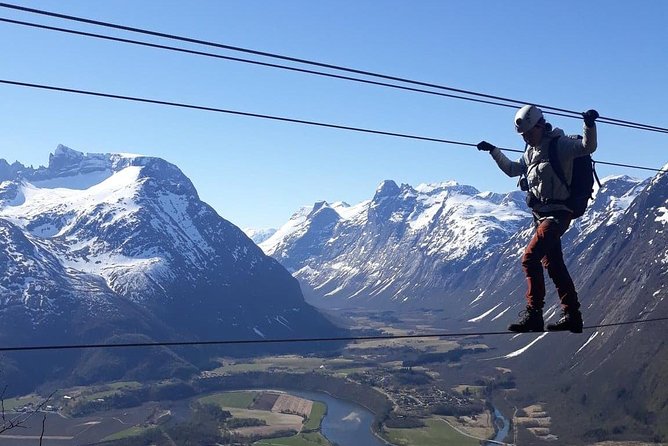
The reward for the effort is the setting. As you climb, the valley opens below you, with broad views in several directions. The route is built for spectacle as much as movement, and the vertical position gives you a very different view from a standard trail.
Weather can change the experience quickly. On a clear day, you should get the full sweep of the valley and mountain surroundings. In mist, the view may disappear near the top, but the climb can still be enjoyable. Wet weather also changes the feel of the route. The metal equipment remains useful, but natural rock and muddy approach sections can become slippery.
One climber completed the route after heavy rain and found wet, muddy places along the way. Another noted that the route still felt safe in wet conditions because the climbing system relies heavily on installed metal holds rather than bare rock. That is reassuring, but it is not a reason to ignore the weather. Gloves become especially useful when the cable and metal fittings are wet.
The route may feel cooler on a misty day, while sunny weather can make a long exposed climb warmer. You should pack for changing mountain conditions, though the provided details do not specify a required clothing list.
Same rush, a different way to get it:
- Extreme Adventure, Wildest Bridge, ATV & Ziplines
★ 5.0 · 3,179 reviews - Shotover River Extreme Jet Boat Ride in Queenstown
★ 5.0 · 2,540 reviews - Krakow: Extreme Shooting Range with Hotel Transfers
★ 4.8 · 2,226 reviews - Tree Limin’ Extreme Zipline
★ 5.0 · 1,713 reviews
Reaching Nesaksla and the Rampestreken area
After the wall, the outing continues toward Nesaksla and Rampestreken before returning to Åndalsnes and the Norwegian Mountaineering Center. This final section changes the pace. You move from vertical climbing to a mountain descent, but your legs may already feel the work.
The end point is back at the original meeting point. That makes the day easy to organize if you are staying in Åndalsnes or connecting with local transport. The activity is near public transportation, and you do not need to arrange a second pickup.
Some route accounts mention finishing near the gondola and using the gondola down, with a restaurant at the top. Treat that as a possible separate option, not a listed inclusion. The official outing described here includes the hike down Nesaksla and Rampestreken to town. The gondola ride, food, and drinks are not included among the listed services.
That distinction matters when comparing the price. The climb itself is the core product. If you choose to add a gondola ride or eat at the top, budget for those separately.
What the $214.64 price really covers
The price is $214.64 per person. That is a serious cost for a half-day activity, but it includes the professional guide, all technical equipment, and GST. For a first via ferrata, those inclusions have practical value.
You do not need to rent a harness, helmet, or the main climbing system separately. You also have someone responsible for the safety briefing, route guidance, and group management. The guide’s help at the overhangs and more exposed sections is a major part of what you are paying for.
The value is strongest if you are new to via ferrata, visiting without your own equipment, or want help on a route that is beyond a casual mountain outing. Experienced climbers may question the cost if they can arrange their own gear and complete the route independently. Still, the guided format can make the day easier and more controlled.
Bring your own hiking shoes. Rubber gloves are also not included, and several people found gloves useful for avoiding blisters, especially on wet days. Food and drinks are not included either, so bring what you need for the outing.
The all-in price is easier to accept when you view this as a guided technical mountain activity rather than a standard walking tour. You are paying for gear, instruction, supervision, and access to a route that requires more planning than a normal trail.
Fitness, climbing ability, and who should book
You should have a strong physical fitness level before booking. The route involves uphill walking, steep climbing, overhangs, and a descent after the main wall. A person who rarely exercises may find the day too demanding.
You do not need to be an expert climber. Some first-time via ferrata climbers with indoor climbing or climbing-park experience completed the route successfully with a guide. The strongest common factor is not advanced technique alone. It is a mix of fitness, stamina, comfort with height, and willingness to follow instructions.
The route suits you best if you:
- Enjoy active outdoor days rather than passive sightseeing
- Have a solid fitness base
- Can handle steep uphill movement
- Have some climbing, climbing-park, or indoor wall experience
- Are comfortable with exposure and metal ladders or holds
- Want a guide for safety and route advice
It may not suit you if you want a gentle introduction to the mountains, dislike heights, or need frequent breaks. The fact that the route is secured does not make it effortless.
Shorter climbers should think carefully but not rule themselves out. Some reaches may be awkward, especially if you are below about 5 feet 4 inches. You will benefit from good footwork, upper-body strength, and comfort using natural rock when a metal hold is not easy to reach.
Weather, gear, and small tips that matter
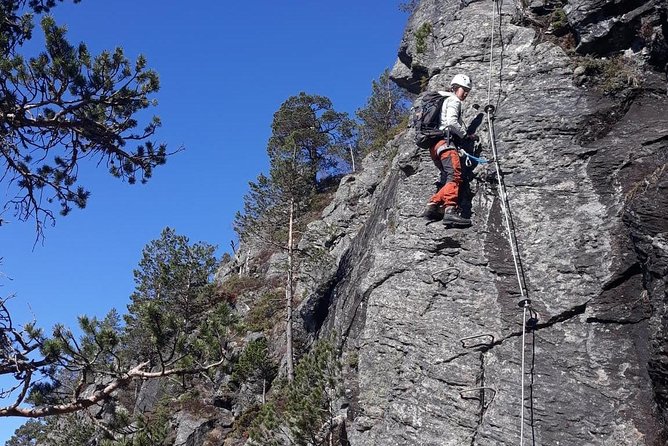
Wear proper hiking shoes. They are specifically excluded, and the route includes walking before and after the wall. Rubber gloves are also worth considering, especially if the forecast is wet or you are prone to blisters.
Bring food and drinks because they are not included. A hands-free hydration system is useful. You may be wearing the harness for a long time, so plan ahead and use the restroom before you leave the center.
Do not assume a clear view all day. Mist may cover the upper route, and rain can create muddy or slippery sections. The climb can still be worthwhile in those conditions, but the visual reward may be reduced.
The activity normally takes about six hours. Fit climbers moving without delays may finish the climbing section in less than three hours, but that is not a promise for a guided group. The group size, pace, route conditions, and time spent at difficult sections all affect the day.
Confirmation is received when you book. The activity has a minimum number of participants, so a cancellation for that reason may lead to another date or experience, or a full refund. Otherwise, the booking is non-refundable and cannot be changed, so check your schedule and the weather outlook before committing.
Should you book Via Ferrata Åndalsnes West Wall?
Book it if you want a real physical challenge with outstanding Romsdalen Valley views, and you like the idea of climbing without arranging technical gear yourself. The guide support is especially valuable for first-timers and for anyone unsure about overhangs, exposure, or route finding.
Skip it if you are looking for a relaxed mountain excursion, lack strong fitness, or feel uneasy about sustained height and steep movement. The route is friendly to capable beginners, but it is not beginner-level exercise.
For the right person, the $214.64 price buys more than equipment. It buys a supervised route, practical instruction, and the chance to climb one of Åndalsnes’ most dramatic walls with a clear plan from the center and back to town. If you prepare with good shoes, gloves, water, food, and realistic expectations, this is a strong choice for an active day in Norway.
FAQ
Where does the Via Ferrata Åndalsnes West Wall experience start?
It starts at Norsk Tindesenter, Havnegata 2, 6300 Åndalsnes, Norway. The meeting time is 9:30 am.
How long does the activity take?
The experience lasts approximately six hours. The time includes the equipment briefing, walk to the route, climbing, and return to Åndalsnes.
Is technical climbing equipment included?
Yes. All necessary technical equipment and a professional guide are included.
Are hiking shoes, gloves, food, and drinks included?
No. Hiking shoes, rubber gloves, food, and drinks are not included. Gloves can be useful for avoiding blisters, especially in wet conditions.
How difficult is the route?
You need a strong physical fitness level. The route includes steep uphill sections, three climbing parts, exposed vertical walls, and short overhangs. Some previous climbing experience can help, but first-time via ferrata climbers have completed it with a guide.
Where does the activity finish?
The experience finishes back at the Norwegian Mountaineering Center in Åndalsnes.
Just added around the world
- Reno: Zero Latency Extreme Virtual Reality Experience Ticket★ 5.0 · 2 reviews
- Punta Cana: Extreme Buggy Tour with River Cave & Macao Beach★ 4.2 · 34 reviews
- Rafting, Canyoning & Zipline, : 3-in-1 Adrenaline Tour★ 4.6 · 26 reviews
- Rafting Classic, with Extreme Waves★ 4.8 · 16 reviews
- Punta Cana: Triple Jungle Adventure Park Tour with Tastings★ 4.7 · 7 reviews
- Punta Cana: Bávaro Adventure Park Horse Riding & Waterfalls★ 4.0 · 11 reviews
- Pula: Coasteering Adventure with Guide and Photos★ 4.8 · 23 reviews
- Puerto Vallarta: Hidden Beaches & Adventure Park★ 5.0 · 5 reviews
Via Ferrata Climbing, compared.
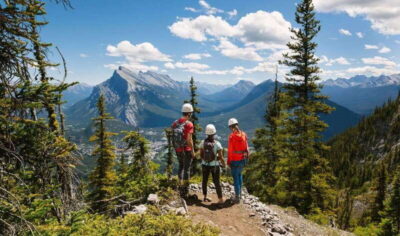
Banff: Mount Norquay 2.5 or 4-Hour Guided Via Ferrata Climb
Read our review →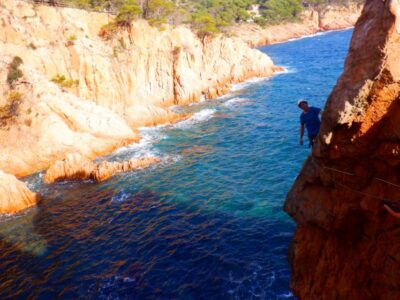
Sant Feliu de Guixols: Climb Via Ferrata Cala del Molí
Read our review →
Small-Group Guided Via Ferrata Climbing with Banff’s Best Views
Read our review →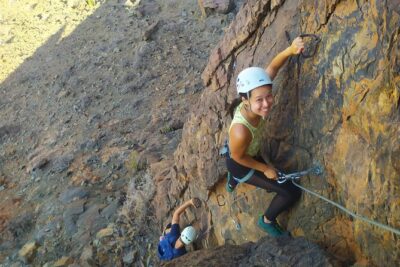
Via Ferrata in Gran Canaria. Vertical adventure park. Small groups
Read our review →Browse the lists this tour appears in