
Review · USA
Orlando Tree Trek Adventure Park
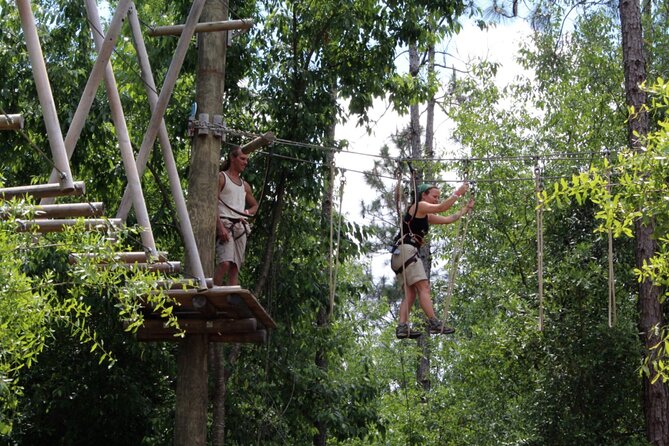
Ready to trade theme-park lines for tree-top thrills? Orlando Tree Trek Adventure Park gives you a hands-on outdoor challenge near Walt Disney World, with cargo nets, swinging logs, bridges, skateboards, trapeze swings, and ziplines set 10 to 50 feet above a pine forest. I like the steady rise in difficulty and the fact that children from age seven can take part.
I also like the strong safety routine. You get fitted with climbing equipment, watch a demonstration, and practice on a short training course before heading upward. The main drawback is simple: this is an obstacle course first and a zipline experience second. It can be a tough workout, and some courses may be closed or less challenging than expected.
Quick takeaways for planning your visit
- Six aerial courses and more than 97 obstacles: Expect cargo nets, bridges, swinging logs, trapeze swings, skateboards, and ziplines rather than a series of simple rides.
- Progressively harder routes: The early sections help you learn the equipment, while later courses can demand real upper-body strength and balance.
- Ages seven and up: Children must meet the stated reach requirements, and all participants need a waist measurement of 44 inches or less.
- A required safety start: Every visit begins with a waiver, harness fitting, orientation, and demo course.
- Plan on two to three hours: You move at your own pace through much of the course, so your group may finish at different times.
- Heat matters: An early morning booking, water, bug spray, closed-toe shoes, and gloves can make the outing far more comfortable.
What the Orlando Tree Trek course is really like
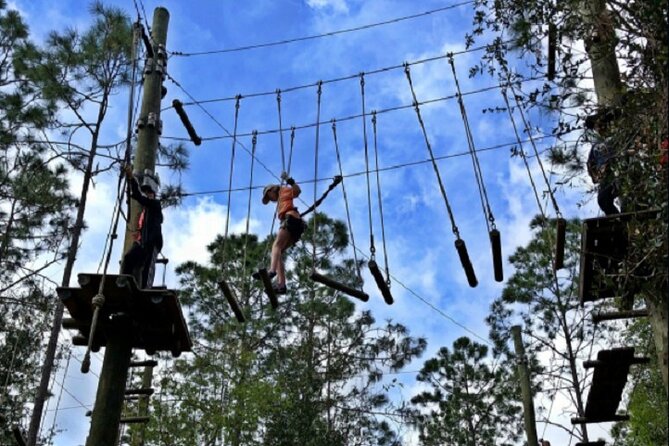
The park sits at 7625 Sinclair Road in Kissimmee, close to the Walt Disney World Resort area. It is built among pine trees, with the obstacles held on specially designed poles and platforms rather than relying only on natural tree branches.
That setting gives the activity a pleasant break from Orlando’s indoor attractions and themed environments. You are still near the resort corridor, but the pace is different. Instead of waiting for the next ride, you climb, balance, pull, swing, and work out how to reach the next platform.
The headline numbers give you a good idea of the scale: more than 97 games spread across six courses, with sections reaching from 10 to 50 feet high. You may encounter cargo nets, swinging bridges, logs, trapeze elements, skateboards, and zipline sections.
The key point is that this is not mainly a zipline park. One zipline may be the reward at the end of a course, but much of your time goes into completing the obstacles before it. If you want repeated long rides through the trees, this may not match your expectations. If you want a physical challenge with a few fast aerial finishes, it is a better fit.
More Adventure Parks in the USA:
- Ketchikan Shore Excursion: Rainforest Canopy Ropes and Zipline Adventure Park
★ 5.0 · 390 reviews - Outdoor Gravity Park Zorbing Admission Ticket in Pigeon Forge
★ 4.5 · 184 reviews - Cocoa Beach: Aerial Adventure Park Ticket
★ 4.9 · 7 reviews
Starting on the ground: waiver, harness, and demo course
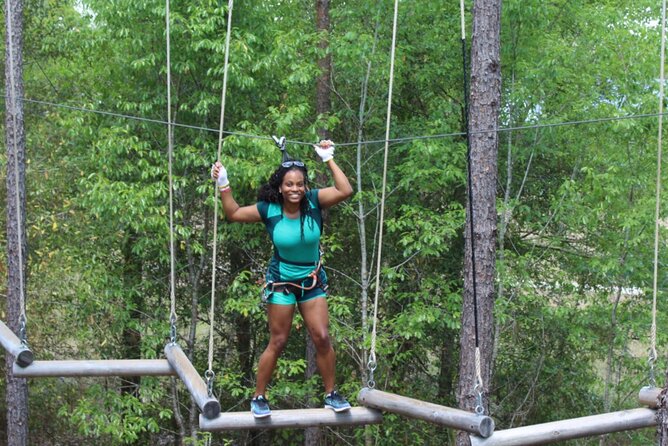
Your visit begins with the practical work. You complete a required waiver, get fitted with climbing equipment, and attend a mandatory safety demonstration.
The demo course is important. You learn how to use the safety connection system and get a sample of the movements you will use above the ground. Take this part seriously, even if you have used a ropes course before. It is your chance to understand the equipment while both feet are still close to the ground.
The staff receive consistent praise for being friendly, clear, and reassuring. Guides named Ryan, Josiah, Nick, and others have helped people feel more comfortable with the harness and safety system. Nick was singled out for making first-time participants comfortable asking questions, while Josiah was praised for clear instruction and enthusiasm.
This matters if heights make you nervous. Several people who described themselves as frightened of heights still completed the course. The equipment and staff support do not remove the challenge, but they give you a sensible way to manage it.
Six courses, changing difficulty, and a self-guided pace
Once orientation is finished, you are directed to the first course. The routes are largely self-led, which means you are not following a guide through every obstacle in a fixed line.
That arrangement has two sides. You get more control over your pace, and you can pause before a difficult element. You can also encourage family members as they work through a section. On the other hand, groups may spread out, and you might wait for someone ahead of you or finish a course before the rest of your party.
The courses grow harder as you move along. The first sections help you get used to the height, clipping system, and basic balance work. Later sections require more pulling, reaching, swinging, and sustained effort. The red course is often described as a genuine test, especially for adults who arrive expecting a light family activity.
Some accounts refer to completing four adult courses and then taking the large zipline, while the park information describes six courses overall. This likely reflects different route choices, age categories, or the number of adult courses completed during a particular visit. Ask the staff at check-in which courses apply to your party and how much time you should allow.
The self-directed layout also makes the experience less predictable than a normal guided ride. You might finish quickly if you stop after a few courses, or spend close to three hours if you attempt the full available route.
The physical challenge: more than a casual afternoon
You need moderate physical fitness for this activity. The work is spread across your whole body, with plenty of gripping, reaching, balancing, climbing, and bracing.
Your arms may tire before your legs, especially on obstacles that require you to pull yourself toward a platform or hold your body steady. Children can manage the course, but height and reach matter. The stated reach requirement is 4 feet 7 inches for children, 5 feet 9 inches for youth, and 5 feet 11 inches for adults and seniors.
Those measurements are not just paperwork. A shorter participant may need to stretch repeatedly to reach safety cables or the next obstacle. A 12-year-old described the challenge as fun but noted that reaching up to the wires made the arms sore. If someone in your group is close to the minimum height, expect the course to feel more demanding.
You should also be honest about your fitness and comfort with heights. This is not a passive sightseeing stop. If you are looking for an easy activity between meals and rides, choose only the early sections or consider watching from the walking trails below.
More Hiking Trips in the USA:
- Matacanes : Canyoning + Hiking + Water Jumps + Rappel + Caves
★ 5.0 · 1,497 reviews - Nido de los Aguiluchos, Monterrey: Hiking + Rock Climbing + 3 Rappels
★ 5.0 · 713 reviews - Estany d’en Mas: Coastal Hike, Abseil & Sea Cave Exploration
★ 4.9 · 162 reviews - Pure Trek Canyoning & White Water Rafting in La Fortuna
★ 5.0 · 83 reviews
What makes it work for families
The best part of Orlando Tree Trek may be the shared problem-solving. Parents, children, teenagers, and older family members can cheer one another on, offer a hand from a platform, and watch someone work past a fear.
Teenagers tend to have plenty to do, and adults can choose to push into the harder sections. Families have used the outing for birthdays and other special occasions, with the physical challenge giving the celebration a clear focus.
The age range is useful, but do not mistake age seven for automatic suitability. Every child must meet the reach requirement, wear the right clothing, and be ready for a physically active outing. A young child who dislikes heights or becomes frustrated by repeated obstacles may not enjoy the full route.
I would also set expectations before arriving. Tell your family that the zipline is part of the experience, not the whole experience. That one detail can prevent disappointment.
Heat, water, gloves, and what to wear
Orlando heat can change the character of the outing. A morning departure is a smart choice, especially during warmer months. The activity takes place outdoors, and the physical effort makes the temperature feel more intense.
Water is not included, so plan for that before you arrive. A water option is available for an extra charge, and it has been considered worth the money by people who found the course tiring. You should also eat beforehand, since the activity can feel like a full-body workout.
Gloves are not included either. You can participate without them, but gloves may make gripping cables and equipment more comfortable. This is especially useful if you plan to attempt several courses.
Wear closed-toe shoes with a secure fit. Do not wear loose clothing or jewelry, and tie back long hair. These rules are about keeping fabric, hair, and accessories away from the equipment. Bring bug spray as well, since you will be spending several hours among the trees.
Safety and staff support above the ground
Safety is one of the park’s strongest features. The demo course teaches you how to use the equipment, and staff members remain available to help when someone gets stuck or needs reassurance.
The course is not risk-free, of course. You are climbing high obstacles and moving through physically demanding sections. But the combination of the harness system, mandatory instruction, and staff supervision gives the activity a structured feel.
Pay attention to the rules once you are on the course. Return equipment as directed, use the proper route, and wait when a section is occupied. The experience works best when everyone respects the pace and space of the group.
If one person in your party does not want to climb, that person can follow the walking trails below. This is useful for parents supervising younger children, companions with mobility concerns, or anyone who wants to watch without taking part. The walking-trail option does not turn the activity into an accessible ropes course, but it gives nonparticipants a way to remain nearby.
Timing, group size, and the best departure
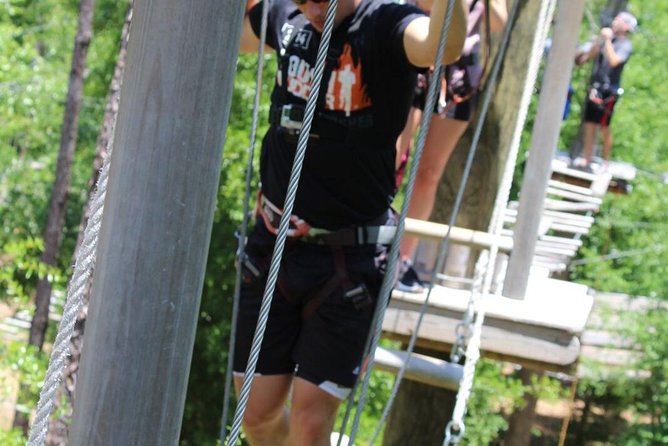
Departure times begin at 8:30 in the morning and run every 30 minutes through the final departure of the day. Hours change by season, so check the current schedule before you book.
Reservations are strongly recommended, and you need to arrive at your assigned time. The maximum group size is 15 people, which helps keep the orientation manageable, though the self-led course means your group may not remain together.
An early start is my first choice. You get cooler conditions, more energy for the harder courses, and a better chance of finishing before the worst heat. Allow two to three hours for the full experience, not counting your drive to the park.
The location is near public transportation, but you should still check the route carefully because the meeting point is in Kissimmee rather than inside a Disney park. The start and finish are both at Orlando Tree Trek Adventure Park Zip Line, 7625 Sinclair Road.
Value: a full activity rather than a quick attraction
Since the price can change, I would judge value by the amount of active time you receive rather than by the ticket alone. Two to three hours on a course with more than 97 obstacles gives you considerably more involvement than a short zipline ride.
The value is strongest if your group wants to exercise, try something new, and stay outdoors for a substantial part of the day. It is weaker if one person wants only a quick thrill or if your group is likely to stop after the first easy sections.
You also need to account for extras. Water and gloves are not included, so add those to your planning. Food is not described as part of the activity, and eating beforehand is sensible.
The high overall rating, 4.9 from 845 ratings, fits the main strengths: kind staff, clear instruction, family bonding, and a satisfying sense of achievement. The lower scores point to useful limits rather than a mystery problem. Some people expect more ziplining, some find the course less difficult than other ropes parks, and some dislike the self-led format.
Who should book this experience?
I would recommend Orlando Tree Trek to families with older children, active couples, birthday groups, and anyone who wants a physical break from Orlando’s theme parks.
It is especially well suited to people who like a challenge that builds slowly. You can begin with manageable elements and decide how far to push yourself. The experience also works well for a group that enjoys encouraging one another rather than simply riding the same attraction together.
I would be cautious if you have limited upper-body strength, a strong fear of heights, or a preference for seated activities. The park can accommodate people who watch from below, but the main attraction requires climbing and reaching.
Should you book Orlando Tree Trek Adventure Park?
Book it if you want a real outdoor workout with your family or friends, not just a zipline ride. The safety orientation, helpful staff, rising difficulty, and range of obstacles make it a strong choice for active visitors near Walt Disney World.
Go early, eat first, bring water money and bug spray, and wear proper shoes. If you accept that the course is self-guided and physically demanding, Orlando Tree Trek can become one of the more memorable non-theme-park activities in the Orlando area.
Free cancellation is available up to 24 hours before the scheduled start time. Cancellations or changes made within 24 hours are not refunded, and poor weather may lead to a different date or a full refund.
FAQ
How long does Orlando Tree Trek Adventure Park take?
The full course takes about two to three hours. Your actual time can vary depending on how many courses you complete, your pace, and how often you stop.
What is the minimum age?
The minimum age is seven. Children must also meet the stated height and reach requirement of 4 feet 7 inches.
How high are the obstacles?
The obstacles range from 10 to 50 feet above the ground, or about 3 to 15 meters.
Is a safety briefing required?
Yes. You complete a waiver, receive climbing equipment, and take a mandatory demo course before beginning the main routes.
What should I wear?
Wear closed-toe shoes. Avoid loose clothing and jewelry, and tie back long hair.
Are gloves and drinks included?
No. Climbing equipment and the demo course are included, but gloves and drinks are not.
Can someone watch without climbing?
Yes. People who do not want to participate can follow the walking trails below the courses.
What happens if the weather is poor?
The activity requires suitable weather. If it is canceled because of poor weather, you can receive a different date or a full refund.
Just added around the USA
- Reno: Zero Latency Extreme Virtual Reality Experience Ticket★ 5.0 · 2 reviews
- From Portland: 7 Wonders of the Gorge Jetboat Cruise★ 4.3 · 25 reviews
- From Portland: Bigfoot Adventure 3.5-hour Jetboat Cruise★ 4.6 · 14 reviews
- Pigeon Forge: Outdoor Gravity Park Zorbing Experience★ 4.8 · 5 reviews
- Panama City Beach: Xtreme Jet Boat Thrill Ride★ 4.6 · 49 reviews
- Orderville: Via Ferrata Guided Climbing and Rappelling Tour★ 4.9 · 8 reviews
- Moab: 2-Hour Scenic Jet Boat Ride on the Colorado River★ 5.0 · 12 reviews
- Moab: 1-Hour Express Jet Boat Tour on Colorado River★ 4.3 · 6 reviews
Adventure Parks, compared.
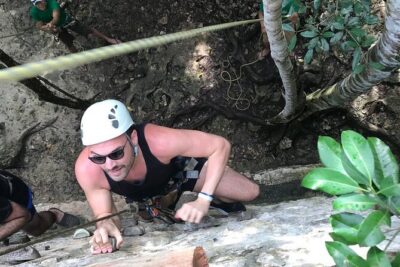
Selva Maya Eco Adventure Park: Ziplining, Hanging Bridges, Rappelling and Cenote
Read our review →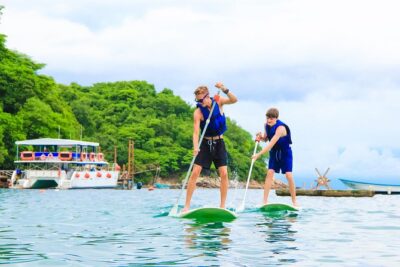
Las Caletas Beach & Adventure Park with buffet lunch and open bar
Read our review →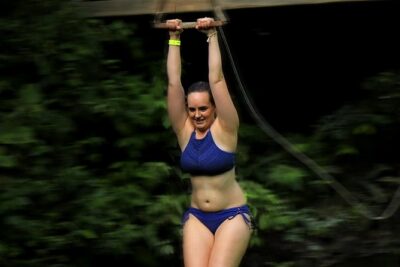
Selvatica Adventure Park: Ziplines and Cenote Tour from Cancun and Riviera Maya
Read our review →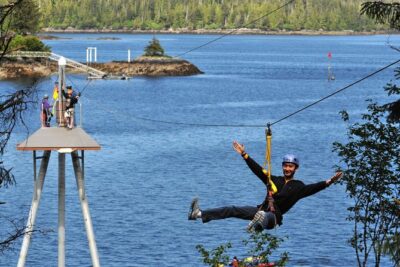
Ketchikan Shore Excursion: Rainforest Canopy Ropes and Zipline Adventure Park
Read our review →
Bavaro Adventure Park Buggy Ride, Zipline Mega Splash, and Waterfall Pool
Read our review →
Zorb Inflatable Ball Ride from Mount Ngongotaha in New Zealand
Read our review →
Buggy Ride, Cenote and Waterfall Pool at Bavaro Adventure Park
Read our review →
Conquer the Skies: Monster Zipline at Toro Verde Adventure Park
Read our review →Browse the lists this tour appears in