
Review · MALLORCA
Coasteering in South Mallorca with Transfers
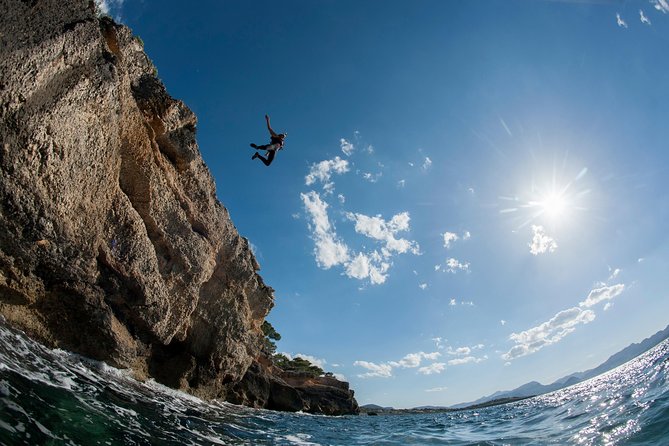
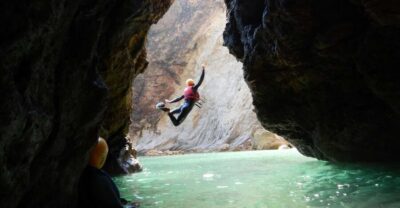
Mallorca rewards a little nerve. This south Mallorca coasteering trip turns the island’s rocky coast into an outdoor playground, with cliff jumps, swimming, scrambling, rappelling, sea caves, and sometimes a zip line. I like the progressive jump heights, which let you start small before facing jumps up to 39 feet, and I like the friendly guides, including José, Naco, Mario, Niko, and Rafael, who adjust the route to the group.
The included hotel transfer is another strong point, especially since the activity takes place away from many south-coast resorts. The main drawback is that this is a physical outing over sharp rock and moving water, not a gentle sightseeing cruise. Meeting instructions can also be unclear, and one account raised concerns about worn wetsuits and shoe grip, so you should inspect your equipment before setting out.
What makes this coasteering trip worth considering
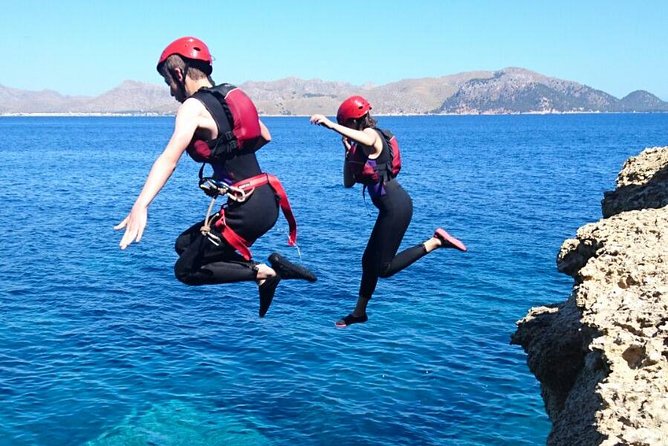
- Jumps build from about 6 feet to as high as 39 feet, with no requirement to attempt every height.
- The route mixes several activities, including swimming, scrambling, rappelling, sea-cave exploration, and cliff jumping.
- Guides tailor the outing to the group, encouraging nervous beginners and allowing confident jumpers to add tricks.
- Transfers cover south Mallorca pickup areas, with other zones available for Alcudia, Cala d’Or, and Cala Ratjada.
- Small groups of up to 10 people keep the safety briefing and personal coaching manageable.
- All main equipment is supplied, including wetsuits, shoes, helmets, buoyancy aids, and climbing gear.
What coasteering in Mallorca actually involves
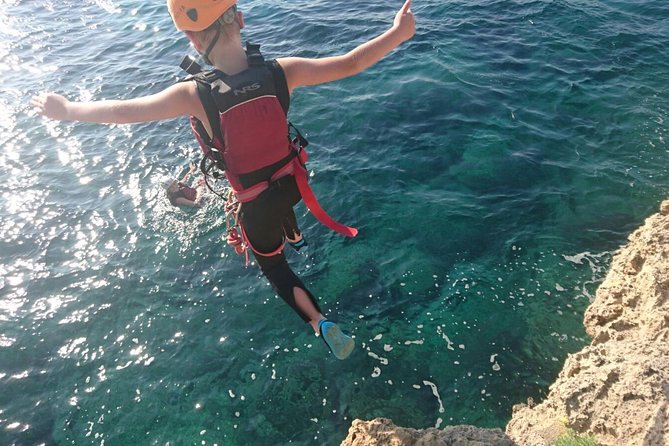
Coasteering is a point-to-point adventure along the water’s edge. You do not simply walk beside the sea and stop for a single jump. You move between rocks and coves using whatever method fits the terrain: swimming, climbing, scrambling, jumping, and lowering yourself with a rope.
The activity begins with a minivan transfer from your hotel or an arranged meeting point. Pickup covers areas from Puig de Ros along the coast to Andratx, and the exact departure zone matters. If you are staying near Alcudia, you need the northern option. Cala d’Or and Cala Ratjada use the eastern zone.
Once you reach the coast, you change into the supplied wetsuit and shoes. A helmet and buoyancy aid are also provided. The group then receives a safety briefing before moving toward the first jump point.
You should expect roughly four hours of activity, sometimes described as four and a half hours once transport and preparation are included. A listed start time is 10:00 a.m., with morning and afternoon departures available. The group size is capped at 10, which is helpful when everyone needs individual advice at the rocks.
More Coasteering Tours in Mallorca
- Mallorca: Half-Day Coasteering Experience
★ 4.7 · 447 reviews - Coasteering Mallorca
★ 5.0 · 40 reviews - Shore Excursion: Coasteering in Mallorca
★ 5.0 · 40 reviews
Starting small before the serious jumps
The first jumps are usually low enough to help you understand the technique. Heights can begin around 6 feet, or 2 meters, then rise gradually toward 12 meters, or 39 feet. That steady build matters because a jump that looks harmless from the shore can feel very different once you are standing above the water.
The guide gives advice on where to stand, how to enter the water, and how to move away from the rock after landing. You can decide which jumps suit you. The activity is designed to include people who want a challenge without forcing anyone into the highest drop.
This is one of the best features for mixed groups. A confident teenager might enjoy the taller jumps, while a parent or nervous first-timer can stay with the lower options and still get swimming, climbing, and beautiful coastal views.
The water and weather affect the experience. One family found the sea rougher than expected, and the climbing harder than it first appeared. That is useful to keep in mind. Calm blue water can look inviting, but waves make the entry and exit points more demanding.
Scrambling, rappelling, and sea caves
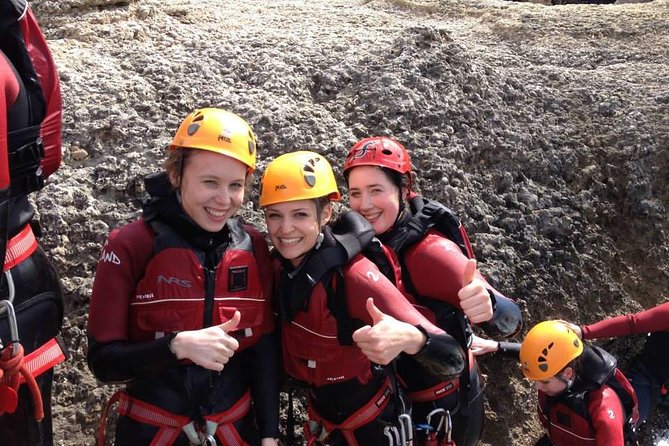
The climbing sections are closer to scrambling and bouldering than to a long, protected climbing route. You move along rock above the water, often keeping close to the cliff edge and using your hands to find secure holds.
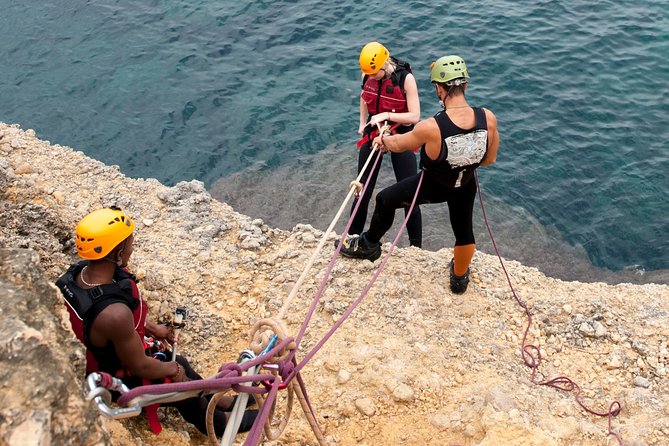
You may also lower yourself from a sea cliff with a climbing rope and rappel device. This adds variety and gives you a controlled way to reach a lower ledge or water entry point. The exact course changes with the group, the weather, and the rock formation available that day.
The sea caves and rock pools are a major reason to choose this outing instead of a standard boat trip. You see the coastline from water level, then work your way around formations that are easy to miss from a road or viewpoint.
The climbing can be tiring. One account noted sore hands afterward from repeatedly climbing out of the water, which is a fair warning for anyone unused to scrambling. You do not need advanced climbing skills, but basic strength, balance, and comfort using your hands will make the day easier.
The zip line and the final water section
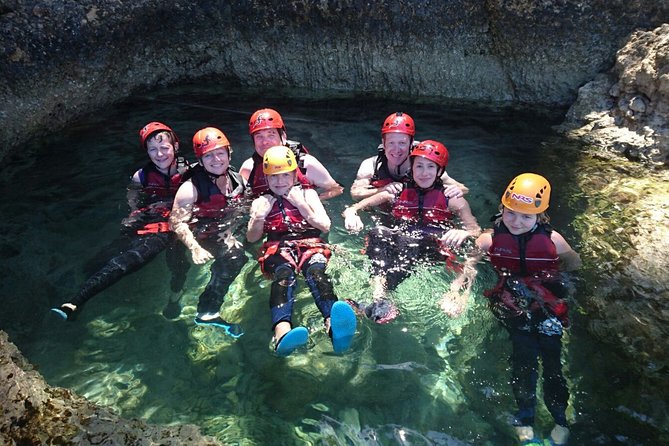
Some groups finish with a short zip line stretched between rocky points. Guides may set it up during the activity to fit the location and the group. The line ends with a splash into the sea, making it a memorable final challenge.
The approach to the zip line can require swimming and climbing. It is not simply a platform beside the van, so you need to be ready for one more active section before the reward.
The zip line is not guaranteed as a fixed attraction at a permanent site. The course changes, and the activity may use different features depending on conditions and the group. It is best to see it as a possible bonus rather than the central promise of the trip.
After the final section, you swim back toward the starting point, collect your belongings, change, and meet the driver for the return journey. The day ends at the original meeting point or with drop-off at your hotel, depending on the arrangement.
More Coasteering Tours in Spain
- Mallorca: coasteering South
★ 4.5 · 14 reviews - Mallorca: Coasteering North
★ 5.0 · 8 reviews - Mallorca: Speleo-Coasteering Tour along the Coast of Alcudia
★ 5.0 · 5 reviews - Pollença: Kayak and Coasteering Cliff Jumping
★ 5.0 · 5 reviews
Guides who make the difference
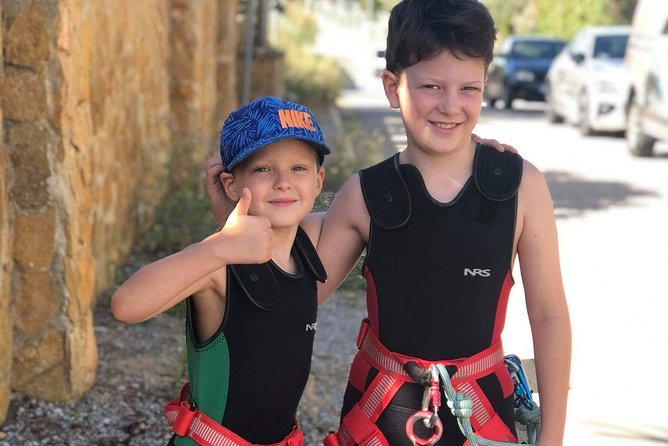
The guide is central to this experience. A good leader controls the pace, explains the safest route across the rock, and knows when to encourage you and when to leave a jump optional.
José is repeatedly praised for patience and encouragement. Naco is described as a professional rock climber who introduced jumps gradually and adjusted the course for beginners and confident participants. Mario and Niko also received praise for creating a safe route to the zip line and helping a family work through a demanding swim and climb.
Other named guides include Joni, Rafael, Gemma, and Alfonso. The consistent theme is personal attention rather than a one-size-fits-all course. The operator aims to provide the requested language, but Spanish and English are the minimum languages you should expect.
If you speak French or Italian, do not assume the full activity will be conducted in that language. Some instruction may be available, but English or Spanish will be the safest choice for understanding safety directions.
Equipment, comfort, and safety
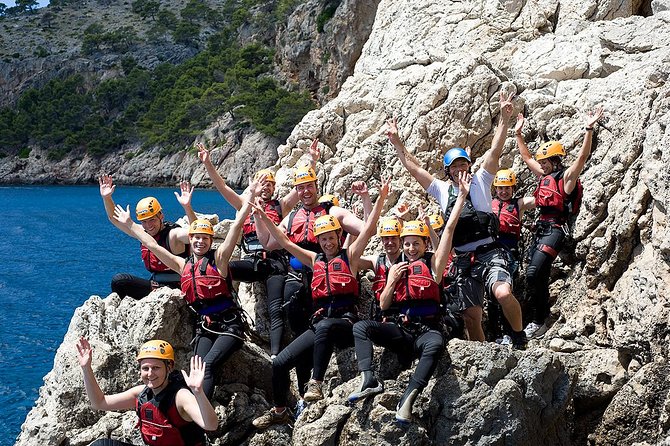
The equipment package includes a wetsuit, water shoes, helmet, buoyancy aid, and other safety gear. Insurance and a qualified local guide are included as well. The wetsuit helps protect your skin from sharp rock, not just keep you warm.
You should still examine the equipment before entering the water. One unhappy account raised concerns about a torn wetsuit and plastic-soled shoes with limited grip. The operator responded that participants may choose to use their own suitable shoes and that the supplied equipment is used regularly. The practical lesson is simple: check the soles, fit, fasteners, and condition before you begin, and speak up immediately if something feels wrong.
Wear a swimsuit under the wetsuit. The supplied water shoes mean you do not need to bring special footwear, though comfortable hiking shoes are recommended for the approach. Flip-flops are not a sensible choice for the rocky walk, even if they can remain in the vehicle.
A helmet and buoyancy aid are especially important here. You are moving around cliffs, pools, and open water, so the safety equipment is not decorative. Listen closely to the briefing, use the route the guide gives you, and skip any section that feels beyond your ability.
Pickup, meeting points, and what to bring
Hotel pickup and return transport are included for the stated south Mallorca areas. Airbnb pickup points can be arranged, but confirm the exact location before the day. The listed meeting point is Carrer de Cala Fornells 30 in Cala Fornells, and the activity ends back at the meeting point if you are not using a hotel transfer.
Do not expect a staffed office or changing room at the meeting point. One person arrived expecting a clear activity base and found a pickup location instead, with no restroom or dedicated place to change. Bring your swimsuit under your clothes and be prepared to change near the vehicle if needed.
The official advice is to bring:
- Sunscreen
- Bottled water
- Your own lunch
- A swimsuit
- A towel
- Comfortable clothing
- Hiking shoes
The group may leave bags in the van or at a designated point while moving between activity areas. A waterproof phone case is useful if you want photos, but there is no stated professional photo package. You should not carry loose valuables through the climbing sections.
Give the operator every participant’s height, weight, and shoe size when booking. These details help the team prepare the equipment and are especially important for children.
Who should book this adventure
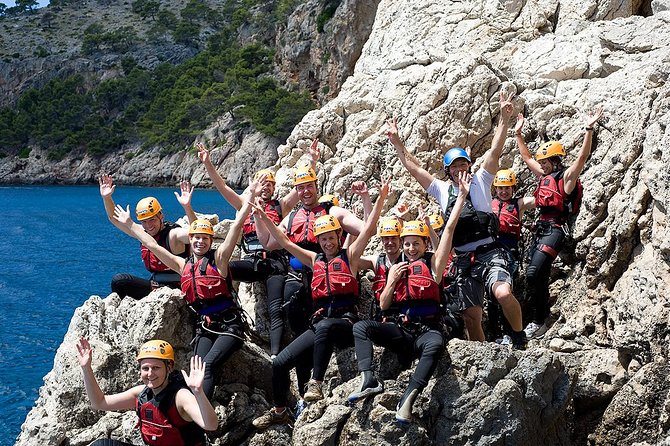
This outing suits active families, couples, and solo visitors who want more than a beach day. The minimum age is 8, and several family accounts describe children and teenagers enjoying the jumps and climbing. The activity can work for beginners because the heights progress and the challenging sections are optional.
You will get more from it if you are comfortable swimming, scrambling over uneven rock, and climbing out of the water. You do not need to be a trained climber, but you should have reasonable mobility and enough strength to pull yourself onto ledges.
It is less suitable if you want a calm coastal tour, dislike heights, or have trouble with rough ground. You can avoid the highest jumps, but you cannot remove the walking, swimming, and climbing from the experience.
The group format helps couples and families, but solo participants can also fit in well. With a maximum of 10 people, you should receive more guidance than on a large commercial boat excursion.
Is $90.51 a fair price?
At $90.51 per person, the price is reasonable if you use the transfer and equipment. You are paying for transport, a guide, insurance, wetsuit, shoes, helmet, buoyancy aid, climbing gear, and several hours of activity. Renting or arranging those pieces independently would be difficult for a visitor.
The value is strongest for people staying away from the activity area. Hotel pickup saves you from finding a remote coastal access point and removes the need to drive after a tiring session.
The value is weaker if you already have transport, climbing equipment, and local knowledge, though most visitors will not. Food and drinks are not included, so carry water and a small snack. A full packed lunch may go untouched during the activity, but it can be useful after the swim or for the ride back.
The high rating and 95 percent recommendation suggest strong overall satisfaction, but the physical effort and equipment concern deserve equal attention. This is good value for an active half-day, not a cheap substitute for sightseeing.
Weather, cancellation, and timing
The trip depends on safe weather and sea conditions. If poor weather cancels the outing, you can choose another date or receive a full refund. A minimum number of participants also applies, and the same alternative date or refund arrangement is offered if that minimum is not met.
You can cancel for a full refund up to 24 hours before the start time. Changes or cancellations inside that window are not accepted for a refund.
For planning, leave room around the stated four to four-and-a-half-hour duration. Pickup routes can add time, and the activity itself includes changing, safety instructions, walking to the coast, and returning to the vehicle.
Final call: book it if you want a real coastal challenge
I would recommend this coasteering trip if you want to experience Mallorca with wet feet, scraped palms, and a healthy respect for gravity. The combination of progressive jumps, sea-level climbing, caves, rappelling, and a possible zip line gives you much more variety than a standard coastal walk.
Book it for active children over 8, teenagers, couples, and beginners who like the idea of adventure but want a guide nearby. Choose another activity if you want predictable conditions, easy access, or a quiet swim.
Before booking, confirm your pickup zone, provide accurate sizes, inspect the equipment, and understand that rough water or the day’s rock route may change the plan. If you accept those limits, $90.51 buys a lively, well-supported half-day on one of Mallorca’s most dramatic shores.
FAQ
How long does the coasteering activity last?
The activity lasts approximately four hours, with the full outing sometimes described as four and a half hours including preparation and transport.
What time does the activity start?
The stated start time is 10:00 a.m. Morning and afternoon departure options are available.
Is hotel pickup included?
Yes. Pickup and drop-off are included for areas in south Mallorca from Puig de Ros along the coast to Andratx. Airbnb meeting points can also be arranged.
What if I am staying near Alcudia, Cala d’Or, or Cala Ratjada?
The operator uses a northern coasteering zone for people in the Alcudia area and an eastern zone for people in Cala d’Or and Cala Ratjada. Select the correct zone when booking.
What equipment is provided?
The operator provides a wetsuit, shoes, helmet, buoyancy aid, climbing equipment, and other required safety equipment. Insurance and transport by minivan are also included.
Do I need climbing experience?
No specific climbing experience is stated as required. The activity includes scrambling, rock climbing, and rappelling, so you should be comfortable with physical movement on uneven rock.
Can I skip the high jumps?
Yes. The jumps progress from about 6 feet to as high as 39 feet, and the activity can be adjusted so you choose the sections that suit your confidence and ability.
What should I bring?
Bring sunscreen, bottled water, your own lunch, a swimsuit, a towel, comfortable clothes, and hiking shoes. Wear the swimsuit under the supplied wetsuit.
What is the minimum age?
The minimum age is 8 years.
What happens if the weather is poor?
If the activity is canceled because of poor weather, you will be offered a different date or a full refund. A refund or alternative is also offered if the minimum group size is not met.
Just added around Mallorca
- Mallorca: Visit Palma Speedboat adrenaline & snorkelling★ 4.9 · 48 reviews
- Mallorca: coasteering South★ 4.5 · 14 reviews
- Mallorca: 4-Hour Cliff Jumping Adventure★ 4.9 · 56 reviews
- Mallorca: Speleo-Coasteering Tour along the Coast of Alcudia★ 5.0 · 5 reviews
- Mallorca: Bladerunner Jet Boat Excursion★ 4.6 · 27 reviews
- Mallorca: Beginner Canyoning -Level I★ 5.0 · 4 reviews
- Mallorca: Coasteering North★ 5.0 · 8 reviews
- Mallorca: Adrenaline Tree Top Adventure Entry Ticket★ 4.7 · 44 reviews
Coasteering Tours, compared.
Award Winner Premium Kayak and Coasteering Adventure with Lunch
Read our review →
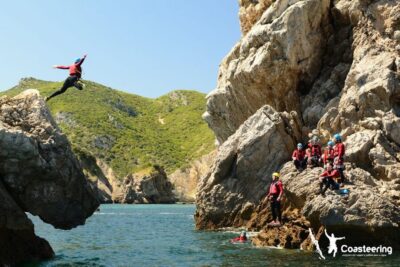
Lisbon: Sesimbra/Arrábida Natural Park Coasteering Adventure
Read our review →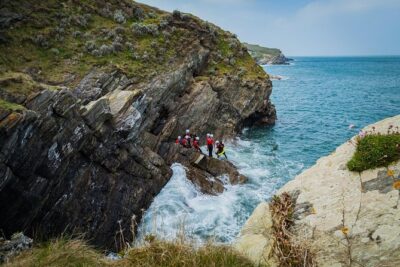
Newquay Coasteering x Cornish Wave | Original Since 2012
Read our review →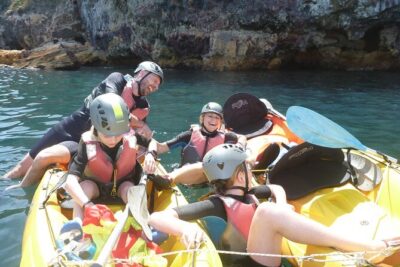
Private Tour explore Vulcano Island by Kayak & Coasteering
Read our review →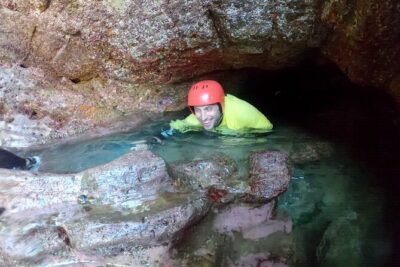
Sagres: Coasteering – Swimming, Cliff Jump & Rock Climbing
Read our review →Browse the lists this tour appears in